Theopolis Logo

Writing

Explore our collection of theological essays, biblical studies, and reflections on faith and culture.

See all
little-girl
Children

Honor God With Your Body

I am making a new rule in our house! We are actually kind of skimpy on the house rules. I try very hard to keep things simple: love God, love others, be joyful. It’s not complicated to avoid discipline here. But I have found myself repeating this new rule over…

by Lindsey TollefsonApril 9, 2015

giotto-noli-me-3
John

The Gardener and the Beloved, (Part 3)

Click HERE for Part 2 The voice of Jesus transforms and changes Mary when she hears him speak her name. This is her last “turning.” So also the woman in the Song of Songs longs to hear the voice of her beloved. Let me see your face, let me hear…

by Jeff MeyersApril 6, 2015
giotto-noli-me-2
John

The Gardener and the Beloved, (Part 2)

Click HERE for Part 1. The details of this story call the attentive reader back to the drama of Solomon’s Song of Songs. And the Song of Song’s alludes to, ties us into the story of Adam and Eve in the Garden and the promise of a coming Messiah that…

by Jeff MeyersApril 4, 2015
easter-term-2015-2
Theopolis News

Easter Term, 2015

“The course was a paradigm shift for me,” said Jonathan Sedlak, a Milwaukee electrical contractor who attended Theopolis’s course on Revelation. “I am left with a book that is far more practical than it has ever seemed before.” Jonathan Anderson of Louisville, Kentucky found the course “refreshing.” “I finished with…

by TheopolisApril 2, 2015
psalm-singing
Genesis

Worship as Response: Liturgical Logic, (Part 1)

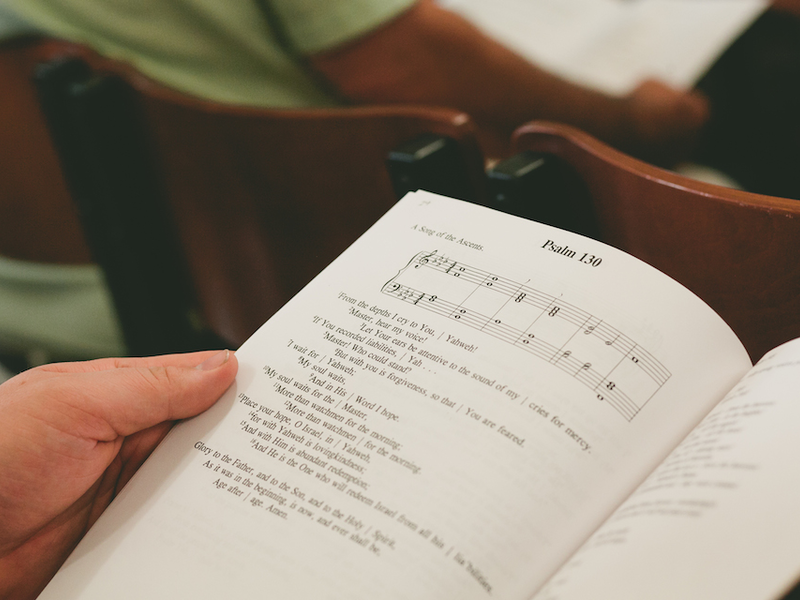
“It is only by participation in a rational, practice-based community that one becomes rational.” – Alasdair MacIntyre It may be perfectly clear to a chef why adding unsifted powdered sugar to a hot frosting is a bad idea. But for an amateur cook, this may be the kind of rule…

by Jonathan BarlowApril 2, 2015
giotto-noli-me
John

The Gardener and the Beloved, (Part 1)

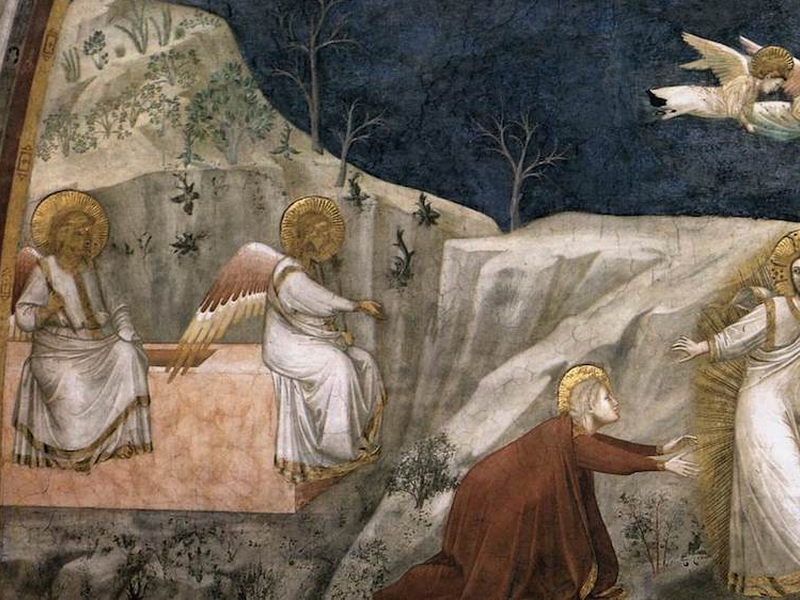
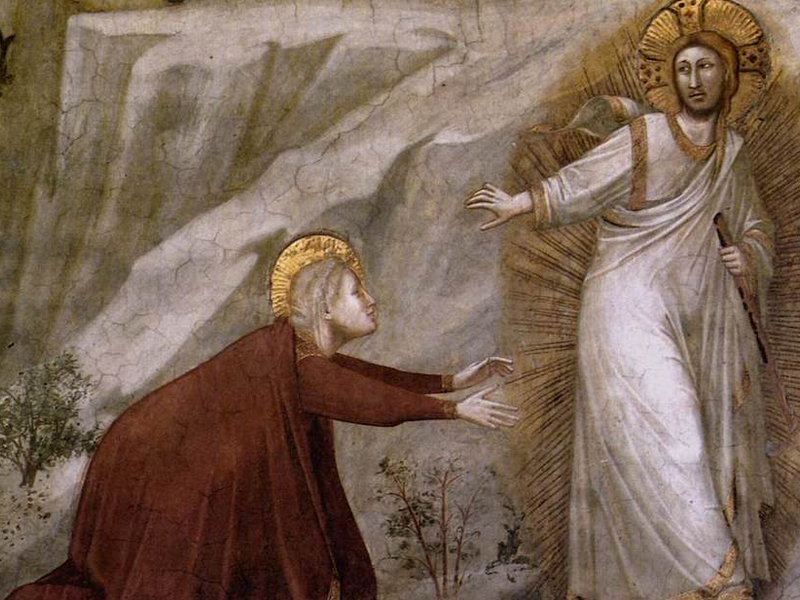
On a fresco in a chapel in Padua, Italy, there is a famous painting depicting the dramatic post-resurrection scene in John 20 with Mary and Jesus outside of the garden tomb. Giotto di Bondone painted it in the early 14th century. Jesus is striding from the tomb with a victor’s…

by Jeff MeyersApril 1, 2015

Showing page 156 of 309

See all
See all
Science

Devil’s Delusion

Of all the people I’ve seen on film recently, the one I’d most want to be is David Berlinski, whom Ben Stein interviewed extensively in his Paris apartment that reeked with sophistication and culture. Berklinski, by his own definition a “secular Jew” with no memory of Hebrew, has just published…

May 21, 2008

Obama’s subtexts

In an intriguing piece in TNR , writer Cinque Henderson - who identifies himself as one of the few remaining Clinton supporters among African-Americans - explains Obama’s use of “hoodwinked” and “bamboozled” (not the first words to spring to Obama’s lips, one would think) in the South Carolina primary: “It…

May 21, 2008
Philosophy

Flat souls

Kristeva says that contemporary culture separates affects from language, which leads to a loss of soul. Souls are empty. To help, our culture offers drugs and entertainment. Drugs flatten experience to a drone; entertainment dazzles momentarily with two-dimensional images. So do our solutions increase the problem. Flat remedies for flat…

May 20, 2008

Body/Language

Kristeva’s distinction of semiotic and symbolic is intended to overcome the dualism of traditional linguistic theories, the dualism of body and language, or matter and language. For Kristeva, the “semiotic” is the way drives are organized or “discharged” in language, and thus includes everything that is meaningful in language but…

May 20, 2008

Langue without speakers

Julia Kristeva notes that Saussure’s linguistic theory permits “linguistics to claim a logical, mathematical formalization on the one hand, but on the other, it definitely prevents reducing a language or text to one law or one meaning.” This latter point is true because by splitting the sign into signified and…

May 20, 2008

Limits of Dialectic

Desmond thinks that dialectic makes some gains: It affirms the “complex sense of unity,” appreciates mediation, critiques dualism, defends the “interplay and community of immanence and transcendence.” But dialectic cannot be the final moment of metaphysics. Why? “The problem is that if we privilege self-mediation and erect this into the…

May 20, 2008

Showing page 1516 of 2212

Browse by Category

In Medias Res

Your weekly digest for all things Theopolis.

Donate

Theopolis is nearly 100% donor-supported. Consider joining us on our mission.