
Theopolis Logo

Writing

Explore our collection of theological essays, biblical studies, and reflections on faith and culture.

See all
dan-burton-nrw4i8kuyd8-unsplash-2

Tyranny of the Agreeable

Inspired by the “Moscow Mood” Debate In a shocking 1961 study, Yale psychologist Stanley Milgram would don an official-looking white lab coat and tell a volunteer to administer increasing shocks to another “volunteer” in an adjacent room strapped into an “electric chair” just out of sight. The shocks were incrementally…

by John CarpenterJuly 22, 2024
screen-shot-2023-03-21-at-10-37-03-am
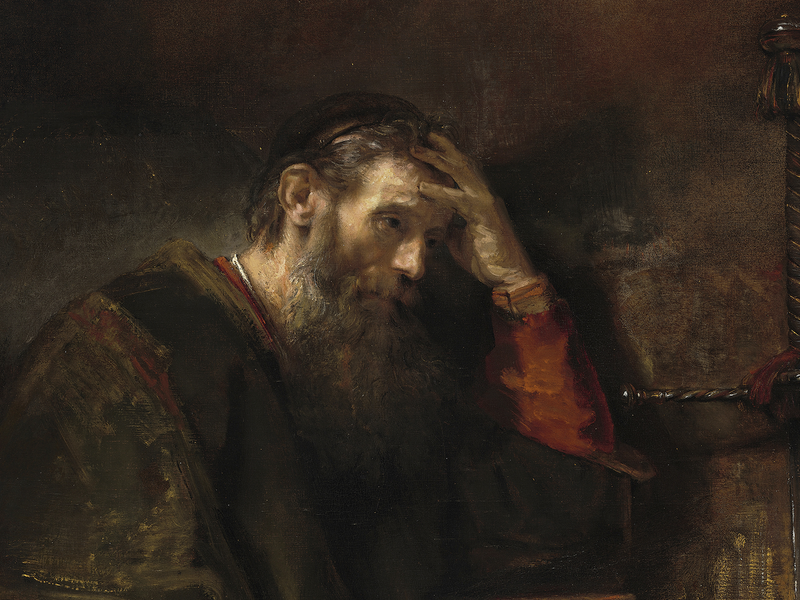
Apostle Paul

Why Doesn’t Paul Quote Jesus?

My title and the substance of the article are borrowed from a section of David Wenham’s excellent book, Paul: Follower of Jesus or Founder of Christianity? I am appropriating ideas from the pages in his book which address the question, “Why Does Paul refer to Jesus’ Life and Ministry so…

by Ralph Allan SmithJuly 9, 2024
screenshot-2024-07-04-at-8-35-35-am
James

The Epistle of James: Shotgun or Sniper

Some of us may be familiar with the notion that the epistle of James is like a New Testament version of Proverbs or other wisdom literature. According to this line of thinking, the epistle of James (together with the other wisdom literature) is basically a collection of timeless sayings without…

by Chris JohnsonJuly 4, 2024
metin-ozer-v4q9cqeashy-unsplash
Virtue

Doing What You Don’t Want to Do

This summer I started walking a long trail that ran north from our home. On my best days, I would walk a total of five miles at a brisk pace. This trail follows the power lines that serve a significant portion of North Dallas and stretches far past the two…

by Mandi GerthJune 25, 2024
screenshot-2024-06-18-at-12-49-58-pm
American Culture

Is Queer Theology Christian?

I am an Australian. I went to the American Academy of Religion mega-fest last year to meet up with some friends, to present a paper at a ‘science and religion’ panel, and to marvel at the sheer scale of how Americans do things. It was quite a ride. Looking at…

by Paul TysonJune 18, 2024
thomas-vitali-owhtrwwtpku-unsplash
Ecclesiology

Consumerism, Oikos, and the Role of Women in the Church (Part 4)

Part 1 Part 2 Part 3 We evangelicals do not often understand the roles of men and women in ministry. Because our consumerist culture has gutted the notion of family as it was historically understood, all Biblical passages about women in church ministry (a familial organism) are almost incomprehensible to…

by John CarpenterJune 11, 2024

Showing page 19 of 309

See all
See all
Science

Devil’s Delusion

Of all the people I’ve seen on film recently, the one I’d most want to be is David Berlinski, whom Ben Stein interviewed extensively in his Paris apartment that reeked with sophistication and culture. Berklinski, by his own definition a “secular Jew” with no memory of Hebrew, has just published…

May 21, 2008

Obama’s subtexts

In an intriguing piece in TNR , writer Cinque Henderson - who identifies himself as one of the few remaining Clinton supporters among African-Americans - explains Obama’s use of “hoodwinked” and “bamboozled” (not the first words to spring to Obama’s lips, one would think) in the South Carolina primary: “It…

May 21, 2008
Philosophy

Flat souls

Kristeva says that contemporary culture separates affects from language, which leads to a loss of soul. Souls are empty. To help, our culture offers drugs and entertainment. Drugs flatten experience to a drone; entertainment dazzles momentarily with two-dimensional images. So do our solutions increase the problem. Flat remedies for flat…

May 20, 2008

Body/Language

Kristeva’s distinction of semiotic and symbolic is intended to overcome the dualism of traditional linguistic theories, the dualism of body and language, or matter and language. For Kristeva, the “semiotic” is the way drives are organized or “discharged” in language, and thus includes everything that is meaningful in language but…

May 20, 2008

Langue without speakers

Julia Kristeva notes that Saussure’s linguistic theory permits “linguistics to claim a logical, mathematical formalization on the one hand, but on the other, it definitely prevents reducing a language or text to one law or one meaning.” This latter point is true because by splitting the sign into signified and…

May 20, 2008

Limits of Dialectic

Desmond thinks that dialectic makes some gains: It affirms the “complex sense of unity,” appreciates mediation, critiques dualism, defends the “interplay and community of immanence and transcendence.” But dialectic cannot be the final moment of metaphysics. Why? “The problem is that if we privilege self-mediation and erect this into the…

May 20, 2008

Showing page 1516 of 2212

Browse by Category

In Medias Res

Your weekly digest for all things Theopolis.

Donate

Theopolis is nearly 100% donor-supported. Consider joining us on our mission.