Theopolis Logo

Writing

Explore our collection of theological essays, biblical studies, and reflections on faith and culture.

See all
james-coleman-qej5dhl4mwq-unsplash
Galatians

Getting the Galatian Heresy Right

Misunderstanding “Galatianism” has caused several problems in the Reformed church. Because circumcision is at issue in the Galatian epistle, some have fallen into thinking that ritual per se, rather than anything uniquely Mosaic or Jewish, is the object of Paul’s critique. Likewise, his polemic against “works of the law” is…

by Rich LuskJune 6, 2003

screenshot-2023-09-21-at-3-59-23-pm
Romans

Jewish Rejection of the Gospel

Many texts in the NT become more perspicuous if we keep in mind the possibility — and indeed ubiquity — of Gentile God-fearers in the Old Covenant. After the special covenant with Israel is set up, Gentiles are not altogether excluded from the hope of salvation. Israel’s special status in…

by Rich LuskJune 6, 2003
aaron-burden-1ebsmyrau-s-unsplash
Ephesians

An X-File

I was once trying to get a sermon out of Ephesians 1.12-14 and it seemed obvious that I should look for two parallel statements both ending with the phrase, “to the praise of his glory.” Paul here begins talking about two groups of people (“you” and “we”), and he later…

by Mark HorneJune 5, 2003
screenshot-2023-12-12-at-10-36-28-am-2
New Perspective on Paul

The PCA and the New Perspective on Paul

WHY A DENOMINATION WITH SOUTHERN PRESBYTERIAN ROOTS SHOULD CAREFULLY CONSIDER THE “NEW PERSPECTIVE ON PAUL” In my denomination, the PCA, we are continually haunted by the sins of our racist Southern past. It has become an annual rite at General Assembly for the issue to be addressed one way or…

by Rich LuskJune 5, 2003
screenshot-2023-09-21-at-3-59-23-pm
Justification

The Centrality of Justification

Recent debates over whether or not, “justification is central” to Paul’s theology have reminded me of a sermon I once heard by a Presbyterian seminary student. This African American student challenged his audience on the sin of racism and the ways it might manifest itself among us. Like any good…

by Mark HorneJune 5, 2003
charles-hodge-islandora6062_crop_0
Ecclesiology

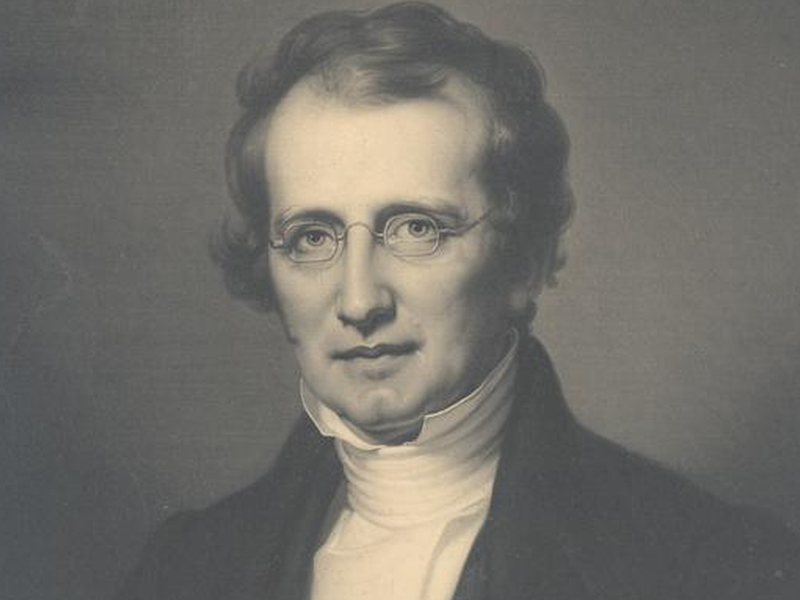
Charles Hodge’s Deficient Idea of the Church

In Charles Hodge’s 1853 article, “Idea of the Church,” his stated aim is to analyze the idea of the Church proposed in the Apostles’ Creed, in which, “the Church is declared to be “the Communion of the Saints.” He writes: The conception of the Church as the communion of saints…

by Mark HorneJune 5, 2003

Showing page 231 of 309

See all
See all
Science

Devil’s Delusion

Of all the people I’ve seen on film recently, the one I’d most want to be is David Berlinski, whom Ben Stein interviewed extensively in his Paris apartment that reeked with sophistication and culture. Berklinski, by his own definition a “secular Jew” with no memory of Hebrew, has just published…

May 21, 2008

Obama’s subtexts

In an intriguing piece in TNR , writer Cinque Henderson - who identifies himself as one of the few remaining Clinton supporters among African-Americans - explains Obama’s use of “hoodwinked” and “bamboozled” (not the first words to spring to Obama’s lips, one would think) in the South Carolina primary: “It…

May 21, 2008
Philosophy

Flat souls

Kristeva says that contemporary culture separates affects from language, which leads to a loss of soul. Souls are empty. To help, our culture offers drugs and entertainment. Drugs flatten experience to a drone; entertainment dazzles momentarily with two-dimensional images. So do our solutions increase the problem. Flat remedies for flat…

May 20, 2008

Body/Language

Kristeva’s distinction of semiotic and symbolic is intended to overcome the dualism of traditional linguistic theories, the dualism of body and language, or matter and language. For Kristeva, the “semiotic” is the way drives are organized or “discharged” in language, and thus includes everything that is meaningful in language but…

May 20, 2008

Langue without speakers

Julia Kristeva notes that Saussure’s linguistic theory permits “linguistics to claim a logical, mathematical formalization on the one hand, but on the other, it definitely prevents reducing a language or text to one law or one meaning.” This latter point is true because by splitting the sign into signified and…

May 20, 2008

Limits of Dialectic

Desmond thinks that dialectic makes some gains: It affirms the “complex sense of unity,” appreciates mediation, critiques dualism, defends the “interplay and community of immanence and transcendence.” But dialectic cannot be the final moment of metaphysics. Why? “The problem is that if we privilege self-mediation and erect this into the…

May 20, 2008

Showing page 1516 of 2212

Browse by Category

In Medias Res

Your weekly digest for all things Theopolis.

Donate

Theopolis is nearly 100% donor-supported. Consider joining us on our mission.