Theopolis Logo

Writing

Explore our collection of theological essays, biblical studies, and reflections on faith and culture.

See all
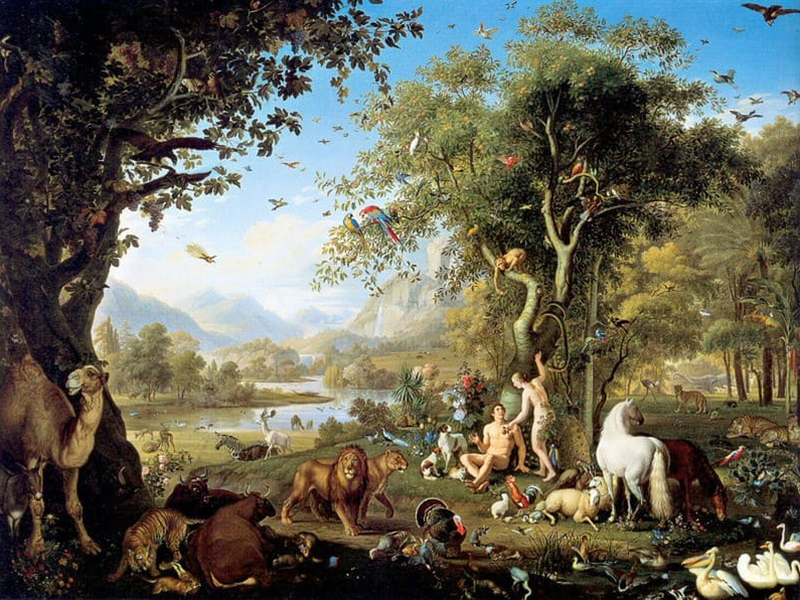
29994-adam-and-eve-in-the-garden-of-eden-800w-tn
Biblical Theology

Jesus in the Garden

Figure: Literary structure of the Garden narrative The Garden narrative describes God forming the adam , resting him in his presence, then provisioning for his appetites of food, vocation, and mate. It continues to describe a snake, the introduction of death, and humanity's expulsion from the garden. The pages of…

by Scott FairbanksJune 25, 2019
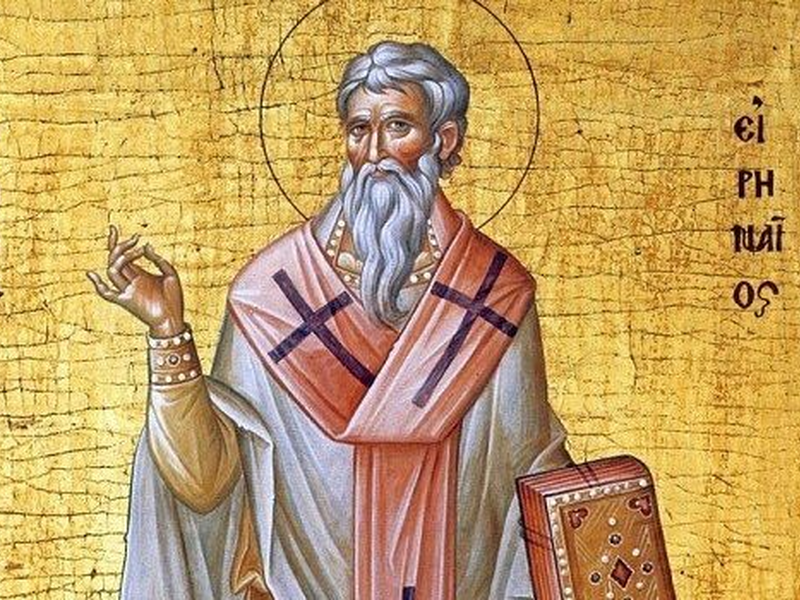
irenaeus-of-lyons-620x350
Christology

St. Irenaeus, the Beatific Vision, and the Instrumentalization of Creation

I’ve spent the last few years studying the theology of St. Irenaeus (d. circ. 200ad). In particular, I’ve been gripped by the way that Irenaeus consistently resisted the anti-body emphasis that emerged in later Christian theology. His eschatology is remarkably focused on the resurrection of the body, and the renewal…

by Gerald HiestandJune 18, 2019
aaron-burden-1ebsmyrau-s-unsplash
Exodus

The Light Before the Switch

Details of Jesus in Exodus 1:22-2:25 Although there are a great many Christ-types in the Old Testament, it is hard to overplay the obviousness of some that seem to necessarily rise to the top before others. One of these is Isaac, with his near sacrifice by his own father after…

by Eric RobinsonJune 11, 2019
thomas-habr-185321-unsplash
Biblical Theology

Characteristics of the Wicked City

What can we say about Cain's wicked sanctuary-city of Enoch? First that it was built with a brother's blood as its cornerstone. The Church is also built such, for Jesus was the younger brother of the whole Adamic race, slain by that company of older brothers because they hated Him.…

by James B. JordanJune 4, 2019
simon-caminada-107680-unsplash
Biblical Theology

Trees and Thorns

In Genesis 2:9 the ground brought forth trees good for food, delightful to view, and in two cases, life-giving or rule-bestowing. Adam, made of the ground (2:7), would by implication bring forth new trees, and thus trees and plants are among the symbols for human beings throughout the Bible. The…

by James B. JordanMay 28, 2019
annie-spratt-44241-unsplash
Biblical Theology

Trees for Food

One of the must fundamental teachings of the Bible and of the Christian religion is that man does not have life in himself. Man must get life from outside of himself, in order to maintain his life. The way this is done is through eating and drinking. Apart from life,…

by James B. JordanMay 21, 2019

Showing page 78 of 309

See all
See all
Science

Devil’s Delusion

Of all the people I’ve seen on film recently, the one I’d most want to be is David Berlinski, whom Ben Stein interviewed extensively in his Paris apartment that reeked with sophistication and culture. Berklinski, by his own definition a “secular Jew” with no memory of Hebrew, has just published…

May 21, 2008

Obama’s subtexts

In an intriguing piece in TNR , writer Cinque Henderson - who identifies himself as one of the few remaining Clinton supporters among African-Americans - explains Obama’s use of “hoodwinked” and “bamboozled” (not the first words to spring to Obama’s lips, one would think) in the South Carolina primary: “It…

May 21, 2008
Philosophy

Flat souls

Kristeva says that contemporary culture separates affects from language, which leads to a loss of soul. Souls are empty. To help, our culture offers drugs and entertainment. Drugs flatten experience to a drone; entertainment dazzles momentarily with two-dimensional images. So do our solutions increase the problem. Flat remedies for flat…

May 20, 2008

Body/Language

Kristeva’s distinction of semiotic and symbolic is intended to overcome the dualism of traditional linguistic theories, the dualism of body and language, or matter and language. For Kristeva, the “semiotic” is the way drives are organized or “discharged” in language, and thus includes everything that is meaningful in language but…

May 20, 2008

Langue without speakers

Julia Kristeva notes that Saussure’s linguistic theory permits “linguistics to claim a logical, mathematical formalization on the one hand, but on the other, it definitely prevents reducing a language or text to one law or one meaning.” This latter point is true because by splitting the sign into signified and…

May 20, 2008

Limits of Dialectic

Desmond thinks that dialectic makes some gains: It affirms the “complex sense of unity,” appreciates mediation, critiques dualism, defends the “interplay and community of immanence and transcendence.” But dialectic cannot be the final moment of metaphysics. Why? “The problem is that if we privilege self-mediation and erect this into the…

May 20, 2008

Showing page 1516 of 2212

Browse by Category

In Medias Res

Your weekly digest for all things Theopolis.

Donate

Theopolis is nearly 100% donor-supported. Consider joining us on our mission.