Theopolis Logo

Writing

Explore our collection of theological essays, biblical studies, and reflections on faith and culture.

See all
little-girl
Children

Honor God With Your Body

I am making a new rule in our house! We are actually kind of skimpy on the house rules. I try very hard to keep things simple: love God, love others, be joyful. It’s not complicated to avoid discipline here. But I have found myself repeating this new rule over…

by Lindsey TollefsonApril 9, 2015

giotto-noli-me-3
John

The Gardener and the Beloved, (Part 3)

Click HERE for Part 2 The voice of Jesus transforms and changes Mary when she hears him speak her name. This is her last “turning.” So also the woman in the Song of Songs longs to hear the voice of her beloved. Let me see your face, let me hear…

by Jeff MeyersApril 6, 2015
giotto-noli-me-2
John

The Gardener and the Beloved, (Part 2)

Click HERE for Part 1. The details of this story call the attentive reader back to the drama of Solomon’s Song of Songs. And the Song of Song’s alludes to, ties us into the story of Adam and Eve in the Garden and the promise of a coming Messiah that…

by Jeff MeyersApril 4, 2015
easter-term-2015-2
Theopolis News

Easter Term, 2015

“The course was a paradigm shift for me,” said Jonathan Sedlak, a Milwaukee electrical contractor who attended Theopolis’s course on Revelation. “I am left with a book that is far more practical than it has ever seemed before.” Jonathan Anderson of Louisville, Kentucky found the course “refreshing.” “I finished with…

by TheopolisApril 2, 2015
psalm-singing
Genesis

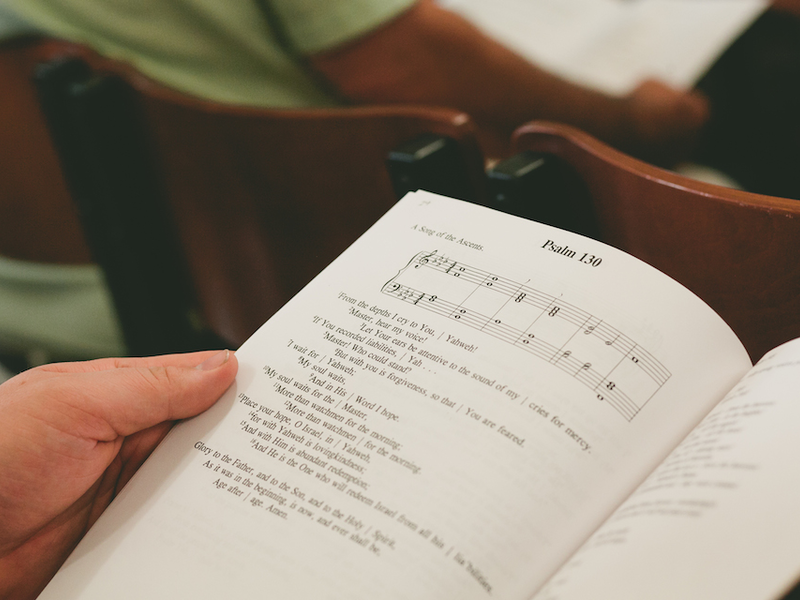
Worship as Response: Liturgical Logic, (Part 1)

“It is only by participation in a rational, practice-based community that one becomes rational.” – Alasdair MacIntyre It may be perfectly clear to a chef why adding unsifted powdered sugar to a hot frosting is a bad idea. But for an amateur cook, this may be the kind of rule…

by Jonathan BarlowApril 2, 2015
giotto-noli-me
John

The Gardener and the Beloved, (Part 1)

On a fresco in a chapel in Padua, Italy, there is a famous painting depicting the dramatic post-resurrection scene in John 20 with Mary and Jesus outside of the garden tomb. Giotto di Bondone painted it in the early 14th century. Jesus is striding from the tomb with a victor’s…

by Jeff MeyersApril 1, 2015

Showing page 156 of 309

See all
See all

Root of David

Jesus is described twice in Revelation as the “root of David” (5:5; 22:16). “Son of David” or “Seed of David” makes sense; Jesus comes from the Davidic line. But Jesus is not only the fruit, but the root of the Davidic house. He is the original Anointed One before who…

May 3, 2008

Jesus and the Sea

In a 1984 JBL article, Elizabeth Struthers Malbon suggested that the boat in Mark’s gospel represents a “mediator” between sea and land, and pointed out that Jesus treats the sea as if it were land (walking on it, showing no concern for the unsteadiness of the waves, etc.). If we…

May 3, 2008

Proverbs 21

PROVERBS 21:20 The verse could be translated, more woodenly, as “Stores desired and oil in the habitation of the wise; but the foolish Adam swallows it.” The verse contrasts the conduct of the wise and of the foolish, and the basic contrast is between the wise man who has things…

May 2, 2008
History

Priestcraft

Well, a bit of looking pays off. One Justin Champion has written a study of priestcraft in early Enlightenment England, The Pillars of Priestcraft Shaken (Cambridge 1992), which is available in its entirety online at: http://www.newtonproject.sussex.ac.uk/catalogue/viewcat.php?id=OTHE00029. Chapter 5 begins with a paragraph that links the attacks on priestcraft with the…

May 1, 2008
History

Priestcraft

Writing of Spinoza, Jonathan Israel ( Radical Enlightenment ) notes that Spinoza outlines “the concept of priestcraft as a system of organized imposture and deception, rooted in credulousness and superstitution, which loomed so large in the subsequent history of the Enlightenment and was to receive massive amplification in the books…

May 1, 2008
History

New atheism

Not of the Hitchens-Dawkins-Harris variety, but of the seventeenth century variety. The four figures most often attacked for formulating a thoroughgoing atheistic perspective were Spinoza (for his biblical work as well as his metaphysics), Hobbes, La Peyrere (author of Pre-Adamites ), and Lodewijk Meyer (author of Philosophia Scripturae Interpres ).…

May 1, 2008

Showing page 1523 of 2212

Browse by Category

In Medias Res

Your weekly digest for all things Theopolis.

Donate

Theopolis is nearly 100% donor-supported. Consider joining us on our mission.