Theopolis Logo

Writing

Explore our collection of theological essays, biblical studies, and reflections on faith and culture.

See all
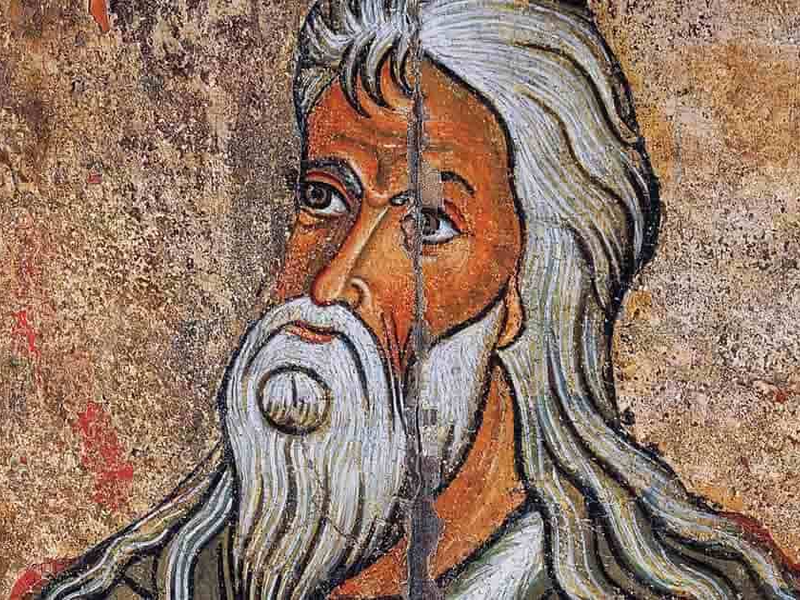
elijah-1200x630-min
Biblical Horizons

Elijah’s Exodus

1 Kings 17, which abruptly introduces Elijah into the history of the northern kingdom, is a carefully constructed literary unit. In its basic structure, it follows a clear exodus-return pattern. Like Jacob and his sons, Elijah was driven out of the land by a famine (vv. 1-4). In exile, Elijah…

by Peter LeithartJune 17, 1992

ales-krivec-4mibe6zg5r0-unsplash
Biblical Studies

All Things New

Now the Pharisees, who were lovers of money, were listening to all these things and they were scoffing at Him. And He said to them, "You are those who justify yourselves in the sight of men, but God knows your hearts; for that which is highly esteemed among men is…

by Mark HorneJune 6, 1992
aaron-burden-h8s0pf2rcqs-unsplash
Biblical Chronology

Chronologies and Kings, Part 11: The Knots of 2 Kings 11-14

In the year 3119, Ahaziah of Judah and Jehoram of Israel were both slain by Jehu as he carried out his God-appointed task of eliminating the seed and house of Ahab (2 Kings 9:13-33). Since the kings of Israel are usually counted as beginning their reign in the same year…

by James B. JordanMay 24, 1992
trnava-university-beeyeib-am8-unsplash
Biblical Studies

Gleanings from Robert Alter’s "Art of Biblical Narrative"

One of the most important developments in Biblical studies in recent years has been a movement of scholars devoted to studying the literary techniques of the Biblical writers. Tremper Longman, III of Westminster Theological Seminary has treated this movement from a Reformed perspective in his Literary Approaches to Biblical Interpretation…

by Peter LeithartMay 17, 1992
ian-schneider-iqbc4vu4ypq-unsplash
Biblical Horizons

Tentmaking

And because [Paul] was of the same trade, he stayed with [Aquila and Priscilla] and they were working; for by trade they were tentmakers (Acts 18:3). The fact that Paul was by trade a tentmaker has usually been taken as the springboard for a discussion of whether pastors should have…

by James B. JordanApril 24, 1992
screen-shot-2022-05-12-at-12-07-23-pm
Biblical Studies

Chronologies and Kings, Part 10: Jehoram of Judah

I pointed out in Chronologies and Kings Part 9 that the years of Judah’s kings are given in chronological fashion. "When we read of a Judahite king’s reign as lasting 4 years, it means that 4 years of the chronology have been given to him, and there is no chronological…

by James B. JordanApril 24, 1992

Showing page 290 of 309

See all
See all

Root of David

Jesus is described twice in Revelation as the “root of David” (5:5; 22:16). “Son of David” or “Seed of David” makes sense; Jesus comes from the Davidic line. But Jesus is not only the fruit, but the root of the Davidic house. He is the original Anointed One before who…

May 3, 2008

Jesus and the Sea

In a 1984 JBL article, Elizabeth Struthers Malbon suggested that the boat in Mark’s gospel represents a “mediator” between sea and land, and pointed out that Jesus treats the sea as if it were land (walking on it, showing no concern for the unsteadiness of the waves, etc.). If we…

May 3, 2008

Proverbs 21

PROVERBS 21:20 The verse could be translated, more woodenly, as “Stores desired and oil in the habitation of the wise; but the foolish Adam swallows it.” The verse contrasts the conduct of the wise and of the foolish, and the basic contrast is between the wise man who has things…

May 2, 2008
History

Priestcraft

Well, a bit of looking pays off. One Justin Champion has written a study of priestcraft in early Enlightenment England, The Pillars of Priestcraft Shaken (Cambridge 1992), which is available in its entirety online at: http://www.newtonproject.sussex.ac.uk/catalogue/viewcat.php?id=OTHE00029. Chapter 5 begins with a paragraph that links the attacks on priestcraft with the…

May 1, 2008
History

Priestcraft

Writing of Spinoza, Jonathan Israel ( Radical Enlightenment ) notes that Spinoza outlines “the concept of priestcraft as a system of organized imposture and deception, rooted in credulousness and superstitution, which loomed so large in the subsequent history of the Enlightenment and was to receive massive amplification in the books…

May 1, 2008
History

New atheism

Not of the Hitchens-Dawkins-Harris variety, but of the seventeenth century variety. The four figures most often attacked for formulating a thoroughgoing atheistic perspective were Spinoza (for his biblical work as well as his metaphysics), Hobbes, La Peyrere (author of Pre-Adamites ), and Lodewijk Meyer (author of Philosophia Scripturae Interpres ).…

May 1, 2008

Showing page 1523 of 2212

Browse by Category

In Medias Res

Your weekly digest for all things Theopolis.

Donate

Theopolis is nearly 100% donor-supported. Consider joining us on our mission.