
Theopolis Logo

Writing

Explore our collection of theological essays, biblical studies, and reflections on faith and culture.

See all
sunrise-2
Creation

Maker of Heaven and Earth, (Part 4)

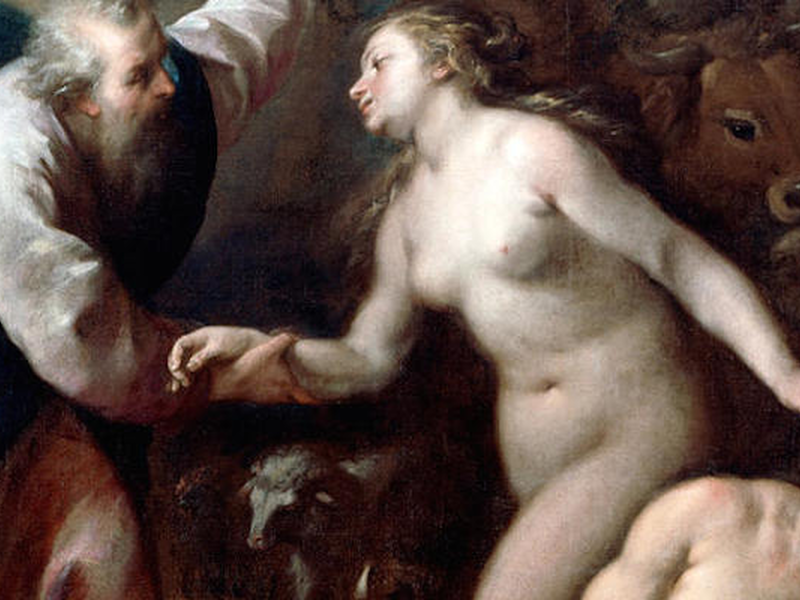
In my previous two posts, I looked at aspects of Psalms 93, 95, 96 and 98 that declare Yahweh, the divine King, to be the world’s own Creator. In my next post, I plan to argue that the creation theology of the sub-section constituted by Psalms 93-100 contributes to the…

by Stephen LongApril 23, 2015
creation-eve
Otherness

Sexual Difference, Liberal and Christian

Ethika Politika has published a fascinating interview within which the French Catholic philosopher Fabrice Hadjadj discusses his recent work on the subject of sexuality. While there are many points where our lines of reasoning as Protestants will sharply diverge from Hadjadj’s, there is also much that is deeply perceptive in…

by Alastair RobertsApril 21, 2015
giammarco-zeh-ljawhtg-unsplash
Literature

Macbeth and the Fall of Adam

For anyone in Shakespeare’s audience who knew the real story of Macbeth, his play must have been surprising. Shakespeare changed so many important details of the historical Macbeth’s life that had Raphael Holinshed, the main author of the most popular history of the British Isles in Shakespeare’s day — Holinshed…

by Ralph Allan SmithApril 16, 2015
medievalilluminatedmanuscript
Creation

Maker of Heaven and Earth, (Part 3)

I started looking at a sequence of psalms on divine Kingship (Psalms 93-100) in my last post, part of a series looking at the Old Testament’s witness to Yahweh’s exercise of absolute mastery over his cosmos. I am not trying to “prove” a doctrine of creation ex nihilo directly from…

by Stephen LongApril 14, 2015
pearls
Anxiety

(Un)Holy Fear

Most of the time I believe that dread is wise, anxiety righteous, fear a holy thing. It sounds ridiculous, but bear with me. There are days when fear seems to be not only a rational response to my circumstances, but a moral duty. After all, being a grown-up means responsibility.…

by Leta SundetApril 11, 2015
emmanuel-phaeton-1bwmfmvybi8-unsplash
Psalms

Psalm 36 Commentary

Get the Psalm 36 Translation here Psalm 36 begins with several translation problems. First, the first word in the actual psalm, as it is found in the English text, is the word "oracle." This word also begins the second verse in the medieval Massoretic Hebrew text, which is our basic…

by James B. JordanApril 10, 2015

Showing page 155 of 309

See all
See all
History

Saving the flesh

Melanchthon wrote, “The views of Erasmus might have caused greater tumults if Luther had not arisen to arrest them . . . all of this tragedy about the Lord’s Supper started from him.” Melanchthon had in mind Erasmus’s Neo-platonic disparagement of matter, which infected Zwingli and filtered into Anabaptist theology.…

April 30, 2008

Tyre’s sacrifice

Zechariah predicts that Tyre will be dispossessed and her wealth cast into the sea (v. 4), and then the city will be “consumed with fire.” The verb is the common verb for “eating,” and the picture of an “eating fire” sends the mind back to the sacrificial system, where the…

April 29, 2008

Wisdom of Tyre

Zechariah 9:1-4 focuses on the conquest of Tyre, the “wise” city, shrewd at least in amassing wealth (v. 3). But the celebratory description contains a subversive pun. The Hebrew for Tyre is tsor (“rock”), and Zechariah says that Tyre has built herself a fortress, a word built on the same…

April 29, 2008
History

Counting years

In the second edition of African Religions and Philosophy (1989), John Mbiti says that Africans generally lack a concept of the future. Their future tenses reach only a short time into the past, and one people leave the present they are absorbed into an atemporal afterlife. Mbiti notes as well…

April 28, 2008
History

Scale of religions

E.B. Tylor was the first to characterize African religions as “animist,” remarking that “one great element of religion, that moral element which among the higher nations forms its most vital part, is indeed little represented in the religion of the lower races.” Others characterized the”lower religions” as “fetishist” because of…

April 28, 2008
History

Vindication of Barbarians

Tatian’s Oration to the Greeks is an attempt to vindicate the wisdom of Moses against Greek snobbery toward the barbarians. Aime Puech points out that chronology was central to Tatian’s argument: “In order to rehabilitate the Barbarians it was important to prove that they had contributed their share, indeed the…

April 28, 2008

Showing page 1525 of 2212

Browse by Category

In Medias Res

Your weekly digest for all things Theopolis.

Donate

Theopolis is nearly 100% donor-supported. Consider joining us on our mission.