Theopolis Logo

Writing

Explore our collection of theological essays, biblical studies, and reflections on faith and culture.

See all
aaron-burden-h8s0pf2rcqs-unsplash
Galatians

The Restoration of the Galatians

While controversies over the writings of Paul continue in various corners of the intellectual globe, the word of God given through Paul and his scribe and all of the church’s interpreters and translators over the last two millennia is still readily available to the lofty and the lowly. Paul, as…

by Grace LangnessMarch 25, 2013

kiwihug-l4gw27xzn1i-unsplash
Deuteronomy

Law and History: How to Read the Law of Moses (Part 2)

The second in a series of studies in Deuteronomy. Deuteronomy 22:30: A man shall not take his father’s wife, and shall not uncover his father’s wing (Hebrew: kanaf ). There are a number of unusual features in this law that mark it out from the previous context, indicating that it…

by Ralph Allan SmithMarch 20, 2013
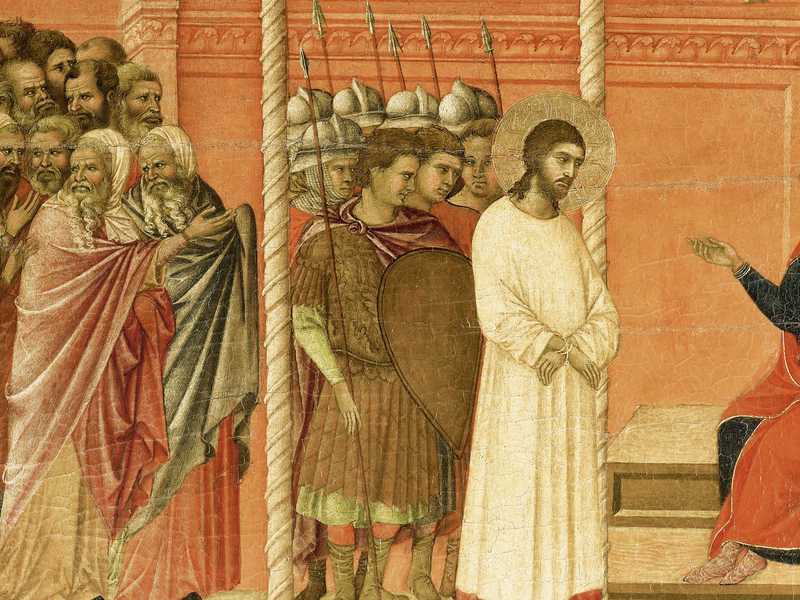
200403-moss-pilate-tease_pncfq5
History

Victimhood and the Gospel

The texts of Christianity have been slowly at work, under the power of the Holy Spirit for 2000 years now. If we could be magically transported back into the world of two millennia ago, modern Americans would be shocked at the cruelty of that world. There was no concern for…

by Richard BledsoeMarch 18, 2013
aaron-burden-1ebsmyrau-s-unsplash
Luke

The Dysfunctional Family of the Gadarene Madman

The Story of the Gadarene Madman is told in all three synoptic Gospels (Matthew 8:28-34, Mark 5:1-20, Luke 8:26-37). Jesus ventures into a Gentile area when He passes over the Sea of Galilee. Upon disembarking from his boat, he is immediately met by a demon-possessed madman. Upon meeting Jesus, he…

by Richard BledsoeMarch 13, 2013
aaron-burden-1ebsmyrau-s-unsplash
Deuteronomy

Law and History: How to Read the Law of Moses

Part 1 of a multi-part series of studies on Deuteronomy 22:30-23:8. Eric Auerbach, in his classic work on Western literature, devotes his first chapter to contrasting Homer with the Bible. Of Homer, he writes of the “need of Homeric style to leave nothing which it mentions half in darkness and…

by Ralph Allan SmithMarch 12, 2013
markus-winkler-aid-xyrtlec-unsplash
Theopolis News

James Jordan in Korea, Japan

Trinity House Fellow James B. Jordan will be a speaker at an International Conference on Biblical Symbolism that will be held in Seoul on Monday, May 27 in 2013. He will address "The Importance of Biblical Symbolism and Symbolic Interpretation of the Bible." The conference will have three other speakers…

by Peter LeithartMarch 9, 2013

Showing page 197 of 309

See all
See all
History

Saving the flesh

Melanchthon wrote, “The views of Erasmus might have caused greater tumults if Luther had not arisen to arrest them . . . all of this tragedy about the Lord’s Supper started from him.” Melanchthon had in mind Erasmus’s Neo-platonic disparagement of matter, which infected Zwingli and filtered into Anabaptist theology.…

April 30, 2008

Tyre’s sacrifice

Zechariah predicts that Tyre will be dispossessed and her wealth cast into the sea (v. 4), and then the city will be “consumed with fire.” The verb is the common verb for “eating,” and the picture of an “eating fire” sends the mind back to the sacrificial system, where the…

April 29, 2008

Wisdom of Tyre

Zechariah 9:1-4 focuses on the conquest of Tyre, the “wise” city, shrewd at least in amassing wealth (v. 3). But the celebratory description contains a subversive pun. The Hebrew for Tyre is tsor (“rock”), and Zechariah says that Tyre has built herself a fortress, a word built on the same…

April 29, 2008
History

Counting years

In the second edition of African Religions and Philosophy (1989), John Mbiti says that Africans generally lack a concept of the future. Their future tenses reach only a short time into the past, and one people leave the present they are absorbed into an atemporal afterlife. Mbiti notes as well…

April 28, 2008
History

Scale of religions

E.B. Tylor was the first to characterize African religions as “animist,” remarking that “one great element of religion, that moral element which among the higher nations forms its most vital part, is indeed little represented in the religion of the lower races.” Others characterized the”lower religions” as “fetishist” because of…

April 28, 2008
History

Vindication of Barbarians

Tatian’s Oration to the Greeks is an attempt to vindicate the wisdom of Moses against Greek snobbery toward the barbarians. Aime Puech points out that chronology was central to Tatian’s argument: “In order to rehabilitate the Barbarians it was important to prove that they had contributed their share, indeed the…

April 28, 2008

Showing page 1525 of 2212

Browse by Category

In Medias Res

Your weekly digest for all things Theopolis.

Donate

Theopolis is nearly 100% donor-supported. Consider joining us on our mission.