Theopolis Logo

Writing

Explore our collection of theological essays, biblical studies, and reflections on faith and culture.

See all
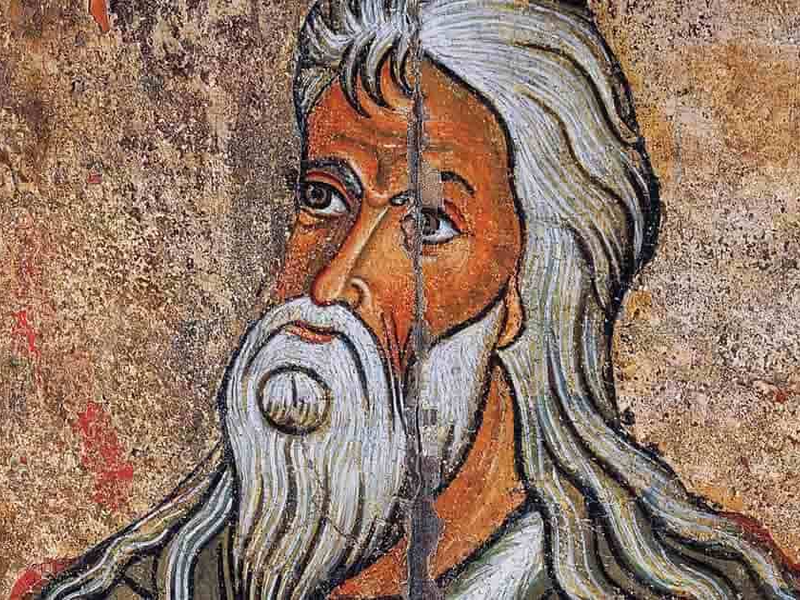
elijah-1200x630-min
Biblical Horizons

Elijah’s Exodus

1 Kings 17, which abruptly introduces Elijah into the history of the northern kingdom, is a carefully constructed literary unit. In its basic structure, it follows a clear exodus-return pattern. Like Jacob and his sons, Elijah was driven out of the land by a famine (vv. 1-4). In exile, Elijah…

by Peter LeithartJune 17, 1992

ales-krivec-4mibe6zg5r0-unsplash
Biblical Studies

All Things New

Now the Pharisees, who were lovers of money, were listening to all these things and they were scoffing at Him. And He said to them, "You are those who justify yourselves in the sight of men, but God knows your hearts; for that which is highly esteemed among men is…

by Mark HorneJune 6, 1992
aaron-burden-h8s0pf2rcqs-unsplash
Biblical Chronology

Chronologies and Kings, Part 11: The Knots of 2 Kings 11-14

In the year 3119, Ahaziah of Judah and Jehoram of Israel were both slain by Jehu as he carried out his God-appointed task of eliminating the seed and house of Ahab (2 Kings 9:13-33). Since the kings of Israel are usually counted as beginning their reign in the same year…

by James B. JordanMay 24, 1992
trnava-university-beeyeib-am8-unsplash
Biblical Studies

Gleanings from Robert Alter’s "Art of Biblical Narrative"

One of the most important developments in Biblical studies in recent years has been a movement of scholars devoted to studying the literary techniques of the Biblical writers. Tremper Longman, III of Westminster Theological Seminary has treated this movement from a Reformed perspective in his Literary Approaches to Biblical Interpretation…

by Peter LeithartMay 17, 1992
ian-schneider-iqbc4vu4ypq-unsplash
Biblical Horizons

Tentmaking

And because [Paul] was of the same trade, he stayed with [Aquila and Priscilla] and they were working; for by trade they were tentmakers (Acts 18:3). The fact that Paul was by trade a tentmaker has usually been taken as the springboard for a discussion of whether pastors should have…

by James B. JordanApril 24, 1992
screen-shot-2022-05-12-at-12-07-23-pm
Biblical Studies

Chronologies and Kings, Part 10: Jehoram of Judah

I pointed out in Chronologies and Kings Part 9 that the years of Judah’s kings are given in chronological fashion. "When we read of a Judahite king’s reign as lasting 4 years, it means that 4 years of the chronology have been given to him, and there is no chronological…

by James B. JordanApril 24, 1992

Showing page 290 of 309

See all
See all
History

Saving the flesh

Melanchthon wrote, “The views of Erasmus might have caused greater tumults if Luther had not arisen to arrest them . . . all of this tragedy about the Lord’s Supper started from him.” Melanchthon had in mind Erasmus’s Neo-platonic disparagement of matter, which infected Zwingli and filtered into Anabaptist theology.…

April 30, 2008

Tyre’s sacrifice

Zechariah predicts that Tyre will be dispossessed and her wealth cast into the sea (v. 4), and then the city will be “consumed with fire.” The verb is the common verb for “eating,” and the picture of an “eating fire” sends the mind back to the sacrificial system, where the…

April 29, 2008

Wisdom of Tyre

Zechariah 9:1-4 focuses on the conquest of Tyre, the “wise” city, shrewd at least in amassing wealth (v. 3). But the celebratory description contains a subversive pun. The Hebrew for Tyre is tsor (“rock”), and Zechariah says that Tyre has built herself a fortress, a word built on the same…

April 29, 2008
History

Counting years

In the second edition of African Religions and Philosophy (1989), John Mbiti says that Africans generally lack a concept of the future. Their future tenses reach only a short time into the past, and one people leave the present they are absorbed into an atemporal afterlife. Mbiti notes as well…

April 28, 2008
History

Scale of religions

E.B. Tylor was the first to characterize African religions as “animist,” remarking that “one great element of religion, that moral element which among the higher nations forms its most vital part, is indeed little represented in the religion of the lower races.” Others characterized the”lower religions” as “fetishist” because of…

April 28, 2008
History

Vindication of Barbarians

Tatian’s Oration to the Greeks is an attempt to vindicate the wisdom of Moses against Greek snobbery toward the barbarians. Aime Puech points out that chronology was central to Tatian’s argument: “In order to rehabilitate the Barbarians it was important to prove that they had contributed their share, indeed the…

April 28, 2008

Showing page 1525 of 2212

Browse by Category

In Medias Res

Your weekly digest for all things Theopolis.

Donate

Theopolis is nearly 100% donor-supported. Consider joining us on our mission.