Theopolis Logo

Writing

Explore our collection of theological essays, biblical studies, and reflections on faith and culture.

See all
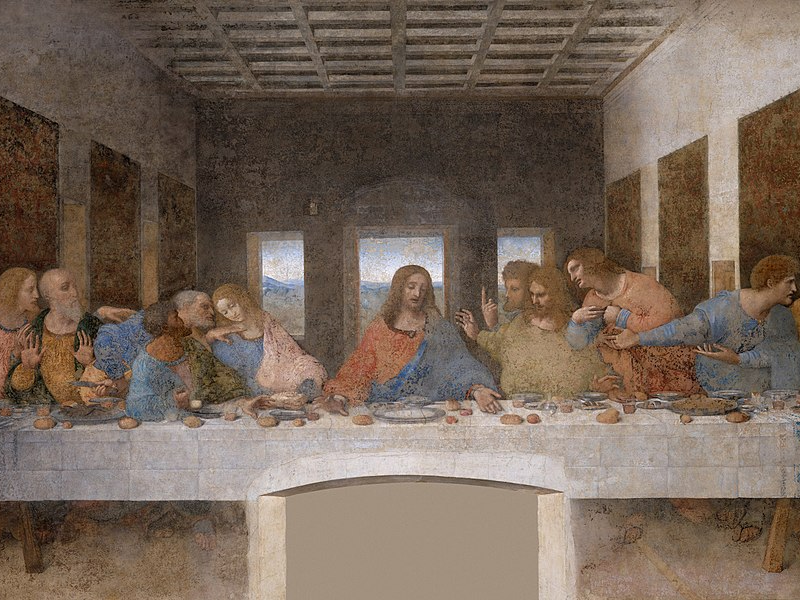
the_last_supper_-_leonardo_da_vinci_-_high_resolution_32x16-2
Biblical Horizons

Was the Last Supper a Passover?

Some readers of my essay, “ Strange and Glorious New Rites ,” have written to object that I have strained a gnat and swallowed a camel. I have strained out the gnat of a possible link to the memorial bread of the minchah (Lev. 2), while overlooking the camel that…

by James B. JordanMarch 22, 2011

screenshot-2023-09-19-at-10-48-12-am
Biblical Horizons

Planetary Judgments

In his lectures on Comparative Religion, Eugen Rosenstock-Huessy points to five fundamental gods that were over ancient man and still can dominate us today, and which must be respected. When we sin, we respect these gods more than we respect the Creator, disobeying the First Word: “You will have no…

by James B. JordanMarch 22, 2011

timothy-eberly-djj49s6ud2o-unsplash
Biblical Studies

Notes on the Book of Judges

A. Israel’s failure to hold land against the Canaanites. Progressive compromise, leading to judgment. 1:1–2:5. B. Israel’s idolatry, the cycle of judges, and war as God’s chastisement. 2:6–3:6. C. Northern Gentiles (Mesopotamia), and Othniel. 3:7-11. D. Lot: Moab, and Ehud. 3:12-13. E. Minor judge: Shamgar. 3:31. F. Canaanites opposed. Women…

by James B. JordanMarch 21, 2011
briana-tozour-mrfapsuyy8a-unsplash
Biblical Horizons

Principalities and Powers, (Part 2)

The great question for the emerging East, for Asia and other awakening third world areas, for an emerging nation like China is, “what fate awaits them?” They are now emerging from an analogous paganism that the West emerged from centuries ago. Here an amazing quotation from David Aikman, the Time…

by Richard BledsoeMarch 15, 2011
sinitta-leunen-dvibhmzsy8e-unsplash
Colossians

The Principalities and Powers, Part I

Paul contends that with the death of Christ on the Cross, there was an overcoming of the Principalities and the Powers (Col. 2:15). A great deal has been written on this subject over the last 60 years. What was for a long time either ignored, or regarded by liberal scholars…

by Richard BledsoeMarch 10, 2011
jimpreaching
Biblical Horizons

Eating and Drinking Together

One of the odd customs that has arisen in the 20th century is that many evangelical churches warp the rites of the Lord’s Supper by insisting that everyone wait so that they eat and drink together. Supposedly this is to emphasize the unity of the Church. This practice has no…

by James B. JordanMarch 3, 2011

Showing page 205 of 309

See all
See all
History

Where was Augustine?

The Reformed Orthodox were entirely correct to discern a fundamental threat and challenge in the spread of Cartesianism, especially as regards the relation of philosophy and theology. But it’s hard to read about their responses without sadness. “Whatever reason brings out of its stinking heaps must be subordinate to the…

April 23, 2008
History

Descartes, Pro and Contra

On the one hand: Method is a discipleship - a “following after.” And the Cartesian methodus is in conflict with the “following after” demanded of a Christian disciple. Here, Descartes offers a different way, a different truth and life. The Christian “method” of knowledge and wisdom is discipleship, not doubt…

April 23, 2008
History

Cartesian critique

Bizer again, on Melchior Leydekker’s summary of the Cartesian critique of Reformed orthodoxy: “The Cartesians reproach the orthodox to the effect that their theology is not scriptural, that they have re-introduced Catholic scholasticism into the Church; that they hinder every advance in knowledge and their work does not have scientific…

April 23, 2008

Lutherans at bay

At several points, Bizer notes that the Reformed orthodox critics of Cartesian philosophy and its application to theology formulated their arguments to buttress their opposition to Lutheran ideas of the real presence. Peter van Mastricht “resists the proposition that God could do something contradictory; one of the reasons for this…

April 23, 2008
History

Orthodoxy’s failure

Reformed Orthodoxy failed to stop the spread of Cartesian philosophy, despite vigorous efforts. Why? Bizer suggests that the orthodox critique often adopted much of what it criticized. In Martin Schoock’s notorious response to Descartes, “there is no word . . . about the fact that the Cartesian proof of God…

April 23, 2008
History

Cocceian-Cartesians

Johannes Cocceius, a father of biblical theology, would seem to have little in common with Cartesian rationalism. But most of the Cocceians in the latter part of the 17th century were Cartesians. Ernest Bizer (in an article entitled “Reformed Orthodoxy and Cartesianism”) suggests that there was an affinity between the…

April 23, 2008

Showing page 1528 of 2212

Browse by Category

In Medias Res

Your weekly digest for all things Theopolis.

Donate

Theopolis is nearly 100% donor-supported. Consider joining us on our mission.