Theopolis Logo

Writing

Explore our collection of theological essays, biblical studies, and reflections on faith and culture.

See all
aaron-burden-h8s0pf2rcqs-unsplash
Galatians

The Restoration of the Galatians

While controversies over the writings of Paul continue in various corners of the intellectual globe, the word of God given through Paul and his scribe and all of the church’s interpreters and translators over the last two millennia is still readily available to the lofty and the lowly. Paul, as…

by Grace LangnessMarch 25, 2013

kiwihug-l4gw27xzn1i-unsplash
Deuteronomy

Law and History: How to Read the Law of Moses (Part 2)

The second in a series of studies in Deuteronomy. Deuteronomy 22:30: A man shall not take his father’s wife, and shall not uncover his father’s wing (Hebrew: kanaf ). There are a number of unusual features in this law that mark it out from the previous context, indicating that it…

by Ralph Allan SmithMarch 20, 2013
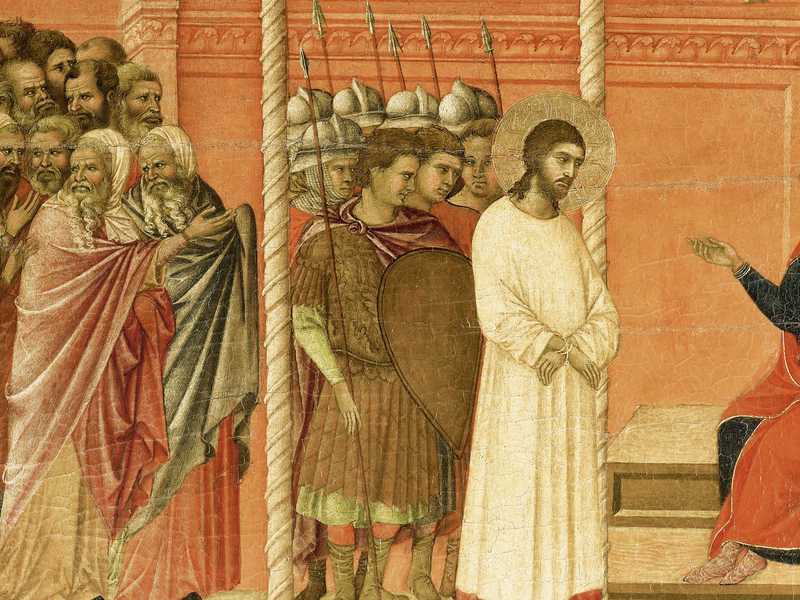
200403-moss-pilate-tease_pncfq5
History

Victimhood and the Gospel

The texts of Christianity have been slowly at work, under the power of the Holy Spirit for 2000 years now. If we could be magically transported back into the world of two millennia ago, modern Americans would be shocked at the cruelty of that world. There was no concern for…

by Richard BledsoeMarch 18, 2013
aaron-burden-1ebsmyrau-s-unsplash
Luke

The Dysfunctional Family of the Gadarene Madman

The Story of the Gadarene Madman is told in all three synoptic Gospels (Matthew 8:28-34, Mark 5:1-20, Luke 8:26-37). Jesus ventures into a Gentile area when He passes over the Sea of Galilee. Upon disembarking from his boat, he is immediately met by a demon-possessed madman. Upon meeting Jesus, he…

by Richard BledsoeMarch 13, 2013
aaron-burden-1ebsmyrau-s-unsplash
Deuteronomy

Law and History: How to Read the Law of Moses

Part 1 of a multi-part series of studies on Deuteronomy 22:30-23:8. Eric Auerbach, in his classic work on Western literature, devotes his first chapter to contrasting Homer with the Bible. Of Homer, he writes of the “need of Homeric style to leave nothing which it mentions half in darkness and…

by Ralph Allan SmithMarch 12, 2013
markus-winkler-aid-xyrtlec-unsplash
Theopolis News

James Jordan in Korea, Japan

Trinity House Fellow James B. Jordan will be a speaker at an International Conference on Biblical Symbolism that will be held in Seoul on Monday, May 27 in 2013. He will address "The Importance of Biblical Symbolism and Symbolic Interpretation of the Bible." The conference will have three other speakers…

by Peter LeithartMarch 9, 2013

Showing page 197 of 309

See all
See all
Literature

Austen and Islam

Dale Dykema of Covenant Home Curriculum writes: “I have just finished reading Infidel by Ayaan Hirsi Ali, a Somali Moslem woman converted to Dutch Humanism. Her efforts to expose the violence of Islam, especially its oppression of women is noteworthy. Of particular interest to me was how this woman discovered…

April 23, 2008
Politics

Liberal state

The liberal state is a free state, but it’s clear from Spinoza that freedom in a liberal state is limited to unlimited freedom of thought and speech. Action is controlled by the state, including religious action: “God has no special kingdom among men except in so far as He reigns…

April 23, 2008
History

Anabaptist modernity

The genealogy is pretty clear: Pietist-leaning Collegiants, with affinities to the Anabaptists of the sixteenth century, influence the theological and political view of Spinoza, leading him to write a treatise where he defends two central Anabaptist/Pietist clams: a) he attacks the tyranny of the letter and b) he argues for…

April 23, 2008
History

After Church

Another from Hatzfeld: “The Saturday after the [President’s] plan crash was the usual choir rehearsal day at the church in Kibungo. We sang hymns in good feeling with our Tutsi compatriots, our voices still blending in chorus. On Sunday morning we returned at the appointed hour for mass; they did…

April 22, 2008
History

African Scapegoating

In his harrowing book on the Rwandan killers of 1994, Jean Hatzfeld quotes one young man: “Suddenly Hutus of every kind were patriotic brothers without any partisan discord. We were through playing around with political words. We were no longer in our each-to-his-won mood. We were doing a job to…

April 22, 2008
History

Exporting Racism

According to Emmanuel Kolini and Peter Holmes ( Christ Walks Where Evil Reigned ), the Hutus and Tutsis of Rwanda were originally ethnically indistinguishable. Prior to colonialization, the difference was “vocational,” social and economic. Tutsis were cattle herders, Hutus farmers; Tutsis were Abel, Hutus Cain. When the Belgians took over,…

April 22, 2008

Showing page 1529 of 2212

Browse by Category

In Medias Res

Your weekly digest for all things Theopolis.

Donate

Theopolis is nearly 100% donor-supported. Consider joining us on our mission.