Theopolis Logo

Writing

Explore our collection of theological essays, biblical studies, and reflections on faith and culture.

See all
johann-siemens-epy0gbjzzzu-unsplash
Apologetics

A Sabbath Conversation: How Old is the Earth?

As Adam and Eve walked to the center of the Garden of Eden to meet with the LORD on their first Sabbath they conversed about the origin and age of the earth. Adam: You know, honey, we spent a lot of time yesterday making preparations for our house, and we…

by Jeff MeyersOctober 3, 1997

img_1043
Biblical Horizons

Psalms for Exile: The Narrative Progression in the Fifth Book of the Psalter

Some of our forefathers believed in reading/singing the psalms in order. Today, when the psalms are even used at all, they tend to be used randomly, though sometimes tied to a church calendar or to the pastor’s sermon. The Bible does not bind us to any particular practice, but there…

by James B. JordanSeptember 4, 1997
jordan-wozniak-xp_agmeea6s-unsplash-2
Biblical Chronology

The Anthropomorphic Days of C. John Collins, Part 2

Dr. Collins begins his essay with a brief statement of the Day Age view and then a brief statement of the Six Day view, focussing on the challenge to that view posed by modern "science." He ends this discussion by writing: "Two crucial points are at stake here: first, the…

by James B. JordanSeptember 4, 1997
john-salzarulo-wtjrpjzabcq-unsplash
Biblical Horizons

Paperweights and the Puzzles of Secularism

In his The Construction of Social Reality , Berkeley philosopher John Searle puzzles over the ontology of the products of human construction. Certain things – granite, platypi, weeping willows – occur naturally; while other realities – stone walls, zoos and parks, Chase Manhattan Bank – exist only as products of…

by Peter LeithartAugust 27, 1997
ales-krivec-4mibe6zg5r0-unsplash
Biblical Chronology

The Anthropomorphic Days of C. John Collins, Part 1

In the journal Presbyterion 20 (1994):109-130, published by Covenant Theological Seminary, Dr. C. John Collins sets forth a revision of the Day Age approach in his essay, "How Old Is the Earth? Anthropomorphic Days in Genesis 1:1–2:3." Dr. Collins’s essay has been widely accepted in evangelical Presbyterian circles as an…

by James B. JordanAugust 4, 1997
screenshot-2023-09-04-at-10-37-01-am
Biblical Horizons

The Sin of Ham and the Curse of Canaan, Part 3 (An Exposition of Genesis 9:20-27)

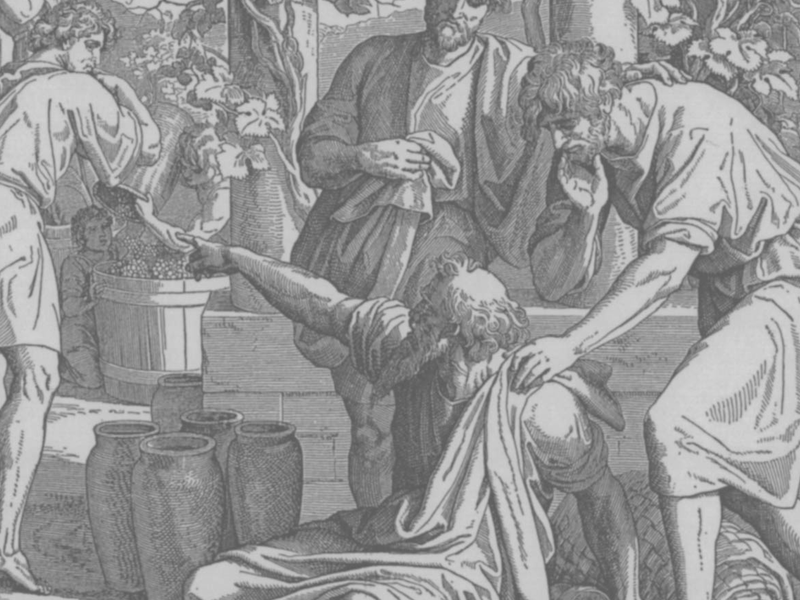
The Righteousness of Shem and Japheth As noted above, the action of Shem and Japheth was purely symbolic. They did not need to cover Noah with a garment, for he was already covered by the tent. Their action was a symbolic affirmation of Noah’s authority, a symbolic rejection of Ham’s…

by James B. JordanAugust 4, 1997

Showing page 254 of 309

See all
See all
Literature

Austen and Islam

Dale Dykema of Covenant Home Curriculum writes: “I have just finished reading Infidel by Ayaan Hirsi Ali, a Somali Moslem woman converted to Dutch Humanism. Her efforts to expose the violence of Islam, especially its oppression of women is noteworthy. Of particular interest to me was how this woman discovered…

April 23, 2008
Politics

Liberal state

The liberal state is a free state, but it’s clear from Spinoza that freedom in a liberal state is limited to unlimited freedom of thought and speech. Action is controlled by the state, including religious action: “God has no special kingdom among men except in so far as He reigns…

April 23, 2008
History

Anabaptist modernity

The genealogy is pretty clear: Pietist-leaning Collegiants, with affinities to the Anabaptists of the sixteenth century, influence the theological and political view of Spinoza, leading him to write a treatise where he defends two central Anabaptist/Pietist clams: a) he attacks the tyranny of the letter and b) he argues for…

April 23, 2008
History

After Church

Another from Hatzfeld: “The Saturday after the [President’s] plan crash was the usual choir rehearsal day at the church in Kibungo. We sang hymns in good feeling with our Tutsi compatriots, our voices still blending in chorus. On Sunday morning we returned at the appointed hour for mass; they did…

April 22, 2008
History

African Scapegoating

In his harrowing book on the Rwandan killers of 1994, Jean Hatzfeld quotes one young man: “Suddenly Hutus of every kind were patriotic brothers without any partisan discord. We were through playing around with political words. We were no longer in our each-to-his-won mood. We were doing a job to…

April 22, 2008
History

Exporting Racism

According to Emmanuel Kolini and Peter Holmes ( Christ Walks Where Evil Reigned ), the Hutus and Tutsis of Rwanda were originally ethnically indistinguishable. Prior to colonialization, the difference was “vocational,” social and economic. Tutsis were cattle herders, Hutus farmers; Tutsis were Abel, Hutus Cain. When the Belgians took over,…

April 22, 2008

Showing page 1529 of 2212

Browse by Category

In Medias Res

Your weekly digest for all things Theopolis.

Donate

Theopolis is nearly 100% donor-supported. Consider joining us on our mission.