Theopolis Logo

Writing

Explore our collection of theological essays, biblical studies, and reflections on faith and culture.

See all
last-supper
Luke

Table Talk

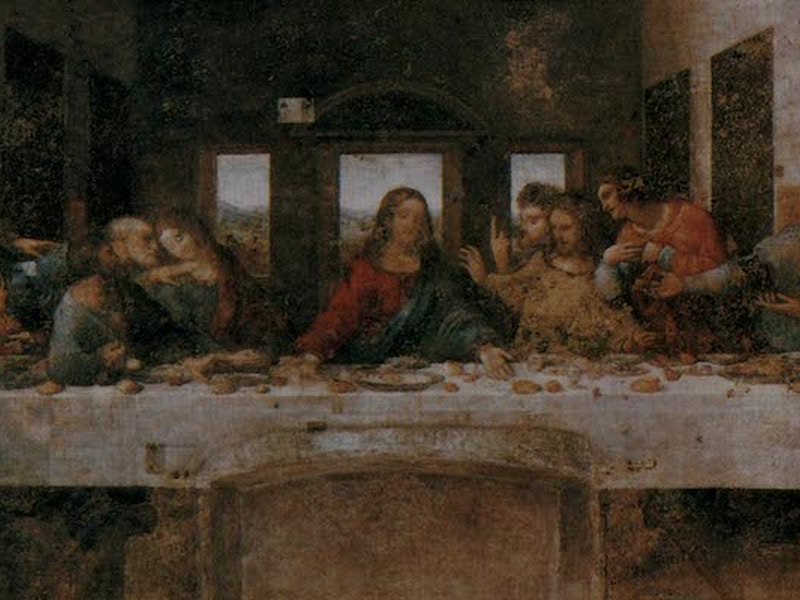
Along His journey to Jerusalem, Jesus stops frequently to have meals, three times with Pharisees (7:37-50; 11:37-54; 14:1-35). Meals were central to Jesus’ ministry. He comes “eating and drinking” (Luke 7:34). While His meals are not just for refreshment, they are opportunities for teaching the protocols of the kingdom. Meals…

by Peter LeithartApril 19, 2016

music-violin
Biblical Theology

A Musical Case for Typological Realism, (Part 4)

Time as a realm of participation can be difficult for us imaginatively to grasp. While music is a profoundly temporal art, exploring the medium of time like no other, most of our temporal experience seems decidedly unmusical in character, disjointed and unorchestrated. The form in which we naturally discover time…

by Alastair RobertsApril 14, 2016
John

Jesus' Burial Clothes

John devotes much attention to Jesus’ burial clothes. He tells us that Nicodemus brought about a hundred pounds of myrrh and aloes to spice Jesus body, and that He was bound in linen wrappings. We find out that His body and His head were wrapped separately. (John 19:39-40; 20:6-7). When…

by James B. JordanApril 12, 2016
clock
Biblical Theology

A Musical Case for Typological Realism, (Part 3)

Thinking about time in terms of music also helps us to appreciate its unity and inner relations. Henri Bergson observes our cultural habit of dividing time into discrete moments, and conceiving of these as if akin to objects in a spatial succession. [1] Against such a notion, Bergson argues for…

by Alastair RobertsApril 7, 2016
screen-shot-2016-03-31-at-9-32-11-am
Biblical Theology

A Musical Case for Typological Realism, (Part 2)

As we attend to these and other aspects of music’s temporality, Begbie suggests, we will find means by which to resist some of our habitual modern ways of conceptualizing time, most especially our tendency to conceive of time as if it were a homogeneous set of technologically quantifiable units laid…

by Alastair RobertsMarch 31, 2016
biblioteca-vasconcelos-crop
Biblical Theology

Systematic Typology (Part Three)

The Hidden Dimension In many fields of scientific study, the apparent complications and contradictions are dispelled once the internal logic is perceived. Biblical hermeneutics is no different, since the author of Creation is the Author of the Word. The Bible’s literary labyrinth radiates organically from an algorithm so simple it…

by Mike BullMarch 29, 2016

Showing page 133 of 309

See all
See all

TheoUrban Dreams

The following was delivered as a Convocation Address at the beginning of the 2017-18 Theopolis Institute's Junior Fellows Program on August 14, 2017 . Theopolis is the embodiment of a dream. Our name expresses the contents of that dream. We dream of a polis , a city. Every city is…

August 15, 2017

Hearts Prepared

Hezekiah's Passover (2 Chronicles 30) has a prominent place in the Chronicler's account of his reign. As William Johnstone points out ( 1 & 2 Chronicles ), Hezekiah's reign moves out from the temple to the city to the nations. He reopens and purifies the house of Yahweh (2 Chronicles…

August 15, 2017

Welcome to Leithart

Welcome to Leithart the blog. For those who are coming to the blog for the first time, please allow me to introduce myself. I am Peter Leithart, President of the Theopolis Institute , a study center and leadership training program based in Birmingham, Alabama. After spending several decades in the…

August 14, 2017
Gratitude

Pillars of Gratitude

Philip Watkins ( Gratitude and the Good Life ) identifies three “pillars of gratitude.” These are components of gratitude as an emotional “trait,” as opposed to gratitude expressed in response to specific good received or as an emotional state: “These are presumed to be three subordinate facets that contribute to…

August 11, 2017

Inventing “Emotion”

No one before the twentieth century, writes Robert Solomon ( The Passions ), paid serious philosophical attention to the emotions. There's a good reason for that, writes Thomas Dixon ( From Passions to Emotions ): The category “emotion” didn't exist prior to the 19th century. Between 1800 and 1850, there…

August 11, 2017
Epistemology

Dehumanizing Skepticism

God made us to be knowers. We long to know. Esther Meek argues ( Longing to Know ) that the frustration of this desire is one of the effects of skepticism and relativism: “To be human is to make sense of experience. There are voices today that would discourage the…

August 11, 2017

Showing page 153 of 2212

Browse by Category

In Medias Res

Your weekly digest for all things Theopolis.

Donate

Theopolis is nearly 100% donor-supported. Consider joining us on our mission.