Theopolis Logo

Writing

Explore our collection of theological essays, biblical studies, and reflections on faith and culture.

See all
sony-dsc
Leviticus

Cathedral Offerings

Interwoven within Leviticus’ opening offerings is a redemptive storyline meant to be rehearsed. Each offering makes a particular contribution to the retelling of the Exodus deliverance. Like learning a dance, Israel’s opening rituals recount their steps from Egypt to Sinai in a fashion meant to perpetually imprint its experience on…

by Ben LoveladyMay 15, 2025
patrick-fore-rm5dtbswzay-unsplash
Mark

Mark 7 in Color

In Capernaum, the leaders of Israel questioned Jesus in their hearts. Beside the sea, they questioned his disciples about their rabbi’s practices. They challenged Jesus in the grain fields, sought to trap him in the synagogue, tried to seize him, thinking he was mad, and accused him of being possessed.…

by George EdemaMay 13, 2025
ksenia-kudelkina-wvas_uto8wq-unsplash
Psalm-singing

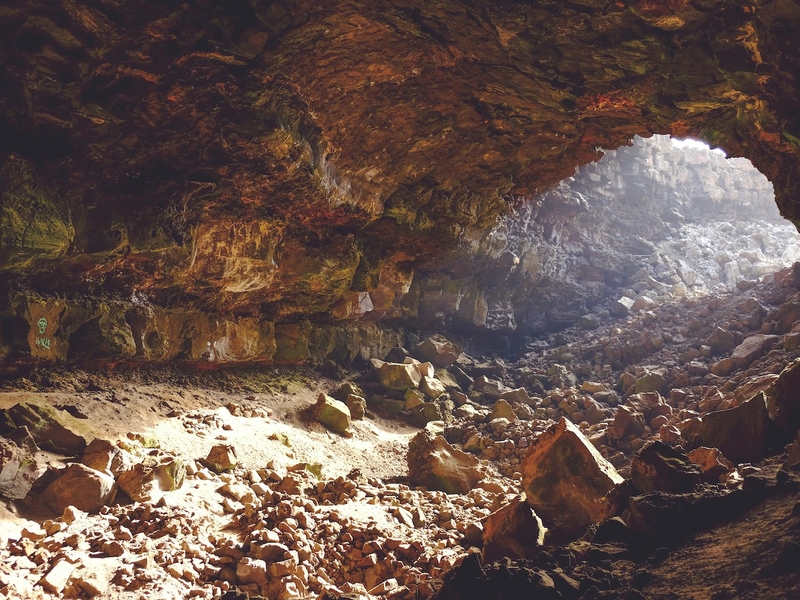
Rascals in a Cave

An essay on ministry taken from recent notes for a ‘solemn charge’ I gave our pastoral team (together with their spouses) at All Saints Honolulu, a church-plant that enters its fifth year. I. After receiving the sword of Goliath from Ahimelech at Nob, and after fleeing first to and then…

by Mark BriansMay 6, 2025
lexi-laginess-zfvr_8hdngc-unsplash
Biblical Theology

A Theology of Tombs: Burial and the Promises of God

When thinking about the book of Genesis, we often think of beginnings, the beginning of the world, humanity, the elect people of God. The word “genesis” itself means beginning. Genesis is also known as the book of promises. Genesis contains three of the major Old Testament covenants: Adamic, Noahic and…

by Matthew DarbyApril 30, 2025
michael-parulava-o2zbdcbtu8g-unsplash
Luke

Mountain, Tomb, Table: Moses and Elijah as the First Witnesses at the Empty Tomb

A Theological and Typological Commentary on Luke 24:4 In Luke 24:4, we are told that as the women arrived at the tomb on Easter morning, they encountered “two men in dazzling apparel” standing beside them. This description, on its own, may not immediately provoke questions. The traditional interpretation identifies these…

by Bruce GrimmetApril 29, 2025
Acts

Easter Meditation (Part 2)

For Part 1, click HERE . The four Gospel accounts give us their strange and wonderful historical accounts of the resurrection of Jesus. The rest of the New Testament, either explicitly or by suggestion, refers to the resurrection in every book except 3 John. Unlike the Gospel accounts, however, most…

by Ralph Allan SmithApril 22, 2025

Showing page 10 of 309

See all
See all

Arbitrary Signs

A couple of weeks ago, I mused on whether Saussure would have agreed with Barr’s rejection of the idea that different mentalities are built into different languages. In his superb book on Saussure, Jonathan Culler provides further evidence that Saussure would not agree with Barr. Culler’s argument, to put it…

April 9, 2008

Person and essence

Gilles Emery writes concerning Thomas’s view of essence and person in the Trinity, defending Thomas against Rahnerian-style charges: “There is . . . not ‘derivation’ of persons from an essential act in Thomas. This observation clarifies anew the structure of the treatise on God: the distinction of the two sections…

April 8, 2008

Greatest good

Bonaventure wrote: “Behold, therefore, and observe that the highest good is unqualifiedly that than which no greater can be thought. And this good is such that it cannot rightly be thought of as non-existing, since to exist is absolutely better than not to exist.” So far, so Anselmian. Then Bonaventure…

April 8, 2008

Branch and Stone

The “seven-eyed” stone in Zechariah 3:9 has been variously interpreted - for example, as the crown on the head of the high priest Joshua (the seven eyes being the letters engraved on the crown), as the kingdom of God, as a stone with seven “springs” (in Hebrew, the same word…

April 8, 2008
History

Holy City

Babylon was considered a holy city in the ancient world, its kings consecrated by power given by Marduk. This is the reason the Persians destroyed the temple of Esagila and deported the statue of Marduk to Persia (or, by some accounts, melted it down) when the Babylonians revolted against Persian…

April 7, 2008

Protestantism and the Postmodern Self

Postmodernism has, we are told, “decentered” the modern self, that unified, sovereign, isolated, godlike “thinking thing” discovered by Rene Descartes. The postmodern self is not single but multiple; not sovereign but controlled by external forces; not isolated but “embedded” in the world and in relation; not godlike, but human, all…

April 7, 2008

Showing page 1537 of 2212

Browse by Category

In Medias Res

Your weekly digest for all things Theopolis.

Donate

Theopolis is nearly 100% donor-supported. Consider joining us on our mission.