Theopolis Logo

Writing

Explore our collection of theological essays, biblical studies, and reflections on faith and culture.

See all
img_7543
Nevin Lectures

Fourth Annual Nevin Lectures: Robert Kolb

Why Do Siblings Feud? Presuppositions, Principles, and Practice in Reformed-Lutheran Relationships Robert Kolb, International Research Emeritus Professor for Institute for Mission Studies, Concordia Seminary, St Louis, Missouri. Lecture Topics 1) Law and Gospel: Answering the Question Posed 2) The Lord's Supper: Christ's Presence and Promise 3) Worship and Created Things:…

by Brian MoatsDecember 30, 2016

e99a2994
Advent

Exodus to Eden

From Genesis 3, West-to-East movement is always movement away from God’s presence and His house (cf. Genesis 3:24). Adam and Eve were cast out of the Garden to the east, and when Cain was later cast out he was sent to the land east of Eden. The men of Babel,…

by Peter LeithartDecember 30, 2016
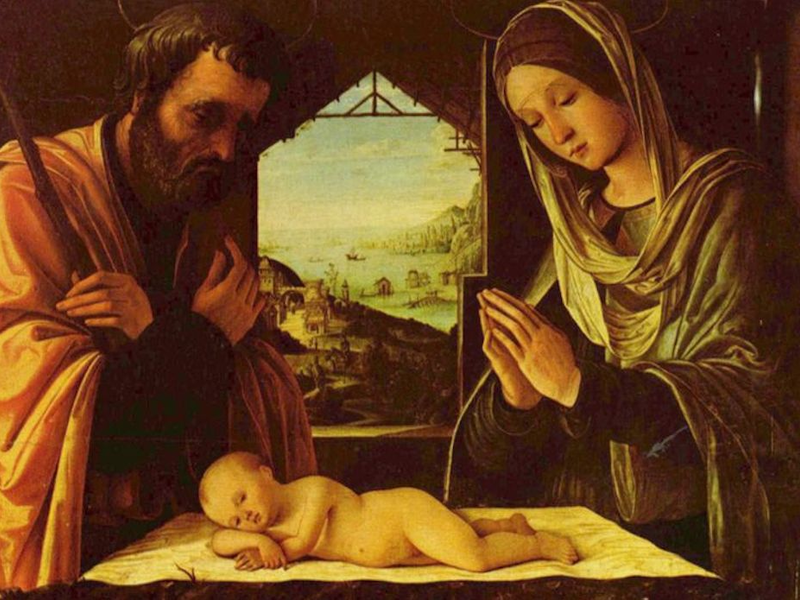
holy-family
Advent

Immanuel's Table

In his account of Jesus' birth, Matthew cites a prophecy assuring Judah of her victory over Israel and Aram. Immanuel is also a sign of the Lord’s judgment. When God comes near, He comes to bless and to curse, to save and to condemn, for deliverance and for judgment. The…

by Peter LeithartDecember 29, 2016
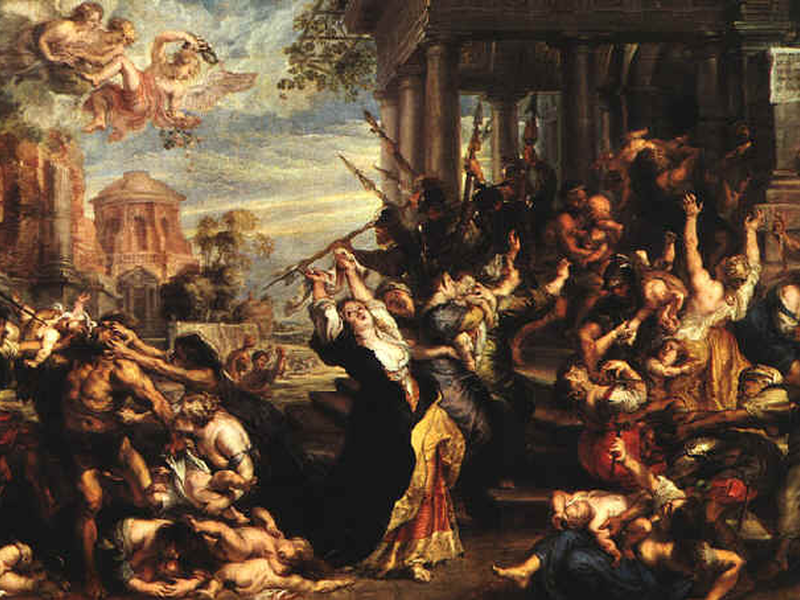
massacre2
Abortion

Holy Innocents

For many in the modern era, Christianity has been seen as an apolitical religion. Christianity is a private, spiritual religion. It's a convenient myth for modern people. After the Reformation, Europe entered a period of protracted and often vicious conflict that left large portions of Western Europe devastated. Many concluded…

by Peter LeithartDecember 28, 2016
sixteen-miles-out-d40gdcd_-he-unsplash
Advent

Christmas Light, Christmas Love

The Christmas gospel announces the coming of day. Those in darkness see a great light, as the Sun rises with healing in His wings. The light has come into the world that lightens every man, to give light to those who sit in darkness and in the shadow of death.…

by Peter LeithartDecember 27, 2016
screen-shot-2022-05-12-at-12-07-23-pm
Advent

Word Made Food

How do we know God loved the world? John tells us that He demonstrates His love in sending His Son. To paraphrase Paul, God has demonstrated His love for us in that while we were still sinners Christ was born for us. He sent His Son to take on human…

by Peter LeithartDecember 26, 2016

Showing page 119 of 309

See all
See all

Arbitrary Signs

A couple of weeks ago, I mused on whether Saussure would have agreed with Barr’s rejection of the idea that different mentalities are built into different languages. In his superb book on Saussure, Jonathan Culler provides further evidence that Saussure would not agree with Barr. Culler’s argument, to put it…

April 9, 2008

Person and essence

Gilles Emery writes concerning Thomas’s view of essence and person in the Trinity, defending Thomas against Rahnerian-style charges: “There is . . . not ‘derivation’ of persons from an essential act in Thomas. This observation clarifies anew the structure of the treatise on God: the distinction of the two sections…

April 8, 2008

Greatest good

Bonaventure wrote: “Behold, therefore, and observe that the highest good is unqualifiedly that than which no greater can be thought. And this good is such that it cannot rightly be thought of as non-existing, since to exist is absolutely better than not to exist.” So far, so Anselmian. Then Bonaventure…

April 8, 2008

Branch and Stone

The “seven-eyed” stone in Zechariah 3:9 has been variously interpreted - for example, as the crown on the head of the high priest Joshua (the seven eyes being the letters engraved on the crown), as the kingdom of God, as a stone with seven “springs” (in Hebrew, the same word…

April 8, 2008
History

Holy City

Babylon was considered a holy city in the ancient world, its kings consecrated by power given by Marduk. This is the reason the Persians destroyed the temple of Esagila and deported the statue of Marduk to Persia (or, by some accounts, melted it down) when the Babylonians revolted against Persian…

April 7, 2008

Protestantism and the Postmodern Self

Postmodernism has, we are told, “decentered” the modern self, that unified, sovereign, isolated, godlike “thinking thing” discovered by Rene Descartes. The postmodern self is not single but multiple; not sovereign but controlled by external forces; not isolated but “embedded” in the world and in relation; not godlike, but human, all…

April 7, 2008

Showing page 1537 of 2212

Browse by Category

In Medias Res

Your weekly digest for all things Theopolis.

Donate

Theopolis is nearly 100% donor-supported. Consider joining us on our mission.