Theopolis Logo

Writing

Explore our collection of theological essays, biblical studies, and reflections on faith and culture.

See all
dsc_0082
Theopolis News

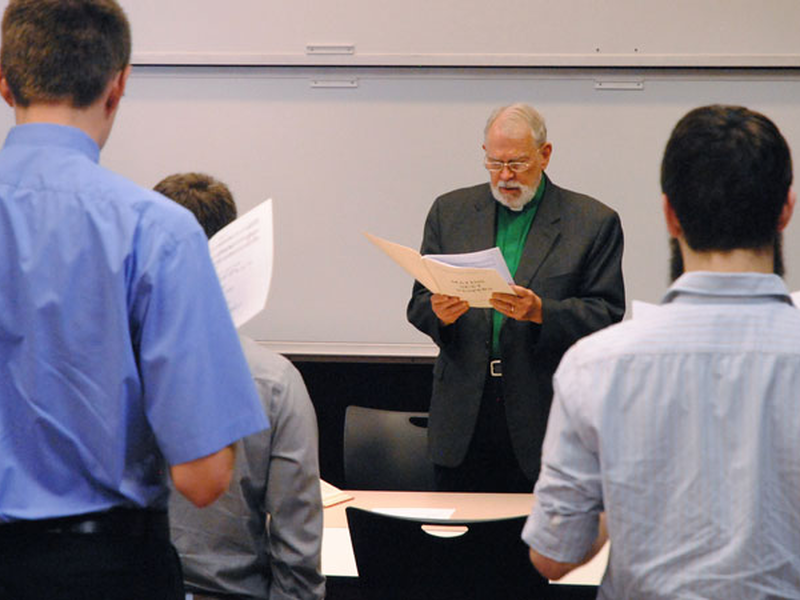
2015 Biblical Horizons Conference

This year’s Biblical Horizons conference was another great success and we would like to thank all those who were involved by helping out with the catering or opening up their homes to attendees and speakers. The talks, open-ended as they were, offered a fresh perspective and food for thought on…

by Abi KayJuly 30, 2015

little-girl
Children

Training Tools

I find myself often rehearsing conversations with my children. When the house is quiet in the late evening, and I'm standing in front of a pile of soapy dishes, I think about what I am going to say to them in certain situations. When I am driving in the car,…

by Lindsey TollefsonJuly 30, 2015
night-sky
Biblical Studies

Cosmic Language, (Part 1)

In Matthew 24:29 , Jesus employs “cosmic language,” signs in the sun, moon and stars, to predict the imminent end of the Old Covenant. His first-century audience would have recognized His allusion to the prophecy against Babylon in Isaiah 13 and understood His discourse as a condemnation of Jerusalem as…

by Mike BullJuly 28, 2015
preston-goff-xncifslw0jw-unsplash
Revelation

Triune God of Israel

The Enthroned One speaks to John (Revelation 21:6): “I am the Alpha and the Omega, the beginning and the end. I will give to the one who thirsts from the spring of the water of life without cost.” It's a little theology proper. For starters, there's the Greek version of…

by Peter LeithartJuly 23, 2015
unity-1
Homosexuality

Stealing a Page from Our Playbook

In reading about how we got into this mess, I came across a very interesting couple of paragraphs that I think the church could learn from if we are going to counter the Obergefell ruling. Prior to 2009, same sex “marriage” had gone to the ballot box thirty-one times in…

by Rich LuskJuly 21, 2015
giammarco-zeh-ljawhtg-unsplash
Literature

From Garden to Gate of Hell

In my previous essay on Macbeth , I pointed out that Shakespeare rewrote Scottish history to construct a play which points to Adam’s Fall — a man and a woman tempted by devils to steal the throne and become like gods. It is hard to imagine anyone in Shakespeare’s day…

by Ralph Allan SmithJuly 16, 2015

Showing page 147 of 309

See all
See all

Arbitrary Signs

A couple of weeks ago, I mused on whether Saussure would have agreed with Barr’s rejection of the idea that different mentalities are built into different languages. In his superb book on Saussure, Jonathan Culler provides further evidence that Saussure would not agree with Barr. Culler’s argument, to put it…

April 9, 2008

Person and essence

Gilles Emery writes concerning Thomas’s view of essence and person in the Trinity, defending Thomas against Rahnerian-style charges: “There is . . . not ‘derivation’ of persons from an essential act in Thomas. This observation clarifies anew the structure of the treatise on God: the distinction of the two sections…

April 8, 2008

Greatest good

Bonaventure wrote: “Behold, therefore, and observe that the highest good is unqualifiedly that than which no greater can be thought. And this good is such that it cannot rightly be thought of as non-existing, since to exist is absolutely better than not to exist.” So far, so Anselmian. Then Bonaventure…

April 8, 2008

Branch and Stone

The “seven-eyed” stone in Zechariah 3:9 has been variously interpreted - for example, as the crown on the head of the high priest Joshua (the seven eyes being the letters engraved on the crown), as the kingdom of God, as a stone with seven “springs” (in Hebrew, the same word…

April 8, 2008
History

Holy City

Babylon was considered a holy city in the ancient world, its kings consecrated by power given by Marduk. This is the reason the Persians destroyed the temple of Esagila and deported the statue of Marduk to Persia (or, by some accounts, melted it down) when the Babylonians revolted against Persian…

April 7, 2008

Protestantism and the Postmodern Self

Postmodernism has, we are told, “decentered” the modern self, that unified, sovereign, isolated, godlike “thinking thing” discovered by Rene Descartes. The postmodern self is not single but multiple; not sovereign but controlled by external forces; not isolated but “embedded” in the world and in relation; not godlike, but human, all…

April 7, 2008

Showing page 1537 of 2212

Browse by Category

In Medias Res

Your weekly digest for all things Theopolis.

Donate

Theopolis is nearly 100% donor-supported. Consider joining us on our mission.