Theopolis Logo

Writing

Explore our collection of theological essays, biblical studies, and reflections on faith and culture.

See all
indiana-protests
American Politics

In Whom Do We Trust?

"Put not your trust in princes, in a son of man, in whom there is no salvation. When his breath departs, he returns to the earth; on that very day his plans perish. Blessed is he whose help is the God of Jacob, whose hope is in the Lord his…

by Gregory LaughlinMarch 31, 2015
macbeth
Literature

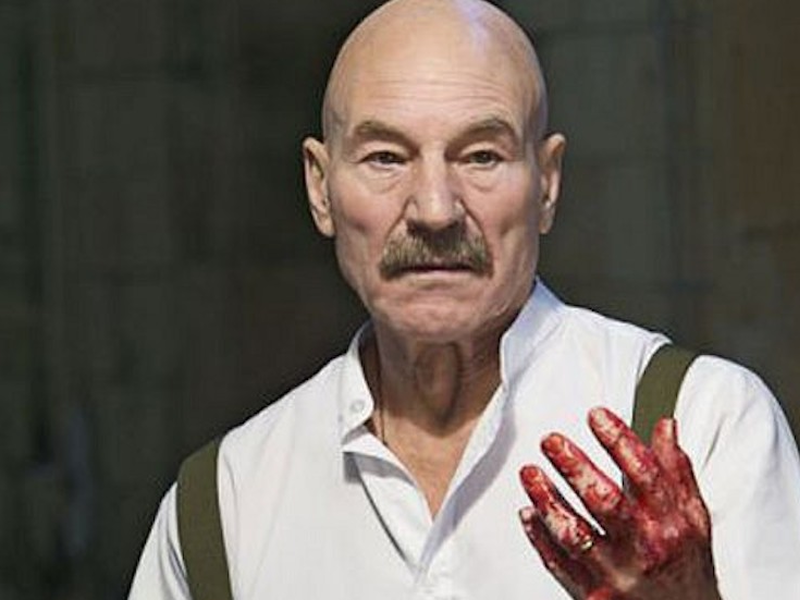
Macbeth and Nihilism

When it comes to the interpretation of Shakespeare, Harold Bloom is my favorite enemy. His writing is brilliant, his knowledge of things Shakespearean encyclopedic, and the insights he offers may puzzle, startle, or amaze, but they always educate. How then can he be an enemy? Because his anti-Christian bias is…

by Ralph Allan SmithMarch 31, 2015
london
Theopolis News

Theopolis in the UK

Theopolis President Peter Leithart spent the last week of March lecturing on worship and sacraments in England. He delivered four lectures on liturgy in Bolton, a town north of Manchester, arguing that Christian worship must be worship fit for the king and fit for the kingdom that has come in…

by TheopolisMarch 31, 2015
claudel-rheault-zvbv1aka-l4-unsplash
Creation

Heavenizing Earth: Eschatology in the Beginning

When we think about eschatology, we think immediately of Daniel, of Matthew 24-25, of 1 Corinthians 15 and 2 Thessalonians 2, and of course of Revelation. We don’t, I suspect, think about Genesis. Perhaps Genesis 3:15, with its promise of the woman’s seed, would come to mind. So might the…

by John BarachMarch 26, 2015
baptism
Baptism

Baptism as Exorcism

Alexander Schmemann in his book, Of Water and the Spirit, expounds the question that appears in nearly all the older baptismal liturgies, “Do you renounce the devil and all his works, the vain pomp and glory of the world and all sinful lusts of the flesh.” This renunciation, according to…

by Steve WilkinsMarch 24, 2015
day-2-ferguson-protests-nationwide
American Culture

Franklin Graham and the Problem of Reaction

Franklin Graham recently posted the following statement on his Facebook page: “Listen up—Blacks, Whites, Latinos, and everybody else. Most police shootings can be avoided. It comes down to respect for authority and obedience. If a police officer tells you to stop, you stop. If a police officer tells you to…

by A. K. ShaukuMarch 20, 2015

Showing page 157 of 309

See all
See all

Arbitrary Signs

A couple of weeks ago, I mused on whether Saussure would have agreed with Barr’s rejection of the idea that different mentalities are built into different languages. In his superb book on Saussure, Jonathan Culler provides further evidence that Saussure would not agree with Barr. Culler’s argument, to put it…

April 9, 2008

Person and essence

Gilles Emery writes concerning Thomas’s view of essence and person in the Trinity, defending Thomas against Rahnerian-style charges: “There is . . . not ‘derivation’ of persons from an essential act in Thomas. This observation clarifies anew the structure of the treatise on God: the distinction of the two sections…

April 8, 2008

Greatest good

Bonaventure wrote: “Behold, therefore, and observe that the highest good is unqualifiedly that than which no greater can be thought. And this good is such that it cannot rightly be thought of as non-existing, since to exist is absolutely better than not to exist.” So far, so Anselmian. Then Bonaventure…

April 8, 2008

Branch and Stone

The “seven-eyed” stone in Zechariah 3:9 has been variously interpreted - for example, as the crown on the head of the high priest Joshua (the seven eyes being the letters engraved on the crown), as the kingdom of God, as a stone with seven “springs” (in Hebrew, the same word…

April 8, 2008
History

Holy City

Babylon was considered a holy city in the ancient world, its kings consecrated by power given by Marduk. This is the reason the Persians destroyed the temple of Esagila and deported the statue of Marduk to Persia (or, by some accounts, melted it down) when the Babylonians revolted against Persian…

April 7, 2008

Protestantism and the Postmodern Self

Postmodernism has, we are told, “decentered” the modern self, that unified, sovereign, isolated, godlike “thinking thing” discovered by Rene Descartes. The postmodern self is not single but multiple; not sovereign but controlled by external forces; not isolated but “embedded” in the world and in relation; not godlike, but human, all…

April 7, 2008

Showing page 1537 of 2212

Browse by Category

In Medias Res

Your weekly digest for all things Theopolis.

Donate

Theopolis is nearly 100% donor-supported. Consider joining us on our mission.