Theopolis Logo

Writing

Explore our collection of theological essays, biblical studies, and reflections on faith and culture.

See all
shutterstock_156932447
Politics

Utopia: A Brief Critique

Utopia is often accompanied by such adjectives as impossible, unrealistic, and impractical. In spite of that, it is not so hard to find some renowned people who actually maintain that is a very helpful and practical concept. Zygmunt Bauman ( Socialism: The Active Utopia ) argues that “utopian thinking belongs…

by Bogumil JarmulakMarch 5, 2015
movie-audience
Culture

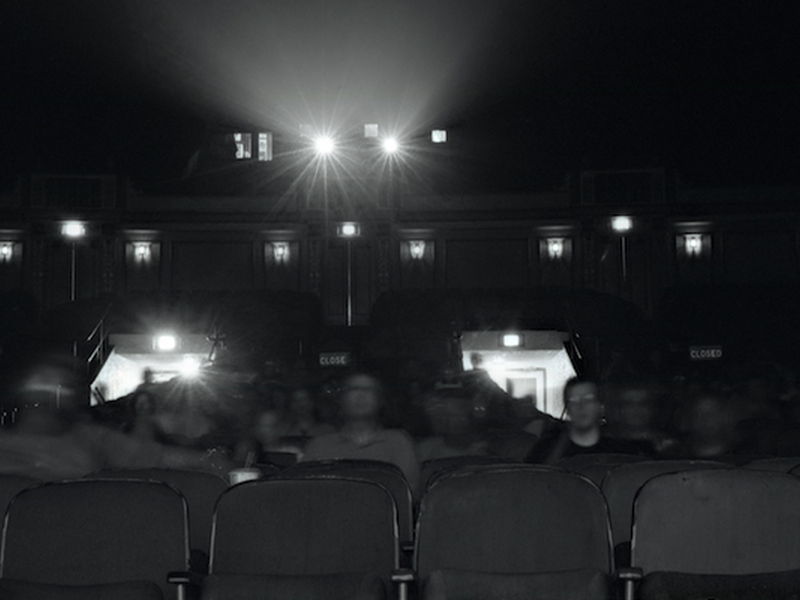
An Experiment in Film Criticism

C. S. Lewis was no fan of the cinema. He once described himself as “rather allergic to films” and after attending one he added in a letter to a friend, “Do not worry it shall not become a habit.” But though he was quick to dismiss films, his fruitful discussion…

by Remy WilkinsMarch 3, 2015
nevin
Nevin Lectures

Nevin Lectures, 2015

Noted Catholic patristic scholar, Robert Louis Wilken, delivered the second annual Nevin Lectures at Beeson Divinity School's Hodges Chapel last Friday and Saturday, February 20-21, 2015. Wilken, the Emeritus William R. Kenan, Jr., Professor of the History of Christianity at the University of Virginia, traced the influence of the writings…

by TheopolisFebruary 25, 2015
hell-bosch-2
American Culture

50 Shades of Surprise

I confess that I’m surprised by the number of Christians who are surprised by the popularity of Fifty Shades of Grey . Many are simply bewildered by the buzz the movie has generated. They shouldn’t be. This is the world we live in. More precisely, this is the country we…

by Aaron GunsaulusFebruary 24, 2015
shutterstock_222718405
Ephesians

Our New Task

The newer perspective on justification by faith advocated in various studies in Pauline Theology by N.T. Wright and others, is now utterly relevant to our historical situation. Such work cannot be merely avant garde theologizing. In Luther’s day, everyone was “in” as regards the Church and the faith. We were…

by Richard BledsoeFebruary 19, 2015
capital-second-temptation-of-christ
Church Calendar

Keep the Fast, Keep the Feast

Over the centuries, Christians have fasted for many reasons. Sometimes, the reasons have been good. The apostles and their churches fasted and prayed before selecting elders or ordaining missionaries. Christians have fasted in mourning for their sins. They have fasted and prayed to combat demons and to plead with God…

by Peter LeithartFebruary 18, 2015

Showing page 159 of 309

See all
See all

Arbitrary Signs

A couple of weeks ago, I mused on whether Saussure would have agreed with Barr’s rejection of the idea that different mentalities are built into different languages. In his superb book on Saussure, Jonathan Culler provides further evidence that Saussure would not agree with Barr. Culler’s argument, to put it…

April 9, 2008

Person and essence

Gilles Emery writes concerning Thomas’s view of essence and person in the Trinity, defending Thomas against Rahnerian-style charges: “There is . . . not ‘derivation’ of persons from an essential act in Thomas. This observation clarifies anew the structure of the treatise on God: the distinction of the two sections…

April 8, 2008

Greatest good

Bonaventure wrote: “Behold, therefore, and observe that the highest good is unqualifiedly that than which no greater can be thought. And this good is such that it cannot rightly be thought of as non-existing, since to exist is absolutely better than not to exist.” So far, so Anselmian. Then Bonaventure…

April 8, 2008

Branch and Stone

The “seven-eyed” stone in Zechariah 3:9 has been variously interpreted - for example, as the crown on the head of the high priest Joshua (the seven eyes being the letters engraved on the crown), as the kingdom of God, as a stone with seven “springs” (in Hebrew, the same word…

April 8, 2008
History

Holy City

Babylon was considered a holy city in the ancient world, its kings consecrated by power given by Marduk. This is the reason the Persians destroyed the temple of Esagila and deported the statue of Marduk to Persia (or, by some accounts, melted it down) when the Babylonians revolted against Persian…

April 7, 2008

Protestantism and the Postmodern Self

Postmodernism has, we are told, “decentered” the modern self, that unified, sovereign, isolated, godlike “thinking thing” discovered by Rene Descartes. The postmodern self is not single but multiple; not sovereign but controlled by external forces; not isolated but “embedded” in the world and in relation; not godlike, but human, all…

April 7, 2008

Showing page 1537 of 2212

Browse by Category

In Medias Res

Your weekly digest for all things Theopolis.

Donate

Theopolis is nearly 100% donor-supported. Consider joining us on our mission.