Theopolis Logo

Writing

Explore our collection of theological essays, biblical studies, and reflections on faith and culture.

See all
preston-goff-xncifslw0jw-unsplash
Catholicism

Outgrowing Protestant Adolescence

The Protestant-Catholic relationship has hardly been an untroubled one. And yet, the possibilities for various layers of reconciliation are better then at any time since the original schism 500 years ago. One of the symbols for the church that is used in Scripture is the church as a household (Ephesians…

by Richard BledsoeMay 5, 2014

screen-shot-2022-05-12-at-12-07-23-pm
Leviticus

Two Shall Become One Flesh, (Part 3): Realizing Recovering

Despite the layers of wiping, covering, and ransoming during the Day of Recoverings, true unity still has not been achieved. Divorce is still possible; God still might leave his people. Thus the Day of Recoverings must be repeated every year. The perpetual expression of unity between God and man in…

by Ryan HandermannApril 30, 2014
skyler-gerald-akljfvj5ym4-unsplash
Leviticus

Two Shall Become One Flesh, (Part 2): The Day of Recoverings

The events of Leviticus 16 are commonly known as “The Day of Atonement,” from the Hebrew phrase yom hakippurim, in Leviticus 23:27. However, it would be more accurate to say, “The Day of Atonements,” [i] since the word is plural. The plurality primarily relates to 16:33, which states five different…

by Ryan HandermannApril 29, 2014
aaron-burden-h8s0pf2rcqs-unsplash
Leviticus

Two Shall Become One Flesh, I: Atonement and Eschatology

Mary Douglas, against the common notion that primitive religious rituals were illogical and random asserts, “The analysis of ritual symbolism cannot begin until we recognize ritual as an attempt to create and maintain a particular culture … Any culture is a series of structures which comprise social forms, values, cosmology,…

by Ryan HandermannApril 23, 2014
Revelation

Seven Spirits, Seven Sisters

​Jesus holds seven stars. They are the angels of the seven churches (Revelation 1:20). For ancient readers and hearers, "seven stars" would evoke a number of associations - the seven planets, the seven stars of Ursa Major, and the seven stars that make up the Pleiades. The last makes a…

by Peter LeithartApril 21, 2014
zoltan-tasi-qxjei8fs9hg-unsplash
Biblical Theology

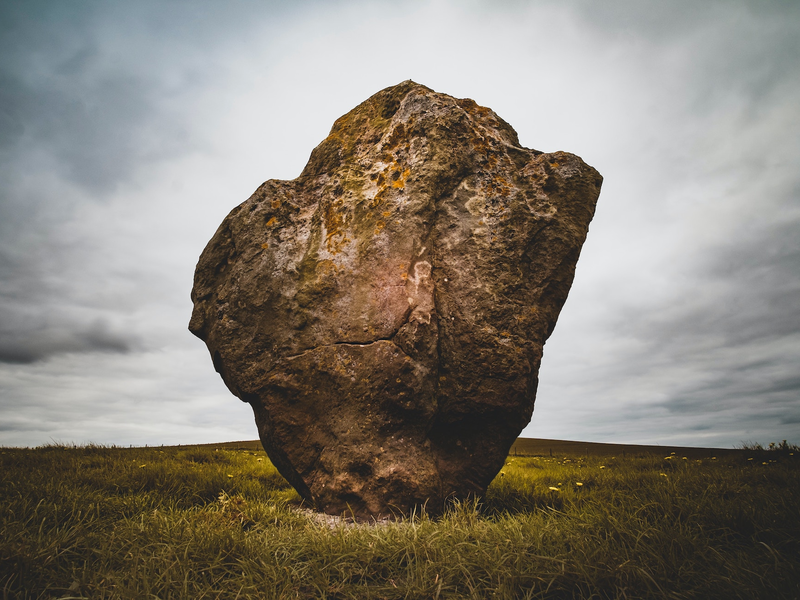
Jacob and the Stone

When he first arrives in Harran, at Paddan-Aram, the home of Laban his uncle, Jacob sees a well. Wells are mentioned frequently in Genesis. Twice Hagar finds a well in the wilderness (Genesis 16:14; 21:19). Philistines seize Abraham’s well (21:22-34), and Abraham’s chief servant finds a wife for Isaac at…

by Peter LeithartApril 16, 2014

Showing page 175 of 309

See all
See all

Arbitrary Signs

A couple of weeks ago, I mused on whether Saussure would have agreed with Barr’s rejection of the idea that different mentalities are built into different languages. In his superb book on Saussure, Jonathan Culler provides further evidence that Saussure would not agree with Barr. Culler’s argument, to put it…

April 9, 2008

Person and essence

Gilles Emery writes concerning Thomas’s view of essence and person in the Trinity, defending Thomas against Rahnerian-style charges: “There is . . . not ‘derivation’ of persons from an essential act in Thomas. This observation clarifies anew the structure of the treatise on God: the distinction of the two sections…

April 8, 2008

Greatest good

Bonaventure wrote: “Behold, therefore, and observe that the highest good is unqualifiedly that than which no greater can be thought. And this good is such that it cannot rightly be thought of as non-existing, since to exist is absolutely better than not to exist.” So far, so Anselmian. Then Bonaventure…

April 8, 2008

Branch and Stone

The “seven-eyed” stone in Zechariah 3:9 has been variously interpreted - for example, as the crown on the head of the high priest Joshua (the seven eyes being the letters engraved on the crown), as the kingdom of God, as a stone with seven “springs” (in Hebrew, the same word…

April 8, 2008
History

Holy City

Babylon was considered a holy city in the ancient world, its kings consecrated by power given by Marduk. This is the reason the Persians destroyed the temple of Esagila and deported the statue of Marduk to Persia (or, by some accounts, melted it down) when the Babylonians revolted against Persian…

April 7, 2008

Protestantism and the Postmodern Self

Postmodernism has, we are told, “decentered” the modern self, that unified, sovereign, isolated, godlike “thinking thing” discovered by Rene Descartes. The postmodern self is not single but multiple; not sovereign but controlled by external forces; not isolated but “embedded” in the world and in relation; not godlike, but human, all…

April 7, 2008

Showing page 1537 of 2212

Browse by Category

In Medias Res

Your weekly digest for all things Theopolis.

Donate

Theopolis is nearly 100% donor-supported. Consider joining us on our mission.