Theopolis Logo

Writing

Explore our collection of theological essays, biblical studies, and reflections on faith and culture.

See all
aaron-burden-h8s0pf2rcqs-unsplash
Luke

The Second Isaiah and His Message

Higher critics have, for a long time, posited a Second Isaiah to account for the structural and tone differences in the book from chapter 40 on. Now, we do believe in a Second Isaiah, but believe that the form critics have generally suffered from a lack of imagination both in…

by Richard BledsoeOctober 5, 1995

whichbooksbelongintheot
Leviticus

Getting the Translation Right

A couple of the most serious mistranslations in our Bibles are found in the book of Leviticus. The main reason these errors have gone unreformed, I believe, is because Leviticus is simply not studied often enough, so the problem has never been fully addressed. The first mistranslation is found right…

by James B. JordanOctober 4, 1995
Biblical Horizons

Prophecy and the Coming Christian Revolution

Thomas Kuhn’s book, The Structure of Scientific Revolutions , is really a parenthesis inside of the larger reality of Christian history. Progress and forward movement inside of science is a footnote to the larger and more general reality of covenant renewals in both Biblical and Christian history. The fundamental mark…

by Richard BledsoeSeptember 5, 1995
luca-tosoni-wneuvexggjg-unsplash
Biblical Horizons

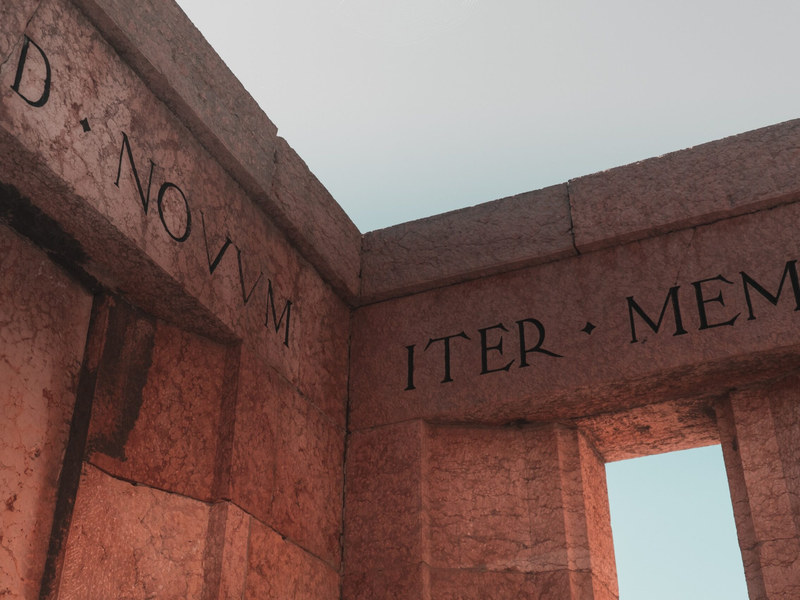
In Defense of Latin

James Jordan, in the June/July 1995 Biblical Horizons, wrote a very helpful essay, "The Great Hangover," the gist of which I entirely agree with. The theme of the essay was that the Church to move forward must shuck off the old husks of Hellenism, Rabbinism, and undo admiration for all…

by Richard BledsoeSeptember 5, 1995
pawan-sharma-vt2efwhbs-e-unsplash
Biblical Horizons

The Triune Office Reconsidered

Traditionally, the three offices in the Presbyterian churches have been teaching elder, ruling elder, and deacon. These have been associated with priest, elder, and Levite respectively. We have seen that the deacon is in fact an apprentice and assistance elder. We have also seen that Levites as well as priests…

by James B. JordanSeptember 4, 1995
jordan-wozniak-xp_agmeea6s-unsplash-2
Biblical Studies

When the Son Is Glorified

John 7:39 interprets Jesus’ offer of living water as an offer of the Spirit to those who believe, "for," John continues, "the Spirit was not yet, because Jesus was not yet glorified." John was not making an ontological statement about the Spirit, as if the Spirit did not exist until…

by Peter LeithartJuly 27, 1995

Showing page 269 of 309

See all
See all

Arbitrary Signs

A couple of weeks ago, I mused on whether Saussure would have agreed with Barr’s rejection of the idea that different mentalities are built into different languages. In his superb book on Saussure, Jonathan Culler provides further evidence that Saussure would not agree with Barr. Culler’s argument, to put it…

April 9, 2008

Person and essence

Gilles Emery writes concerning Thomas’s view of essence and person in the Trinity, defending Thomas against Rahnerian-style charges: “There is . . . not ‘derivation’ of persons from an essential act in Thomas. This observation clarifies anew the structure of the treatise on God: the distinction of the two sections…

April 8, 2008

Greatest good

Bonaventure wrote: “Behold, therefore, and observe that the highest good is unqualifiedly that than which no greater can be thought. And this good is such that it cannot rightly be thought of as non-existing, since to exist is absolutely better than not to exist.” So far, so Anselmian. Then Bonaventure…

April 8, 2008

Branch and Stone

The “seven-eyed” stone in Zechariah 3:9 has been variously interpreted - for example, as the crown on the head of the high priest Joshua (the seven eyes being the letters engraved on the crown), as the kingdom of God, as a stone with seven “springs” (in Hebrew, the same word…

April 8, 2008
History

Holy City

Babylon was considered a holy city in the ancient world, its kings consecrated by power given by Marduk. This is the reason the Persians destroyed the temple of Esagila and deported the statue of Marduk to Persia (or, by some accounts, melted it down) when the Babylonians revolted against Persian…

April 7, 2008

Protestantism and the Postmodern Self

Postmodernism has, we are told, “decentered” the modern self, that unified, sovereign, isolated, godlike “thinking thing” discovered by Rene Descartes. The postmodern self is not single but multiple; not sovereign but controlled by external forces; not isolated but “embedded” in the world and in relation; not godlike, but human, all…

April 7, 2008

Showing page 1537 of 2212

Browse by Category

In Medias Res

Your weekly digest for all things Theopolis.

Donate

Theopolis is nearly 100% donor-supported. Consider joining us on our mission.