Theopolis Logo

Writing

Explore our collection of theological essays, biblical studies, and reflections on faith and culture.

See all
noahs-ark-genesis
Biblical Horizons

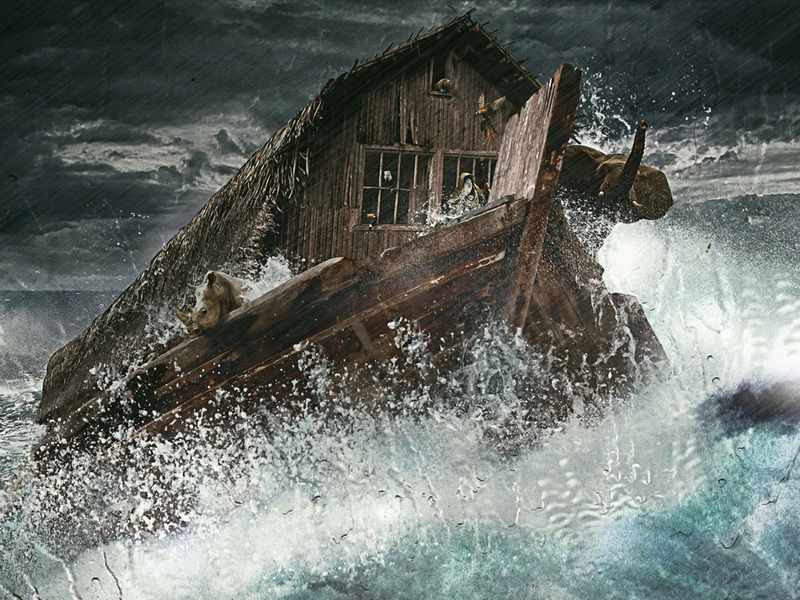
Who Rules the Land? The Meaning of the Noahic Covenant, Part 1

It is commonly held in Reformed thought that the Noahic Covenant is given to all men equally. The Noahic Covenant concerns "man," not simply "church," and establishes civil government as an institution among "mankind" — that is the theory. Sometimes the Noahic Covenant is regarded as a "covenant of common…

by James B. JordanNovember 23, 1990

tanner-mardis-xuxghzhibn4-unsplash-1-2
Daniel

The Babylonian Connection

The Fall of Jerusalem we have dated (provisionally) at 3426 Anno Mundi. In current B.C. dates this is 586 B.C. From this point forward in Biblical chronology we are required to make use of prophetic numbers rather than historical ones. Jeremiah prophesied that the captivity would last 70 years, but…

by James B. JordanNovember 16, 1990
screen-shot-2021-08-12-at-2-57-54-pm
Biblical Horizons

Taking the Situation Seriously

Evangelicals have in recent years become more interested in looking into their Bibles for wisdom to deal with modern problems. This is undoubtedly a welcome development, after many years of neglect. But there are dangers and costs as well. One of these is the tendency to fall into a modern…

by Peter LeithartOctober 19, 1990
carlo-alberto-burato-smdx3gleu_m-unsplash
Hermeneutics

The Unseen Things

Now faith is the substance of things hoped for, the evidence of things not seen (Hebrews 11:1). The famous definition of faith with which the eleventh chapter of Hebrews opens has received a number of different interpretations. The crux of the problem is the interpretation of the words translated in…

by Peter LeithartOctober 19, 1990
49980-nicolas_poussin_-_the_judgment_of_solomon_-_wga18330-800w-tn
Proverbs

Advice From a Sojourner, Part 8

15. The leech has two daughters, "Give," "Give." There are three things that will not be satisfied, Four that will not say, "Enough": 16. Sheol, And the barren womb, Earth, that is never satisfied with water, And fire that never says, "Enough." We are assuming, at least for the purposes…

by James B. JordanOctober 16, 1990
tanner-mardis-xuxghzhibn4-unsplash-1-2
Biblical Chronology

Confusion Among the Kings

As we have seen in previous installments in this series, the Old Testament is quite concerned with chronology, and carefully records chronological data for our use. For this reason, we can assume when we come to the chronology of the kings of Judah and Israel that the writers of the…

by James B. JordanOctober 2, 1990

Showing page 301 of 309

See all
See all

Arbitrary Signs

A couple of weeks ago, I mused on whether Saussure would have agreed with Barr’s rejection of the idea that different mentalities are built into different languages. In his superb book on Saussure, Jonathan Culler provides further evidence that Saussure would not agree with Barr. Culler’s argument, to put it…

April 9, 2008

Person and essence

Gilles Emery writes concerning Thomas’s view of essence and person in the Trinity, defending Thomas against Rahnerian-style charges: “There is . . . not ‘derivation’ of persons from an essential act in Thomas. This observation clarifies anew the structure of the treatise on God: the distinction of the two sections…

April 8, 2008

Greatest good

Bonaventure wrote: “Behold, therefore, and observe that the highest good is unqualifiedly that than which no greater can be thought. And this good is such that it cannot rightly be thought of as non-existing, since to exist is absolutely better than not to exist.” So far, so Anselmian. Then Bonaventure…

April 8, 2008

Branch and Stone

The “seven-eyed” stone in Zechariah 3:9 has been variously interpreted - for example, as the crown on the head of the high priest Joshua (the seven eyes being the letters engraved on the crown), as the kingdom of God, as a stone with seven “springs” (in Hebrew, the same word…

April 8, 2008
History

Holy City

Babylon was considered a holy city in the ancient world, its kings consecrated by power given by Marduk. This is the reason the Persians destroyed the temple of Esagila and deported the statue of Marduk to Persia (or, by some accounts, melted it down) when the Babylonians revolted against Persian…

April 7, 2008

Protestantism and the Postmodern Self

Postmodernism has, we are told, “decentered” the modern self, that unified, sovereign, isolated, godlike “thinking thing” discovered by Rene Descartes. The postmodern self is not single but multiple; not sovereign but controlled by external forces; not isolated but “embedded” in the world and in relation; not godlike, but human, all…

April 7, 2008

Showing page 1537 of 2212

Browse by Category

In Medias Res

Your weekly digest for all things Theopolis.

Donate

Theopolis is nearly 100% donor-supported. Consider joining us on our mission.








