Theopolis Logo

Writing

Explore our collection of theological essays, biblical studies, and reflections on faith and culture.

See all
dan-meyers-0agtpoaarte-unsplash
Matthew

Fertile Toledots

The Book of Genesis contains eleven distinct markers readily acknowledged as the toledot formula. 1 Commentator Nahum Sarna counts the ’elleh toledot to be “…one of the distinguishing characteristics of the Book of Genesis”. 2 Among translations, the noun is variously translated as “generations” (ESV, KJV), “records of the generations”…

by Ben LoveladyDecember 20, 2022

49980-nicolas_poussin_-_the_judgment_of_solomon_-_wga18330-800w-tn
Romans

Who was Judah's Wickedest King? (Kings & Romans 1:18ff)

The answer that immediately comes to mind to the question in the title is Manasseh, the son of Hezekiah. He was conceived during the extension of life that God granted Hezekiah in response to his ardent prayer on his sick bed (2 Kings 20:1-11, 21:1). His reign is summarized in…

by Mark HorneDecember 13, 2022
carlos-macias-pu0rodvqjl4-unsplash
Ecclesiology

The End of Premium Mediocre Church

Back in 2019, on a whim, I sketched out a setting for a modern fantasy story: a single coffee shop that is simultaneously present in multiple cities throughout the world: “...you know the one. Books by local authors, brochures for a walking tour of the city’s outdoor sculpture, a poetry…

by Tim NicholsDecember 6, 2022
screen-shot-2022-11-29-at-2-01-18-pm
Colossians

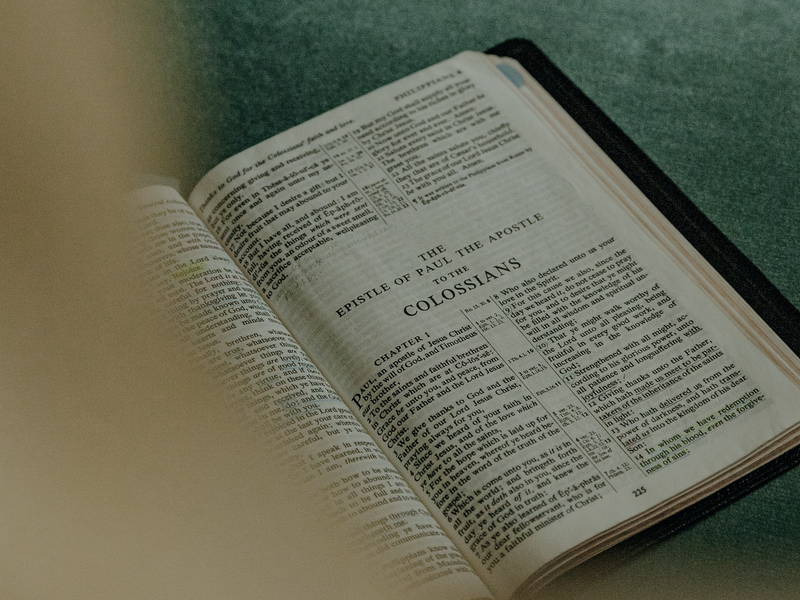
Colossians 4:2, “Watch"

Peter O’Brien’s translation of Colossians 4:2 surprised me: “Persevere in prayer as you watch for the Lord’s return, and be thankful.” 1 What is surprising about that? Well, none of my English translations mentioned “the Lord’s return” — nor does the Greek text! Translated literally, the verse just says: “In…

by Ralph Allan SmithNovember 29, 2022
cicero-denounces-catiline-painting-roman-cesare-maccari-1888
Books

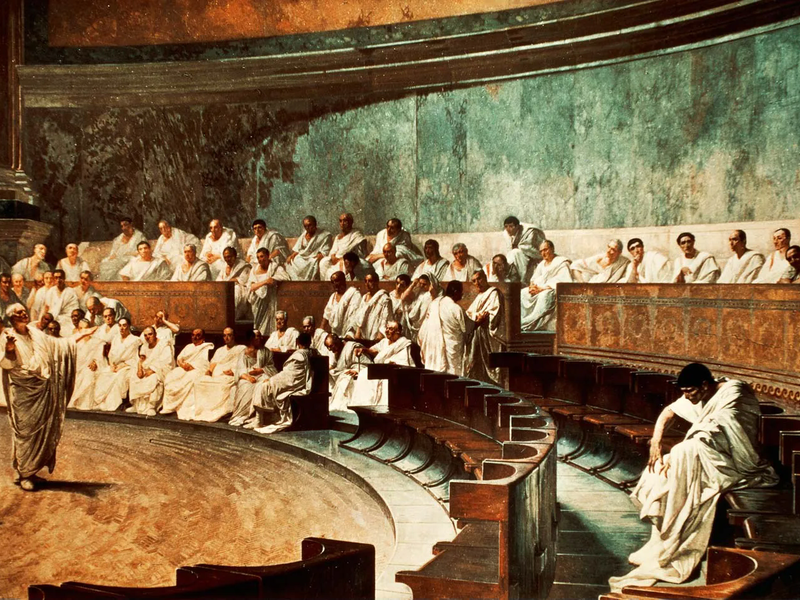
The Laws and the Cosmos: A Brief Response to Stephen Wolfe on Cicero

I Natural Law This is a brief (well, briefer than it could be) first attempt at responding to a very small section of Stephen Wolfe’s recent book The Case for Christian Nationalism . It’s partial, deeply incomplete, and does not at all address the book as a whole; it is…

by Susannah Black RobertsNovember 24, 2022
giammarco-zeh-ljawhtg-unsplash
Formation

A Bad Man Speaking Well

The scuttlebutt of the last hundred years would tell us that Albert Einstein was a horrible husband, Winston Churchill was a racist, Mother Theresa was a hypocrite, and Caravaggio a murderer. From Benjamin Britten’s boys to Gandhi’s girls, it can be depressing and confusing to hear about people of great…

by Garrett SoucyNovember 22, 2022

Showing page 37 of 309

See all
See all

Arbitrary Signs

A couple of weeks ago, I mused on whether Saussure would have agreed with Barr’s rejection of the idea that different mentalities are built into different languages. In his superb book on Saussure, Jonathan Culler provides further evidence that Saussure would not agree with Barr. Culler’s argument, to put it…

April 9, 2008

Person and essence

Gilles Emery writes concerning Thomas’s view of essence and person in the Trinity, defending Thomas against Rahnerian-style charges: “There is . . . not ‘derivation’ of persons from an essential act in Thomas. This observation clarifies anew the structure of the treatise on God: the distinction of the two sections…

April 8, 2008

Greatest good

Bonaventure wrote: “Behold, therefore, and observe that the highest good is unqualifiedly that than which no greater can be thought. And this good is such that it cannot rightly be thought of as non-existing, since to exist is absolutely better than not to exist.” So far, so Anselmian. Then Bonaventure…

April 8, 2008

Branch and Stone

The “seven-eyed” stone in Zechariah 3:9 has been variously interpreted - for example, as the crown on the head of the high priest Joshua (the seven eyes being the letters engraved on the crown), as the kingdom of God, as a stone with seven “springs” (in Hebrew, the same word…

April 8, 2008
History

Holy City

Babylon was considered a holy city in the ancient world, its kings consecrated by power given by Marduk. This is the reason the Persians destroyed the temple of Esagila and deported the statue of Marduk to Persia (or, by some accounts, melted it down) when the Babylonians revolted against Persian…

April 7, 2008

Protestantism and the Postmodern Self

Postmodernism has, we are told, “decentered” the modern self, that unified, sovereign, isolated, godlike “thinking thing” discovered by Rene Descartes. The postmodern self is not single but multiple; not sovereign but controlled by external forces; not isolated but “embedded” in the world and in relation; not godlike, but human, all…

April 7, 2008

Showing page 1537 of 2212

Browse by Category

In Medias Res

Your weekly digest for all things Theopolis.

Donate

Theopolis is nearly 100% donor-supported. Consider joining us on our mission.