Theopolis Logo

Writing

Explore our collection of theological essays, biblical studies, and reflections on faith and culture.

See all
e99a7415
Church Calendar

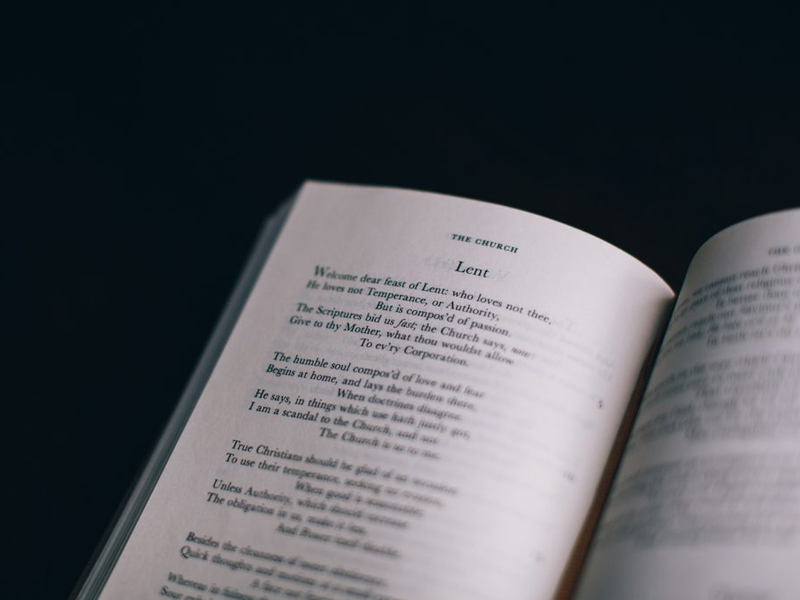
Herbertian Lessons for Lent

I live in an area where Mardi Gras is in full swing, and I can remember from my upbringing that Fat Tuesday was a last ditch effort at debauchery before the pseudo-spiritual practice of “giving something up for Lent” really began. In my youth I would give up some kind…

by Brian G DaigleFebruary 13, 2018

screen-shot-2018-02-08-at-9-58-52-am
Biblical Theology

Of Wine and Wineskins

Part 1: Observations from the Texts (Matthew 9:14-17, Mark 2:18-22, Luke 5:33-39) The precipitating context for the new wine/old wineskins discussion is people asking Jesus why His disciples did not fast. His immediate answer is that you can’t get the friends of the groom to fast at the bachelor party…

by Tim NicholsFebruary 8, 2018
businessman
Culture

True Progress

Simply, “progress” means to move forward. In that sense, a slug can progress from one end of the sidewalk to the other. But for us in twenty-first century America, progress means something else. For us, it is almost a synonym for goodness. The slug can only “progress” if the other…

by Christian LeithartFebruary 6, 2018
woman-bw
Abortion

On Abortion and Real Love

I have the privilege of being able to counsel a lot of women who are seeking abortions. I can tell you that the majority of them are seeking to end their pregnancies not because they feel like it would be a fun thing to do, but because they are scared…

by MargaretAnn HesterFebruary 1, 2018
screen-shot-2018-01-29-at-3-03-21-pm
Culture

What Pastors Could Learn From Jordan Peterson

Last night, along with a few online friends, I watched this debate on the meaning of life between William Lane Craig, Rebecca Goldstein, and Jordan Peterson, hosted by Wycliffe College. While watching it, and reflecting upon Peterson’s work more generally (about which I’ve written in the past ), I was…

by Alastair RobertsJanuary 30, 2018
greg-rakozy-ompaz-dn-9i-unsplash-2
Epistemology

Seeking Integration in a Fragmented World

I’m glad to have been invited to contribute regularly to the Theopolis Institute website. Thank you, readers, for welcoming and joining what I hope will be a venture of integration. Integration itself is what I want to explore. And for me personally, this is the shape of my current integrative…

by Esther Lightcap MeekJanuary 25, 2018

Showing page 99 of 309

See all
See all

Arbitrary Signs

A couple of weeks ago, I mused on whether Saussure would have agreed with Barr’s rejection of the idea that different mentalities are built into different languages. In his superb book on Saussure, Jonathan Culler provides further evidence that Saussure would not agree with Barr. Culler’s argument, to put it…

April 9, 2008

Person and essence

Gilles Emery writes concerning Thomas’s view of essence and person in the Trinity, defending Thomas against Rahnerian-style charges: “There is . . . not ‘derivation’ of persons from an essential act in Thomas. This observation clarifies anew the structure of the treatise on God: the distinction of the two sections…

April 8, 2008

Greatest good

Bonaventure wrote: “Behold, therefore, and observe that the highest good is unqualifiedly that than which no greater can be thought. And this good is such that it cannot rightly be thought of as non-existing, since to exist is absolutely better than not to exist.” So far, so Anselmian. Then Bonaventure…

April 8, 2008

Branch and Stone

The “seven-eyed” stone in Zechariah 3:9 has been variously interpreted - for example, as the crown on the head of the high priest Joshua (the seven eyes being the letters engraved on the crown), as the kingdom of God, as a stone with seven “springs” (in Hebrew, the same word…

April 8, 2008
History

Holy City

Babylon was considered a holy city in the ancient world, its kings consecrated by power given by Marduk. This is the reason the Persians destroyed the temple of Esagila and deported the statue of Marduk to Persia (or, by some accounts, melted it down) when the Babylonians revolted against Persian…

April 7, 2008

Protestantism and the Postmodern Self

Postmodernism has, we are told, “decentered” the modern self, that unified, sovereign, isolated, godlike “thinking thing” discovered by Rene Descartes. The postmodern self is not single but multiple; not sovereign but controlled by external forces; not isolated but “embedded” in the world and in relation; not godlike, but human, all…

April 7, 2008

Showing page 1537 of 2212

Browse by Category

In Medias Res

Your weekly digest for all things Theopolis.

Donate

Theopolis is nearly 100% donor-supported. Consider joining us on our mission.