Theopolis Logo

Writing

Explore our collection of theological essays, biblical studies, and reflections on faith and culture.

See all
screenshot-2025-01-28-at-9-02-46-am
Postmillennialism

Pessimistic Postmillennialism

For ye had compassion of me in my bonds, and took joyfully the spoiling of your goods, knowing in yourselves that ye have in heaven a better and an enduring substance. Hebrews 10:34 There is an old Puritan dictum that goes, “Sit lightly on the world.” George MacDonald places it…

by Garrett SoucyJanuary 28, 2025
1411px-diego_velazquez_065
Biblical Theology

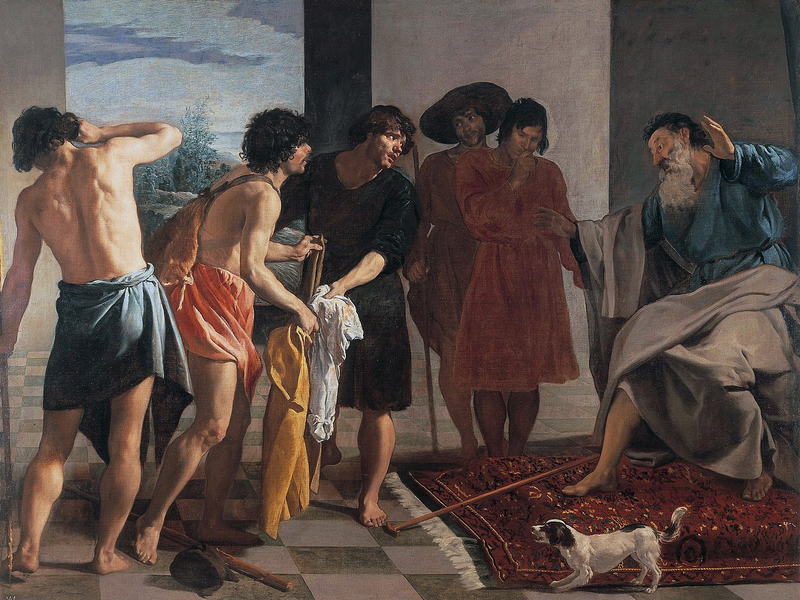
Joseph, Jesus, and the Descent to Egypt

As Genesis unfolds, God chooses a line of promise out of the nations. One by one its offshoots are peeled away as the story zooms in on God’s chosen people, Israel. First, the line of Cain is peeled away as Cain is sent out from the presence of YHWH. Though…

by James BejonJanuary 21, 2025
212342fgsdl
Exhortation

An Eschatological Vision for Ministry

The following article was an address given to Anselm Presbytery (CREC) in the Fall 2024. Grace to you and peace from God our Father and the Lord Jesus Christ. Pray with me. Father of Heavenly Lights and fount of all Wisdom, guide us we pray, by your Word and Spirit,…

by Bo CogbillJanuary 14, 2025
451199882_864804372346894_3713307977104331839_n
Books

What I Read Last Year

At my age, I’ve given up on the fantasy of “keeping up.” Much of my reading is now narrowly focused, research-reading in service of writing projects. If you want bibliography on the ontology of artifacts in Aristotle and Thomas Aquinas (which you don’t), or the purity laws of Leviticus, or…

by Peter LeithartJanuary 6, 2025
aaron-burden-qjdzyt_k8xg-unsplash
Books

What I'm Reading

I have been reading, thinking, and writing about the Internet and its effects upon our identities, communities, polities, and discourses for nearly a copy of decades. In that time, I have encountered no book as perceptive on the subject as Antón Barba-Kay’s A Web of Our Own Making: The Nature…

by Alastair RobertsDecember 31, 2024
screen-shot-2022-08-04-at-9-36-57-am
Philippians

Enemies of the Cross: Philippians 3:18

Identifying the men Paul refers to as “enemies of the cross” in Philippians 3:18 turns out to be relatively difficult. Peter O’Brian speaks of “all kinds of suggestions regarding their identity,” and offers a list of interpretations: “moral libertinists, behavioural materialists, orthodox Jews, lapsed or apostate Christians—because of persecution, Jewish…

by Ralph Allan SmithDecember 30, 2024

Showing page 14 of 309

See all
See all

Incarnation and Eschatology

Barth insists, rightly, that the incarnation doesn’t express any “need” or lack on God’s part, but is rather His free gracious response to the “radical neediness of the world.” Taking on that neediness also means taking up our cause. He comes to maintain and carry through humanity’s cause to victory.…

April 4, 2008

Self-righteousness

Protestants often claim that our sinfulness is manifest in our efforts to earn God’s favor by our works. That is true, but it doesn’t quite get at the most grievous root of sin. Barth is more penetrating in saying that our sinfulness is manifest in our efforts to usurp God’s…

April 4, 2008
Economics

Markets and people

Charles Morris (in The Trillion Dollar Meltdown ) says that one of the dangerous trends emerging in the 80s and 90s, and lurking behind the current financial crisis, is the “increased dominance of investment decisions by mathematical constructs.” He admits that “Large securities portfolios usually do behave more or less…

April 3, 2008

Translation woes

Jesus spits on the ground, makes clay of the spittle, and “applies” the clay to the eyes of a blind man (John 9; NASB). The verb behind “apply” is epichrio . Its only other usage in the NT is five verses later, where the NASB translates the very same form…

April 3, 2008

John the linguist

John is aware of linguistic diversity, translating unusual Hebrew terms into Greek (e.g., “Messiah” into “Christ,” 1:42). This is perhaps for the convenience of Greek readers, but there is likely also a theological reason: John proclaims the incarnate Word, and describes the work and words of that Word with words…

April 3, 2008

Hebrew Latin Greek

John tells us that the inscription “Jesus the Nazarene, the King of the Jews” was placed above his head on the cross in Hebrew, Latin, and Greek (19:19-20). But this is just the culmination of a text that, though written in Greek, contains a number of cross-linguistic terms. Twice in…

April 3, 2008

Showing page 1540 of 2212

Browse by Category

In Medias Res

Your weekly digest for all things Theopolis.

Donate

Theopolis is nearly 100% donor-supported. Consider joining us on our mission.