
Theopolis Logo

Writing

Explore our collection of theological essays, biblical studies, and reflections on faith and culture.

See all
freysteinn-g-jonsson-2baa-syyptk-unsplash
American Religion

Protestantism's Lost Soul

D. G. Hart’s The Lost Soul of American Protestantism vividly clarifies the differences between evangelical and Confessional Protestantism. In part the book is a manifesto for historians of American religion. Hart argues that historians of American Protestantism have operated with a simplistic binary contrast of evangelical/conservative v. liberal/progressive. At best,…

by Peter LeithartAugust 18, 2015
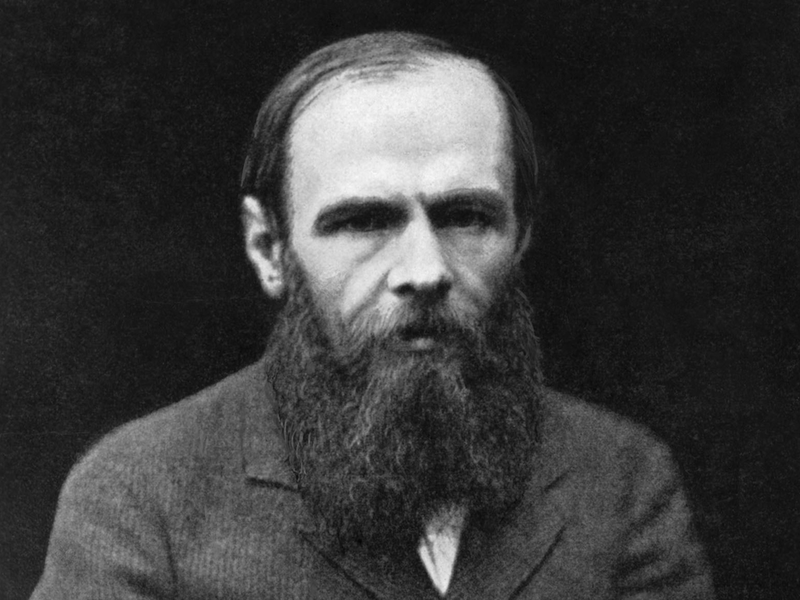
dostoyevsky
Books

The Idiot and the Limits of Compassion

Dostoyevsky’s novel, The Idiot , like his other major works, is a complex evaluation of the human condition—a juxtaposition of the innate goodness and innate evil that resides within every human heart. There is much one can say about The Idiot . I am no specialist of Russian literature, or…

by Gerald HiestandAugust 13, 2015
same-sex-celebrations-2
Homosexuality

If There is “Natural Law” How Can People Believe in Same-Sex Marriage?

At risk of violating some secret handshake agreement on some important nuance to “natural law,” I will sum up what I understand in my own words. As far as I can tell natural law is supposed to be an area of knowledge that all people should be able to agree…

by Mark HorneAugust 11, 2015
falling-star
Biblical Studies

Cosmic Language, 2

The first installment of this article may be found here . The Image of Man This brings us to a substitutionary atonement which we do understand, the fulfilment of the cruciform Tabernacle in the cross of Christ. Although Jesus’ execution was Physical and Social, it was primarily Personal . Beginning…

by Mike BullAugust 6, 2015
branagh-macbeth
Genesis

Every Noise Appalls

The first two essays in this series drew attention to the structure of the first part of Macbeth and to the way Shakespeare incorporates the Garden of Eden into his story. Macbeth , we saw, is a temptation story in which, compared to the Biblical story, the temptation itself is…

by Ralph Allan SmithAugust 4, 2015
new-jerusalem
Revelation

The Warrior and the City: A Wedding Homily

Revelation 19:6-9 Then I heard something like the voice of a great multitude and like the sound of many waters and like the sound of mighty peals of thunder, saying, “Hallelujah! For theLord our God, the Almighty, reigns. Let us rejoice and be glad and give the glory to Him,…

by Peter LeithartAugust 3, 2015

Showing page 146 of 309

See all
See all

Sermon Notes, Fourth Sunday of Lent

INTRODUCTION Jesus has already warned that His coming and the mission of the Twelve divides families (10:21), and He returns to that theme at the end of the discourse (vv. 34-36). He is the Prince of Peace, but the peace He brings comes after He brings a sword. THE TEXT…

February 25, 2008

Whispers to Shouts

Jesus whispers. He speaks dark and hidden parables. But He instructs His disciples to shout out His words on the housetops (Matthew 10:26-27). This is the history of the church in a nutshell. A Pharisee traveling to Damascus is throne from his horse and Jesus speaks to Him, and the…

February 24, 2008

Eucharistic meditation, Third Sunday of Lent

Matthew 10: I send you out as sheep in the midst of wolves. As we saw in the sermon this morning, Jesus distinguishes His disciples from the leaders of Israel as sheep from wolves. The Jewish leaders prey on the people, but the Twelve are supposed to take their place…

February 24, 2008

Exhortation, Third Sunday of Lent

We often think about mission as the thing that happens after all the really important stuff is over and done. Jesus died, rose again, ascended, and gave the Spirit, and now that everything is finished, we start the mission. Mission is announcing what has already happened. There’s some truth to…

February 24, 2008

Sacrifice

In a summary of the theology of Matthias Scheeben, von Balthasar notes that he “proposes a Christian theology of sacrifice which strongly rejects the Baroque theory of ‘destruction’ and returns to the wholly personal and spiritual concept of sacrifice of the Fathers, especially of Augustine.” Sacrifice is not essentially “destruction”…

February 23, 2008

More in heaven and earth

Pelagius agreed with Augustine that sin cannot be a substance, since God doesn’t create evil. For Pelagius, this meant that sin cannot corrupt or wound or weaken human nature since “how could that which lacks substance have weakened or changed human nature.” Augustine’s response is to quote Scripture (Psalm 40),…

February 23, 2008

Showing page 1562 of 2212

Browse by Category

In Medias Res

Your weekly digest for all things Theopolis.

Donate

Theopolis is nearly 100% donor-supported. Consider joining us on our mission.