Theopolis Logo

Writing

Explore our collection of theological essays, biblical studies, and reflections on faith and culture.

See all
e99a2994
Creation

Why Genesis Matters

Creationism is debated widely in the US, especially when it comes to teaching creation as an alternative theory of origins in public schools. Every few months, there’s another poll showing that many Americans still believe Ussher’s claim that the world was created around 4000 BC, which always elicits a contemptuous…

by Peter LeithartAugust 20, 2014

walker-percy
Books

Canary in the Coal Shaft

Walker Percy died in 1990, but his six published novels and his collections of essays are more relevant than when he wrote them. Percy was an American Dostoevsky, and that was no accident. “The European novels,” he says in a 1974 interview, “are more philosophical, more novels of ideas.” Dostoevsky,…

by Peter LeithartAugust 18, 2014
e99a0159
Children

Parenting in the Spirit

The Spirit is God’s agent for renewing the creation, for restoring bonds between nations, for knitting together people into the body of Christ. The Spirit is the renewer of the world, and the bond of all relations. That means that if you want your family to be knit together, if…

by Peter LeithartAugust 13, 2014
francesco-zxnkxnr32ng-unsplash
Revelation

Hunter Into Prey

In their basic physical sense , the verbs translated as "persecute" in the Bible mean “chase” or “pursue,” and that fits the context quite naturally. As Pharaoh “pursued” (LXX, dioko ; Heb. radaph ) Israel into the wilderness, for example, so the dragon chases the woman back to her place…

by Peter LeithartAugust 11, 2014
the-resolutions-of-jonathan-edwards-me4czyke-copy
Books

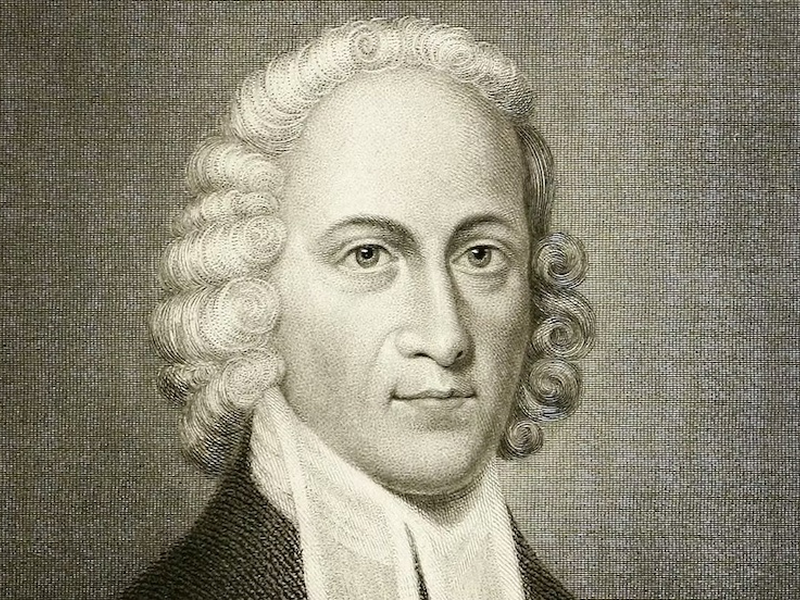
Edwards Our Contemporary

Seng-Kong Tan’s Fullness Received and Returned is a densely argued, thoroughly researched, contextually sensitive study of participation in the soteriology of Jonathan Edwards. Along the way, Tan deals with many of the central themes in Edwards’s theology. As with many recent studies of Edwards, Tan’s monograph demonstrates both Edwards’s creativity…

by Peter LeithartAugust 6, 2014
trnava-university-beeyeib-am8-unsplash
Art

Portrait of the Artist as Aesthetic Martyr

The title of James Joyce’s first novel, Portrait of the Artist as a Young Man indicates that it is a bildungsroman , a story of formation that describes the formative experiences of a poet who aspires to artistic greatness. The education described is Joyce’s own. The novel recounts the failing…

by Peter LeithartAugust 4, 2014

Showing page 170 of 309

See all
See all

Sermon Notes, Fourth Sunday of Lent

INTRODUCTION Jesus has already warned that His coming and the mission of the Twelve divides families (10:21), and He returns to that theme at the end of the discourse (vv. 34-36). He is the Prince of Peace, but the peace He brings comes after He brings a sword. THE TEXT…

February 25, 2008

Whispers to Shouts

Jesus whispers. He speaks dark and hidden parables. But He instructs His disciples to shout out His words on the housetops (Matthew 10:26-27). This is the history of the church in a nutshell. A Pharisee traveling to Damascus is throne from his horse and Jesus speaks to Him, and the…

February 24, 2008

Eucharistic meditation, Third Sunday of Lent

Matthew 10: I send you out as sheep in the midst of wolves. As we saw in the sermon this morning, Jesus distinguishes His disciples from the leaders of Israel as sheep from wolves. The Jewish leaders prey on the people, but the Twelve are supposed to take their place…

February 24, 2008

Exhortation, Third Sunday of Lent

We often think about mission as the thing that happens after all the really important stuff is over and done. Jesus died, rose again, ascended, and gave the Spirit, and now that everything is finished, we start the mission. Mission is announcing what has already happened. There’s some truth to…

February 24, 2008

Sacrifice

In a summary of the theology of Matthias Scheeben, von Balthasar notes that he “proposes a Christian theology of sacrifice which strongly rejects the Baroque theory of ‘destruction’ and returns to the wholly personal and spiritual concept of sacrifice of the Fathers, especially of Augustine.” Sacrifice is not essentially “destruction”…

February 23, 2008

More in heaven and earth

Pelagius agreed with Augustine that sin cannot be a substance, since God doesn’t create evil. For Pelagius, this meant that sin cannot corrupt or wound or weaken human nature since “how could that which lacks substance have weakened or changed human nature.” Augustine’s response is to quote Scripture (Psalm 40),…

February 23, 2008

Showing page 1562 of 2212

Browse by Category

In Medias Res

Your weekly digest for all things Theopolis.

Donate

Theopolis is nearly 100% donor-supported. Consider joining us on our mission.