Theopolis Logo

Writing

Explore our collection of theological essays, biblical studies, and reflections on faith and culture.

See all
49980-nicolas_poussin_-_the_judgment_of_solomon_-_wga18330-800w-tn
Biblical Studies

Advice From a Sojourner, Part 2

In our first essay in this series ( part 1 ), we saw that Proverbs 30 opens with a puzzle, a cryptic sentence that challenges the reader to search out a matter in order to gain understanding. "It is the glory of God to conceal a matter, but the glory…

by James B. JordanOctober 26, 1989
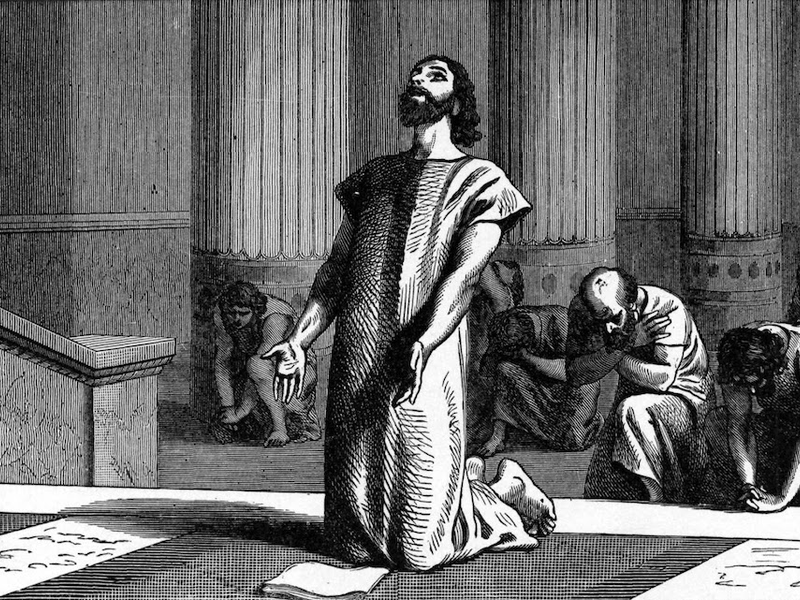
hezekiahs-prayer-2
Isaiah

Hezekiah’s Sign

The story of Hezekiah’s illness and recovery is familiar to every child who has attended Sunday School. Informed that he would die, faithful King Hezekiah pleaded in tears for a longer life. God heard his prayers and saw his tears, and promised fifteen more years. As a sign that He…

by Peter LeithartOctober 13, 1989
screen-shot-2021-08-12-at-2-57-54-pm
Proverbs

An Antidote for Yuppie Postmillennialism

1. The Blessed Hope "Looking for the blessed hope and the appearing of the glory of our great God and Savior, Christ Jesus." Titus 2:13 I was recently asked how I as a postmillennialist would preach on "The Blessed Hope." This is often a sticky question, because postmillennialists believe that…

by James B. JordanAugust 26, 1989
screen-shot-2022-01-10-at-5-52-39-pm
American Culture

Elijah’s War with Baal

1. Jeroboam and Ahab After Solomon died, the people came to his son, King Rehoboam, and asked for tax relief. Rehoboam refused to give it, and indeed told the people that he was going to tax them even more severely than his father had. At that point, with the blessing…

by James B. JordanJuly 26, 1989
screen-shot-2020-08-31-at-10-35-03-am
Biblical Horizons

The Love Feast

One aspect of truth is unity. It was Truth Incarnate who prayed for the unity of His people in John 17, which certainly makes unity a priority for them as well. In one sense, we know by faith that the Church is always invisibly unified in Christ, but there is…

by James B. JordanJune 16, 1989
screen-shot-2022-01-07-at-6-38-22-pm
Biblical Studies

The Son of Joseph, Revisited

Mr. Paul Miller of Vancouver writes that he is not persuaded by my remarks on Luke 4 on " The Son of Joseph ." He calls attention to Mark 6:1-6, where Jesus came "to His own part of the country," taught in the synagogue, and astonished many. The people said,…

by James B. JordanMay 16, 1989
See all
See all

Sermon Notes, Fourth Sunday of Lent

INTRODUCTION Jesus has already warned that His coming and the mission of the Twelve divides families (10:21), and He returns to that theme at the end of the discourse (vv. 34-36). He is the Prince of Peace, but the peace He brings comes after He brings a sword. THE TEXT…

February 25, 2008

Whispers to Shouts

Jesus whispers. He speaks dark and hidden parables. But He instructs His disciples to shout out His words on the housetops (Matthew 10:26-27). This is the history of the church in a nutshell. A Pharisee traveling to Damascus is throne from his horse and Jesus speaks to Him, and the…

February 24, 2008

Eucharistic meditation, Third Sunday of Lent

Matthew 10: I send you out as sheep in the midst of wolves. As we saw in the sermon this morning, Jesus distinguishes His disciples from the leaders of Israel as sheep from wolves. The Jewish leaders prey on the people, but the Twelve are supposed to take their place…

February 24, 2008

Exhortation, Third Sunday of Lent

We often think about mission as the thing that happens after all the really important stuff is over and done. Jesus died, rose again, ascended, and gave the Spirit, and now that everything is finished, we start the mission. Mission is announcing what has already happened. There’s some truth to…

February 24, 2008

Sacrifice

In a summary of the theology of Matthias Scheeben, von Balthasar notes that he “proposes a Christian theology of sacrifice which strongly rejects the Baroque theory of ‘destruction’ and returns to the wholly personal and spiritual concept of sacrifice of the Fathers, especially of Augustine.” Sacrifice is not essentially “destruction”…

February 23, 2008

More in heaven and earth

Pelagius agreed with Augustine that sin cannot be a substance, since God doesn’t create evil. For Pelagius, this meant that sin cannot corrupt or wound or weaken human nature since “how could that which lacks substance have weakened or changed human nature.” Augustine’s response is to quote Scripture (Psalm 40),…

February 23, 2008

Showing page 1562 of 2212

Browse by Category

In Medias Res

Your weekly digest for all things Theopolis.

Donate

Theopolis is nearly 100% donor-supported. Consider joining us on our mission.