Theopolis Logo

Writing

Explore our collection of theological essays, biblical studies, and reflections on faith and culture.

See all
max-kukurudziak-qbc3zmxw0g8-unsplash
History

Report from Ukraine

We lost Crimea. That is very clear. Putin proved he was not lying when he said he would place women and children ahead of his soldiers to storm Ukrainian military bases. Russian soldiers did exactly that with women (some who volunteered and some who were forced). Russia now occupies all…

by San SanychMarch 28, 2014

screenshot-2023-09-21-at-3-59-23-pm
Church Calendar

God Gone Silent

Sound is an indicator of life and energy. “Sound signals the present use of power, since sound must be in active production to exist at all.” Things don’t have to be alive to make themselves visible, and “a primitive hunter can see, feel, smell, and taste an elephant when the…

by Peter LeithartMarch 26, 2014
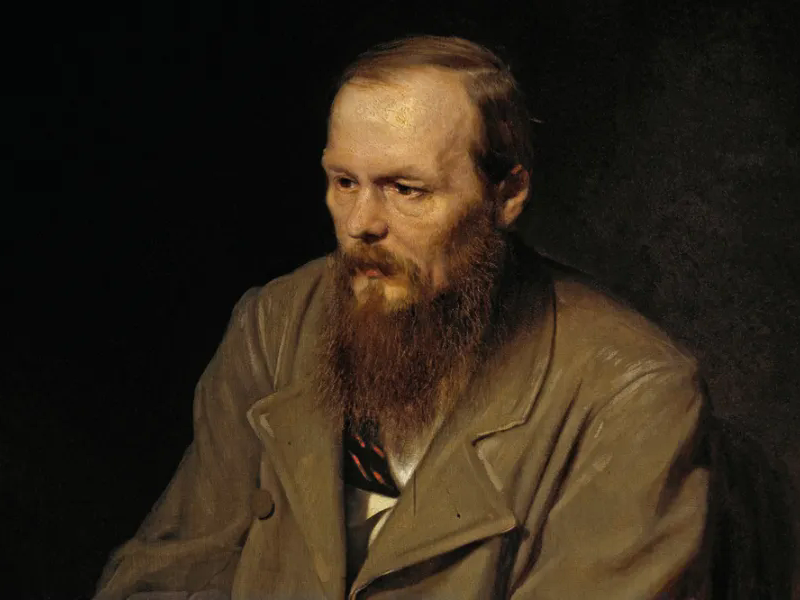
web-lead-image_final_dostoevsky
Books

Dostoevsky the Liberal

In the most famous section of his best-known novel, Dostoevsky’s Ivan Karamazov brings forward his case against God. He opens with a horrific litany of outrages against children. Turkish soldiers make a baby laugh and then shoot a pistol into his face. A little girl is beaten, thrashed, kicked by…

by Peter LeithartMarch 24, 2014
kelly-sikkema-ggs0_g6wi-i-unsplash
Epistemology

Subsidiary-Focal Integration and Liturgy

​At the heart of Esther Lightcap Meek's splendid ​Little Manual for Knowing is a concept she picked up from Michael Polanyi, "subsidiary-focal integration." The concept begins from the insight that all our knowing, all our experience, is double. We focus on something, but we are capable of "indwelling" that focal…

by Peter LeithartMarch 19, 2014
engin-akyurt-uz9qpvbol0e-unsplash
Revelation

White Stone

Jesus promises the overcomers of Pergamum "hidden manna" and a "white stone." The hidden manna is often linked with the manna stashed away in the ark of the covenant. The white stone has proved more elusive. Exodus tells us that manna was white (Exodus 16:31) and like bdellium (Numbers 11:7),…

by Peter LeithartMarch 17, 2014
226961fgsdl
Leviticus

A Theology of Festivity

Leviticus 23 begins with a reference to “Yahweh’s appointed times” ( mo’ade-YHWH ). Mo’ed is the common term for the feasts of Israel. A few dimensions to this term. First, it means “appointed time” or “designated time.” It is a time set by Yahweh. Yahweh has claimed certain times as…

by Peter LeithartMarch 12, 2014

Showing page 177 of 309

See all
See all

Pentecost

Citing Deut 16:9-12 and the Gezer Calendar, K. Lawson Younger says in NIV Application commentary on Ruth, “the time period from the beginning of the barley harvest to the end of the wheat harvest was normally seven weeks, concluding at Pentecost.” Presumably, this was the festival that Boaz was celebrating…

February 20, 2008
Theology

Fall toward nothingness

Augustine is sometimes accused of ontologizing the effects of sin. City of God 14.13 seems to support this: “When [Adam] turned toward himself . . . his being became less complete than when he clung to Him Who exists supremely. Thus, to forsake God and to exist in oneself -…

February 18, 2008
Theology

Eschatology against the Stoics

Augustine rebuts Stoic notions of apatheia and eupatheia in Book 14 of the city of God. He says that Christian experience even those emotions that Stoics denounce - distress and pain and desire - and he roots these experiences in the fact that Christians live in the present age “because…

February 18, 2008
Literature

Hamlet the hero

A colleague, Jayson Grieser, pointed me to Paul Cantor’s little book on Hamlet a few months ago, but I have only recently been able to look at it. It’s superb. Cantor argues that the play dramatizes a conflict between the classical heroism revived by the Renaissance and the Christian constraints…

February 18, 2008
Economics

Augustine the Marginalist

In City of God, 11.16, Augustine observes the reality of marginal utility: “So far as the freedom of judgment is concerned . . . the reason of the thoughtful man is far different from the necessity of one who is in need, or the desire of the pleasure-seeker. For reason…

February 18, 2008

Sermon notes, Third Sunday of Lent

INTRODUCTION Jesus gives the Twelve authority to heal, raise the dead, cleanse lepers, cast out demons. He does not give them authority to escape persecutors. Persecution is an inevitable part of the mission of the Crucified. THE TEXT “Behold, I send you out as sheep in the midst of wolves.…

February 18, 2008

Showing page 1566 of 2212

Browse by Category

In Medias Res

Your weekly digest for all things Theopolis.

Donate

Theopolis is nearly 100% donor-supported. Consider joining us on our mission.