Theopolis Logo

Writing

Explore our collection of theological essays, biblical studies, and reflections on faith and culture.

See all
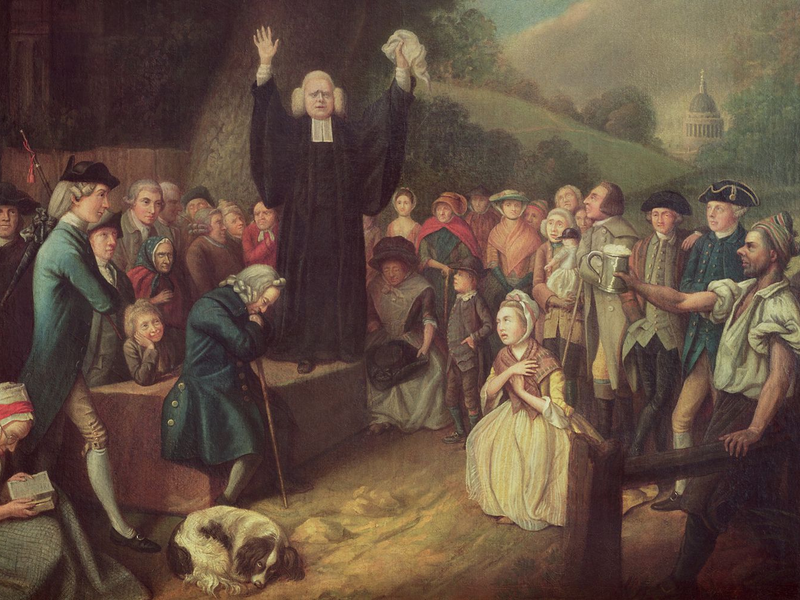
georgewhitefield-71901184-de237affa7764d6e95818a589190adf7
Biblical Horizons

The Great Awakening: A Critique

The following material was published in 1984 in Christianity and Civilization No. 4: The Reconstruction of the Church, pages 6-9, and are reprinted here as grist for the mill of the discussion of “evangelicalism.” Footnotes have not come through, of course. Though this material is offered in connection with a…

by James B. JordanJune 19, 2012

aaron-burden-1ebsmyrau-s-unsplash
Biblical Horizons

Concerning Regeneration

I wrote my beef about “regeneration” a decade ago, and I don’t really see the need to reopen what I think now. (Jordan, Thoughts on Sovereign Grace and Regeneration: Some Tentative Explorations. Biblical Horizons Occasional Paper No. 32) But. My pal Doug Wilson has been writing a series of essays…

by James B. JordanJune 19, 2012

jelleke-vanooteghem-gnxb59lgu1m-unsplash
John

Born From Above: Some Notes on John 3

Nicodemus’s conversation with Jesus in John 3:1-15 is sometimes regarded as an illustration of the tremendous stupidity of the Jews of our Lord’s day. Nicodemus is treated as just some guy who comes to Jesus at night because he doesn’t want to get into trouble by being seen with Him.…

by James B. JordanJune 18, 2012
screen-shot-2020-12-03-at-1-47-33-pm
Biblical Horizons

Is James B. Jordan an “Evangelical”?

During the last couple of weeks, Douglas Wilson has issued several posts over on his Blog and Mablog blog that deal with “evangelicalism” and who is and who is not an “evangelical.” In the course of these postings, Doug has written that while I am a fine Christian who has…

by James B. JordanJune 18, 2012
karsten-wurth-imegmbunara-unsplash
Biblical Horizons

Three Issues in Regard to Eastern Orthodoxy

Here are three issues in regard to the Eastern Church. First, here is the quote from Bavinck’s The Doctrine of God, page 317, Banner of Truth edition (1977) under the heading of Inter-Personal Relations. The Greeks derived the unity of God’s essence and the unity of the persons not from…

by Richard BledsoeJune 14, 2012
screen-shot-2020-12-03-at-1-47-33-pm
Biblical Horizons

Clerical Garb

Elsewhere on the blogosphere men are mocking the wearing of collars and albs to lead in worship. When it is pointed out that historically Reformed ministers have worn daily uniforms and robes in worship, it is replied that that was then and this is now. We ought to conform to…

by James B. JordanJune 9, 2012

Showing page 200 of 309

See all
See all
History

Liminality and the sacred

Milbank sums up Victor Turner by saying that “the sublime is no longer outside the social, at the margin of individuality [as in Weber’s charisma], and nor is it the social whole [as in Durkheim]: instead it is situated within society in the constant negotiation of dangerous passages. Paradoxically, it…

February 12, 2008

Cur Deus Homo

City of God 10.6 is a rich and important, though obscure, explanation of what might be called the sociology of sacrifice. At the beginning of the chapter, Augustine defines sacrifice as any act we perform in order to be united to God in holy society. Acts of mercy are sacrifices,…

February 11, 2008

Augustine against envy

Dodaro again: “Only when it is understood by believers that God mediates goodness to human beings directly, without intermediary spiritual beings such as angels - and certainly not through priests - is it possible to put an end to spiritual rivalries.”

February 11, 2008

High Church Donatists

The Donatists are usually seen as the sectarians of the early church but Robert Dodaro points out that for Augustine their sectarianism derived from their clericalism: “Augustine explains that cultic acts which remit sins, such as baptism, are in reality performed by Christ, who acts through Christian priests. Augustine’s frequent…

February 11, 2008

Sermon notes, Second Sunday of Lent

INTRODUCTION Like Moses (Numbers 27:17), Jesus sees that Israel is like sheep without a shepherd (Matthew 9:36), a field white to harvest. Moses gave authority to Joshua to lead Israel in and out in conquest; Jesus gives authority to the Twelve to carry out another conquest (10:1). THE TEXT “And…

February 11, 2008

Eucharistic exhortation, First Sunday of Lent

Matthew 9:36: And seeing the multitudes, He felt compassion for them, because they were harassed and thrown down like sheep having no shepherd. I mentioned in the sermon that the phrase “sheep without a shepherd” appears in the prophecy of Micaiah who warns Ahab that he will die if he…

February 10, 2008

Showing page 1570 of 2212

Browse by Category

In Medias Res

Your weekly digest for all things Theopolis.

Donate

Theopolis is nearly 100% donor-supported. Consider joining us on our mission.