Theopolis Logo

Writing

Explore our collection of theological essays, biblical studies, and reflections on faith and culture.

See all
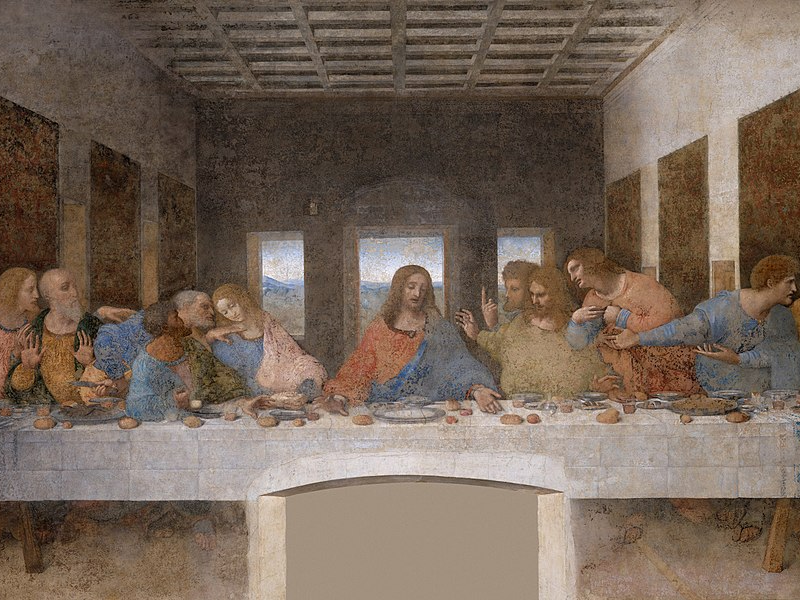
the_last_supper_-_leonardo_da_vinci_-_high_resolution_32x16-2
Biblical Horizons

Was the Last Supper a Passover?

Some readers of my essay, “ Strange and Glorious New Rites ,” have written to object that I have strained a gnat and swallowed a camel. I have strained out the gnat of a possible link to the memorial bread of the minchah (Lev. 2), while overlooking the camel that…

by James B. JordanMarch 22, 2011

screenshot-2023-09-19-at-10-48-12-am
Biblical Horizons

Planetary Judgments

In his lectures on Comparative Religion, Eugen Rosenstock-Huessy points to five fundamental gods that were over ancient man and still can dominate us today, and which must be respected. When we sin, we respect these gods more than we respect the Creator, disobeying the First Word: “You will have no…

by James B. JordanMarch 22, 2011

timothy-eberly-djj49s6ud2o-unsplash
Biblical Studies

Notes on the Book of Judges

A. Israel’s failure to hold land against the Canaanites. Progressive compromise, leading to judgment. 1:1–2:5. B. Israel’s idolatry, the cycle of judges, and war as God’s chastisement. 2:6–3:6. C. Northern Gentiles (Mesopotamia), and Othniel. 3:7-11. D. Lot: Moab, and Ehud. 3:12-13. E. Minor judge: Shamgar. 3:31. F. Canaanites opposed. Women…

by James B. JordanMarch 21, 2011
briana-tozour-mrfapsuyy8a-unsplash
Biblical Horizons

Principalities and Powers, (Part 2)

The great question for the emerging East, for Asia and other awakening third world areas, for an emerging nation like China is, “what fate awaits them?” They are now emerging from an analogous paganism that the West emerged from centuries ago. Here an amazing quotation from David Aikman, the Time…

by Richard BledsoeMarch 15, 2011
sinitta-leunen-dvibhmzsy8e-unsplash
Colossians

The Principalities and Powers, Part I

Paul contends that with the death of Christ on the Cross, there was an overcoming of the Principalities and the Powers (Col. 2:15). A great deal has been written on this subject over the last 60 years. What was for a long time either ignored, or regarded by liberal scholars…

by Richard BledsoeMarch 10, 2011
jimpreaching
Biblical Horizons

Eating and Drinking Together

One of the odd customs that has arisen in the 20th century is that many evangelical churches warp the rites of the Lord’s Supper by insisting that everyone wait so that they eat and drink together. Supposedly this is to emphasize the unity of the Church. This practice has no…

by James B. JordanMarch 3, 2011

Showing page 205 of 309

See all
See all
History

Liminality and the sacred

Milbank sums up Victor Turner by saying that “the sublime is no longer outside the social, at the margin of individuality [as in Weber’s charisma], and nor is it the social whole [as in Durkheim]: instead it is situated within society in the constant negotiation of dangerous passages. Paradoxically, it…

February 12, 2008

Cur Deus Homo

City of God 10.6 is a rich and important, though obscure, explanation of what might be called the sociology of sacrifice. At the beginning of the chapter, Augustine defines sacrifice as any act we perform in order to be united to God in holy society. Acts of mercy are sacrifices,…

February 11, 2008

Augustine against envy

Dodaro again: “Only when it is understood by believers that God mediates goodness to human beings directly, without intermediary spiritual beings such as angels - and certainly not through priests - is it possible to put an end to spiritual rivalries.”

February 11, 2008

High Church Donatists

The Donatists are usually seen as the sectarians of the early church but Robert Dodaro points out that for Augustine their sectarianism derived from their clericalism: “Augustine explains that cultic acts which remit sins, such as baptism, are in reality performed by Christ, who acts through Christian priests. Augustine’s frequent…

February 11, 2008

Sermon notes, Second Sunday of Lent

INTRODUCTION Like Moses (Numbers 27:17), Jesus sees that Israel is like sheep without a shepherd (Matthew 9:36), a field white to harvest. Moses gave authority to Joshua to lead Israel in and out in conquest; Jesus gives authority to the Twelve to carry out another conquest (10:1). THE TEXT “And…

February 11, 2008

Eucharistic exhortation, First Sunday of Lent

Matthew 9:36: And seeing the multitudes, He felt compassion for them, because they were harassed and thrown down like sheep having no shepherd. I mentioned in the sermon that the phrase “sheep without a shepherd” appears in the prophecy of Micaiah who warns Ahab that he will die if he…

February 10, 2008

Showing page 1570 of 2212

Browse by Category

In Medias Res

Your weekly digest for all things Theopolis.

Donate

Theopolis is nearly 100% donor-supported. Consider joining us on our mission.