Theopolis Logo

Writing

Explore our collection of theological essays, biblical studies, and reflections on faith and culture.

See all
rembrandt-main
Art

The Second Word V: On Images and Art, Part 3

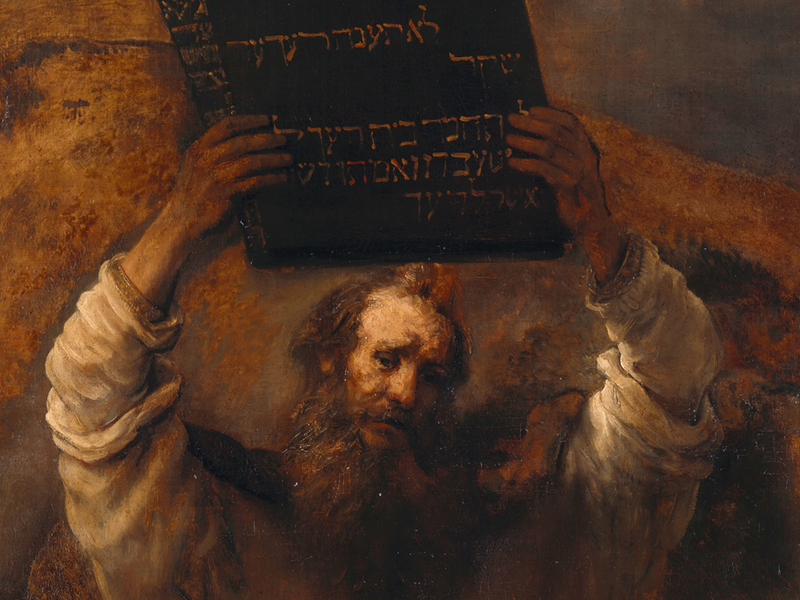
The Failure of the Church Yet a third factor played an important role in this historical development, in addition to the imperial adoption of icons and the rise of the icons of the holy man. Brown writes: "The great Christian basilicas of the previous centuries tended to stand empty, except…

by James B. JordanSeptember 4, 1998

screenshot-2023-09-11-at-11-34-45-am
Biblical Horizons

Patriarchal Dominion

The three large patriarchal narratives of Genesis concern the three aspects of the cosmos: matter, space, and time. Over these three is man given dominion. Lucifer was originally appointed to train man in this dominion, but he chose to lead man into rebellion instead. Thus, the Angel of Yahweh replaced…

by James B. JordanAugust 4, 1998
trnava-university-beeyeib-am8-unsplash
Biblical Horizons

The Case Against Western Civilization, Part 6

Part 6: Living in a Dying World (continued) The "Trivium" (continued) The five stages of education are simply the five stages of the covenant as God administers it in human life and history, and in the liturgy of covenant renewal: First, God announces Himself. "I am Yahweh Your God." He…

by James B. JordanAugust 4, 1998
screen-shot-2022-05-12-at-12-07-23-pm
Biblical Studies

Re-creation in the Ascension Offering

The following essay is tentative and exploratory, offered for your consideration. It seems to me that the ritual of the Ascension Offering (incorrectly translated as Burnt Offering) of Leviticus 1 is a symbolic recapitulation of Genesis 1, which thereby portrays the sacrificial ritual as way of moving from a fallen…

by James B. JordanJuly 4, 1998
Biblical Horizons

The Framework Hypothesis: A Gnostic Heresy

Just as the vast majority of evangelical Christians in America today are Arminian and Baptist, so the vast majority do not believe in a creation around 4000 BC. I don’t expect any of these three situations to change anytime soon. Powerful presuppositions are at work in all three instances, along…

by James B. JordanJuly 4, 1998
picture-mosaic-cathedral-jesus-christ-cefalu-italy-copy
Art

The Second Word V: On Images and Art, Part 2

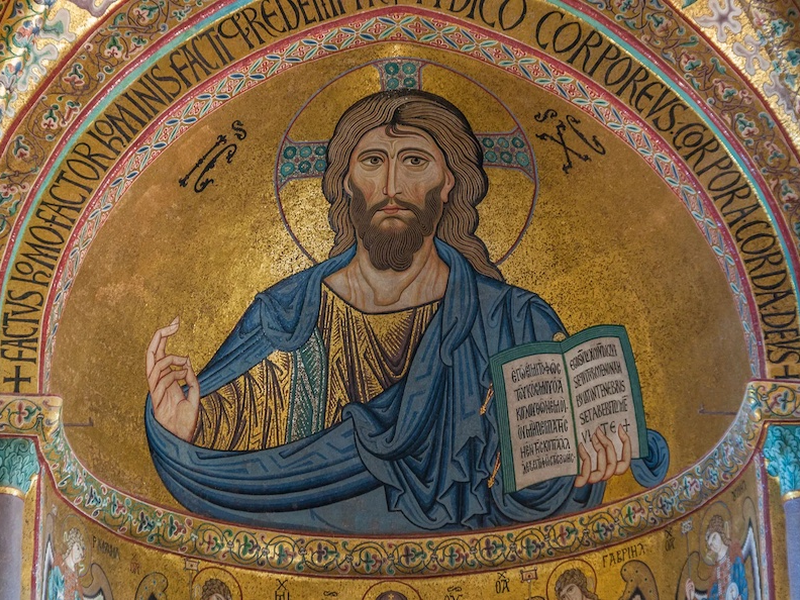
The Iconoclastic Controversy Continuing Pagan Influence How did images creep in? To begin with, there was in the post-Constantinian Church a concerted effort on the part of the semi-pagans to interpret Christianity in essentially pantheistic terms. The heretics put God and man on a continuum of "being," so that God…

by James B. JordanJuly 4, 1998

Showing page 248 of 309

See all
See all
History

Liminality and the sacred

Milbank sums up Victor Turner by saying that “the sublime is no longer outside the social, at the margin of individuality [as in Weber’s charisma], and nor is it the social whole [as in Durkheim]: instead it is situated within society in the constant negotiation of dangerous passages. Paradoxically, it…

February 12, 2008

Cur Deus Homo

City of God 10.6 is a rich and important, though obscure, explanation of what might be called the sociology of sacrifice. At the beginning of the chapter, Augustine defines sacrifice as any act we perform in order to be united to God in holy society. Acts of mercy are sacrifices,…

February 11, 2008

Augustine against envy

Dodaro again: “Only when it is understood by believers that God mediates goodness to human beings directly, without intermediary spiritual beings such as angels - and certainly not through priests - is it possible to put an end to spiritual rivalries.”

February 11, 2008

High Church Donatists

The Donatists are usually seen as the sectarians of the early church but Robert Dodaro points out that for Augustine their sectarianism derived from their clericalism: “Augustine explains that cultic acts which remit sins, such as baptism, are in reality performed by Christ, who acts through Christian priests. Augustine’s frequent…

February 11, 2008

Sermon notes, Second Sunday of Lent

INTRODUCTION Like Moses (Numbers 27:17), Jesus sees that Israel is like sheep without a shepherd (Matthew 9:36), a field white to harvest. Moses gave authority to Joshua to lead Israel in and out in conquest; Jesus gives authority to the Twelve to carry out another conquest (10:1). THE TEXT “And…

February 11, 2008

Eucharistic exhortation, First Sunday of Lent

Matthew 9:36: And seeing the multitudes, He felt compassion for them, because they were harassed and thrown down like sheep having no shepherd. I mentioned in the sermon that the phrase “sheep without a shepherd” appears in the prophecy of Micaiah who warns Ahab that he will die if he…

February 10, 2008

Showing page 1570 of 2212

Browse by Category

In Medias Res

Your weekly digest for all things Theopolis.

Donate

Theopolis is nearly 100% donor-supported. Consider joining us on our mission.