Theopolis Logo

Writing

Explore our collection of theological essays, biblical studies, and reflections on faith and culture.

See all
kiwihug-l4gw27xzn1i-unsplash
Hermeneutics

Hermeneutical Polytheism

A couple of decades ago, when I was a young Reconstructionist (instead of a middle-aged post-Reconstructionist), I coined the phrase "political polytheism" to describe how modern evangelical Christians approach matters of social law and politics. Christians want the Bible for Church and family life, but turn to other gods for…

by James B. JordanJanuary 28, 1996

jan-kahanek-g3o5ztrk2e4-unsplash
Biblical Horizons

Concerning Contracts and Covenants

Gary North has from time to time taken note of some of the differences between contracts and covenants. For him, one of the most important is the oath-character of a covenant. Naturally, the English terms "contract" and "covenant" can be used with varying nuances by different writers, and their zone…

by James B. JordanJanuary 5, 1996
hebrew-manuscript-6
Biblical Studies

Rethinking the Order of the Old Testament

The Book of Chronicles is the last book in the Hebrew Canon of the Old Testament. The word "canon" means "authoritative list" when used in connection with the Bible. What we call the Hebrew Canon consists of 24 books arranged in three major divisions: the Law, the Prophets, and the…

by James B. JordanDecember 28, 1995
skyler-gerald-akljfvj5ym4-unsplash
Biblical Studies

At The Center of the Book of Kings

by: Peter Leithart and James Jordan The Book of Kings is structured chiastically, or concentrically. To see this clearly, we start in the middle and work our way outward. 2 Kings 3–7 record the central events of the ministry of Elisha. Elisha makes his first appearance in 1 Kings 19:19-21,…

by Peter LeithartNovember 5, 1995
lili-popper-lu15z1m_kfm-unsplash
Judges

Dynastic Aspirations in the Book of Judges

(The following is a supplement to my book, God’s War Against Humanism , a study of the book of Judges, available from Biblical Horizons for $20.00 – a photocopy of the original book, which is now out of print). The turning point in the book of Judges is 8:22-28. Here…

by James B. JordanNovember 5, 1995
james-coleman-orks2dpueo0-unsplash
Biblical Horizons

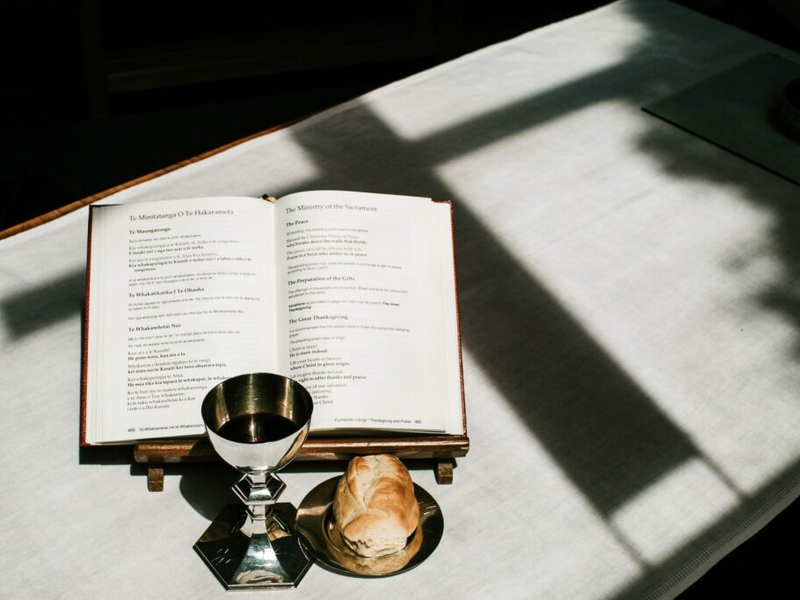
Doing the Lord’s Supper

From time to time I am asked how I think the Lord’s Supper should be done. This essay is my response to that question. To start with, we should agree that the Lord’s Supper is the only ritual we are obligated to do in the New Covenant on a routine…

by James B. JordanNovember 5, 1995

Showing page 268 of 309

See all
See all
Literature

Sympathy for Bertram

Coleridge, on the other hand, stood up for Bertram: “I cannot agree with the solemn abuse which the critics have poured out upon Bertram in All’s Well that ends Well . He was a young nobleman in feudal times, just bursting into manhood, with all the feelings of pride of…

February 6, 2008
Literature

All’s Well?

Samuel Johnson said of Bertram in Shakespeare’s All’s Well that Ends Well : “I cannot reconcile my heart to Bertram, a man noble without generosity, and young without truth, who marries Helena as a coward and leaves her as a profligate; when she is dead by his unkindness, sneaks home…

February 6, 2008
Literature

Shakespeare the Christian

Belated help for a friend: Pastor Ralph Smith of the Mitaka Evangelical Church in Tokyo has produced an course entitled “Shakespeare the Christian.” The lectures cover Shakespeare’s debts to Christianity and his use of the Bible, and then analyze 10 of the plays in detail. Ralph has done his homework,…

February 6, 2008

Universal choir

Augustine on Psalm 149: “Chorus Christi jam totus mundus est.” Christ’s choir is now the whole world.

February 5, 2008
Theology

Augustine, postmodern cynic

Behind Varro’s classification of Roman religion into mythical, natural, and civic, Augustine discerns an interest, and a political one. Varro speaks harshly about the mythic or fabulous religions, for violating the dignity of immortal gods. Yet, the classification system serves to protect civic religion from similar condemnation. On Augustine’s reading,…

February 5, 2008
Politics

Musical city

Augustine quotes Cicero saying, “quae harmonia a musicis dicitur in cantu, eam esse in civitate concordiam.” That is, somewhat loosely, “what musicians call harmony in singing is concord in the city.”

February 5, 2008

Showing page 1572 of 2212

Browse by Category

In Medias Res

Your weekly digest for all things Theopolis.

Donate

Theopolis is nearly 100% donor-supported. Consider joining us on our mission.