Theopolis Logo

Writing

Explore our collection of theological essays, biblical studies, and reflections on faith and culture.

See all
e99a9334
Advent

Stretching Christmas

For many people Christmas comes on December 25 and is over December 26. The tree is taken down along with the lights and the other decorations, and everyone begins setting the house in order for the new year. No more Christmas hymns. No more celebrations (well, until New Year’s Eve).…

by Steve WilkinsDecember 24, 2016
ascension
Advent

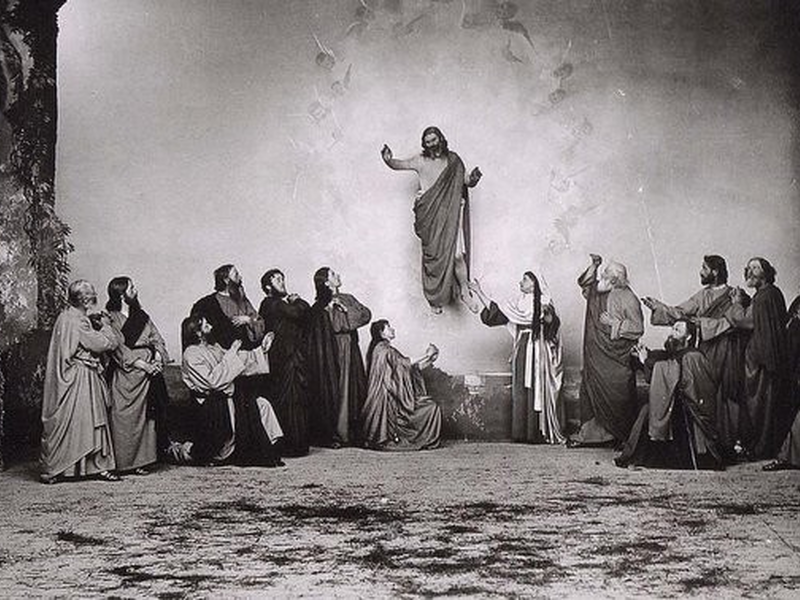
Ascension and Incarnation

The Ascension and the Incarnation should not be disconnected in our Christmas thinking or celebrations. As N.T. Wright notes, the ascension is "a central and vital feature without which all sorts of other things start to go demonstrably wrong. . . . where the ascension has been ignored or misunderstood,…

by Roy AtwoodDecember 23, 2016
nativity-rembrandt
Advent

Christmas Light

“In the Word was life, and the life was the light of men. And the light shines in the darkness.” Thus John describes the incarnation of the Son. He comes as the living and life-giving light of the world. That’s good news. In the beginning, God spoke and light shone…

by Peter LeithartDecember 23, 2016
nativity-chagall
Advent

The Spirit of Christmas

Christmas is all about Jesus. The angels announce Jesus’ birth, shepherds and wise men come to see Jesus, Herod wants to kill Jesus. We occasionally think of the Father who sent the Son, but we keep returning to the Son made flesh in Bethlehem’s manger. Meanwhile, as always, the Spirit…

by Peter LeithartDecember 22, 2016
nativity
Advent

The Humility of God

Christmas is about many things, but one of the chief things revealed in the gospel of Christmas is the humility of God. We don't often think of humility as an attribute of God. If God is glorious and exalted, we think, He must be haughty and proud and self-centered. We…

by Peter LeithartDecember 21, 2016
screenshot-2025-12-15-at-8-35-45-am
Advent

Advent of Unity

John famously begins his Gospel with a piece of theology: “In the beginning was the Word, and the Word was with God, and the Word was God.” Matthew starts with a genealogy. John celebrates Advent with a hymn, Matthew with a list. For John, Jesus is the Word of creation…

by Peter LeithartDecember 20, 2016

Showing page 120 of 309

See all
See all

Jesus the temple

Matthew quotes Isaiah 53:4 to explain how Jesus removes illness and uncleanness (Matthew 8:17). Jesus radiates life, and that life heals the sick and raises the dead. Jesus also accepts death and uncleanness on Himself, to be borne away on the cross. This latter process shows Jesus as temple. Milgrom…

January 26, 2008

Augustine, feminist

In City of God , Augustine condemns Rome for passing the Voconian law during the period between the second and third Punic war. This “forbade anyone to make a woman, not even an only daughter, an heir.” He adds, “I do not know of any law that could be said…

January 25, 2008
Politics

Clintons again

Peggy Noonan puts it this way in today’s Wall Street Journal online: “Bill Clinton, with his trembly, red faced rage, makes John McCain look young. His divisive and destructive daily comportment—this is a former president of the United States—is a civic embarrassment. It is also an education, and there is…

January 25, 2008

Eclipse

Augustine points out that the eclipse during Jesus’ death was not a natural occurrence, since Jesus’ death took place at Passover and eclipses normally take place only in the “last quarter of the moon.” So, why did the Lord rearrange the cycles of the heavens for this purpose? The symbolism…

January 25, 2008
Politics

Clinton

Jim Rogers of Texas A&M writes in response to my earlier post on Bill and Hillary: Re your question: ‘Why run a candidate who immediately alienates a large proportion of the voting population?’ Answer: Because the median voter determines elections. If you alienate 49.99% of the voting population, you still…

January 24, 2008
Literature

Nature and art

Nuttall describes Love’s Labour’s Lost as manifesting an “hysteria of style” like the hysteria of Titus , but with a concentration on a “feast of languages.” The setting for the play is a humanist academy, but one that also follows a medieval rule of renunciation of the flesh in favor…

January 24, 2008

Showing page 1577 of 2212

Browse by Category

In Medias Res

Your weekly digest for all things Theopolis.

Donate

Theopolis is nearly 100% donor-supported. Consider joining us on our mission.