
Theopolis Logo

Writing

Explore our collection of theological essays, biblical studies, and reflections on faith and culture.

See all
nativity-2
Advent

Joyful Humility

Christmas is a joyful season, but for many it turns into something else. Instead of joy, it is full of disappointment and unhappiness. Instead of an occasion for family fellowship, it becomes an opportunity for opening old wounds, reigniting old arguments, giving new life to rancor that should have died…

by Peter LeithartDecember 19, 2016
sagradafamilia-crop
Biblical Theology

Systematic Typology (Part Five)

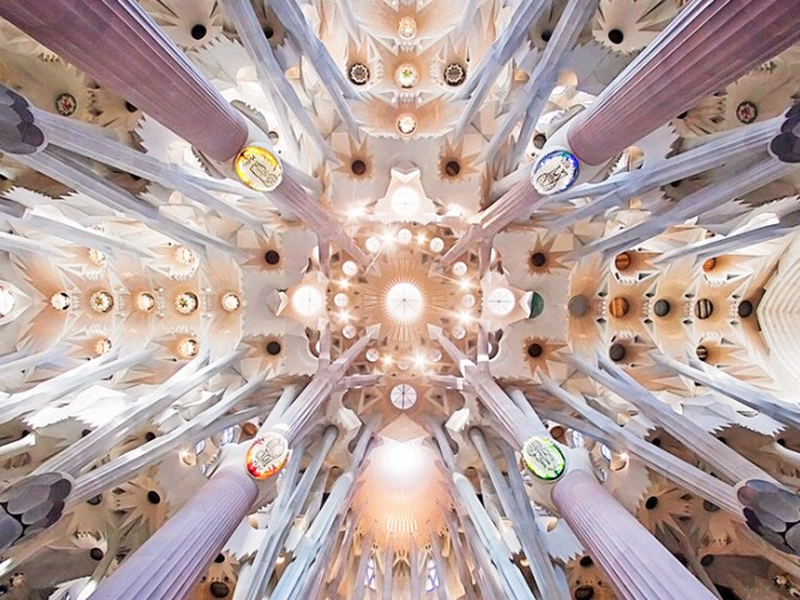
The Temple of Time The “covenant-literary matrix” of the Bible is not a pattern imposed upon the text, but the internal logic of its arrangement. This fundamental structure, functioning at multiple levels simultaneously, is a ceaseless reiteration of God’s primary theme. It is an algorithm forged in the furnace of…

by Mike BullDecember 16, 2016
img_1456
Hermeneutics

Exodus in 1 Kings

In the four hundred and eightieth year after the Exodus, Solomon began to build the temple of the Lord in Jerusalem. [1] That the author of Kings should date the start of the building of the temple from the Exodus is noteworthy. In Exodus 15:17, in Moses’ song following the…

by Alastair RobertsDecember 8, 2016
cross-grunwald
Cross

How Mist Gains Weight

Philip Schaff, a German Reformed theologian, states in The Principle of Protestantism that the material principle of Protestantism is “the doctrine of the justification of the sinner before God by the merit of Christ alone through faith.” This is the core message of the Church which leads “to the abandonment…

by Bogumil JarmulakDecember 6, 2016
mountain-top
Biblical Theology

Jesus and Godel's Theorem

“Religion” is an attempt to create or build a tower with a top, or to build a temple that is self-contained. The story of The Tower of Babel in Genesis 11 is the story of mankind’s attempt to create a world that is self-contained and does not need God. All…

by Richard BledsoeDecember 1, 2016
four-evangelists
Matthew

Dating Matthew, (Part 2)

In the first essay in this series, I presented a case for dating Matthew before AD 70, contrary to the present scholarly consensus. In this essay, I intend to present cultural, personal, ecclesiological, and theological arguments for a very early date for Matthew. [1] The cultural argument concerns literacy in…

by Ralph Allan SmithNovember 29, 2016

Showing page 121 of 309

See all
See all
Art

Mystical modernism

Painter Wassily Kadinsky complained about the materialism of modern life: “Only just now awakening after years of materialism, our soul is infected with the despair born of unbelief, of lack of purpose and aim. The nightmare of materialism, which turned life into an evil, senseless game, is not yet passed;…

December 14, 2007
Music

Chaos and order

Pierre Boulez’s total serialism depended, in the words of Jeremy Begbie, “on the rigorous organization of music through the use of strict mathematical patterns.” The results were, Begbie says, “extremely dull, indeed, some of the most tedious ever written.” Around the same time, John Cage was composing “chance music,” made,…

December 14, 2007

Orchestra of the world

Calvin says “The whole world is a theater for the display of the divine goodness, wisdom, justice, and power, but the Church is the orchestra, as it were - the most conspicuous part of it.”

December 13, 2007

Water of regeneration

Calvin interprets Titus 3:5 as a baptismal passage. Baptism is a sign and pledge of God’s mercy that signifies and pledges this mercy by ingrafting the baptized into the church: “The train of thought of the passage is this: ‘God saves us by his mercy and he has given us…

December 13, 2007

Calvin and Ordination

In his recent book on image and word in Calvin, Randall Zachman describes Calvin’s shifting views on ordination. Early on, he sarcastically rejects the notion that the laying of hands in the Roman Church constitutes a sacrament. By 1543, however, he has changed both his tone and his position. He…

December 13, 2007

Silent gods

Idols have mouths, but don’t speak. But the fear of the prophets is that Yahweh might be the same. Evil abounds in Israel and the nations, yet Yahweh does nothing and says nothing. If Yahweh is silent in the face of evil, how does he differ from the gods of…

December 12, 2007

Showing page 1596 of 2212

Browse by Category

In Medias Res

Your weekly digest for all things Theopolis.

Donate

Theopolis is nearly 100% donor-supported. Consider joining us on our mission.









