Theopolis Logo

Writing

Explore our collection of theological essays, biblical studies, and reflections on faith and culture.

See all
der_anschlag_von_luthers_95_thesen-1024x589
Church Calendar

Five Misconceptions of Reformation Day

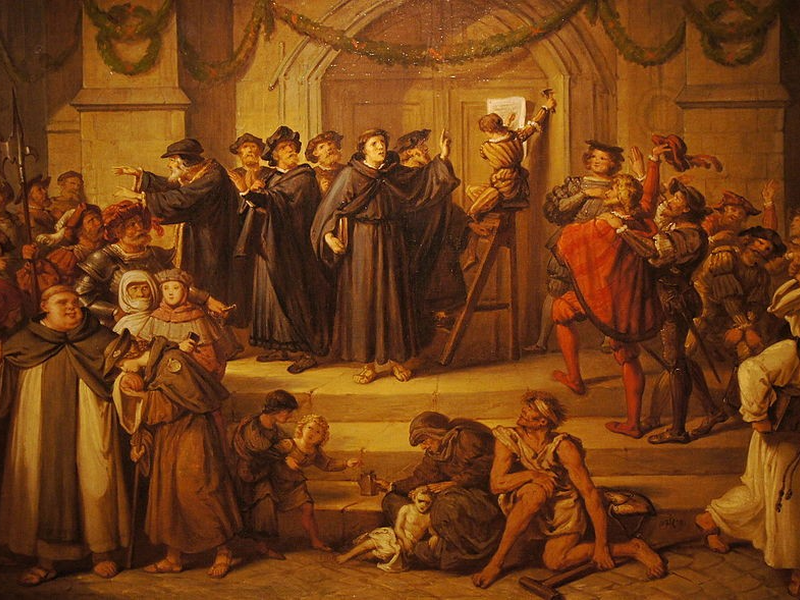
For many people the date October 31 is significant not only for being the Eve of All Saints (All Hallows Eve, Halloween) but as the day in 1517 when Martin Luther nailed his 95 theses to the door of the Castle Church in Wittenburg. These theses were a list of…

by Timothy LeCroyOctober 31, 2017

sacre-bleu-r__kixb0i5m-unsplash
Church Calendar

Concerning Halloween

It has become routine in October for some Christian schools to send out letters warning parents about the evils of Halloween, and it has become equally routine for me to be asked questions about this matter. "Halloween" is simply a contraction for All Hallows’ Eve. The word "hallow" means "saint,"…

by James B. JordanOctober 26, 2017
revelation-john-with-rod
Revelation

Preaching, An Art of Division

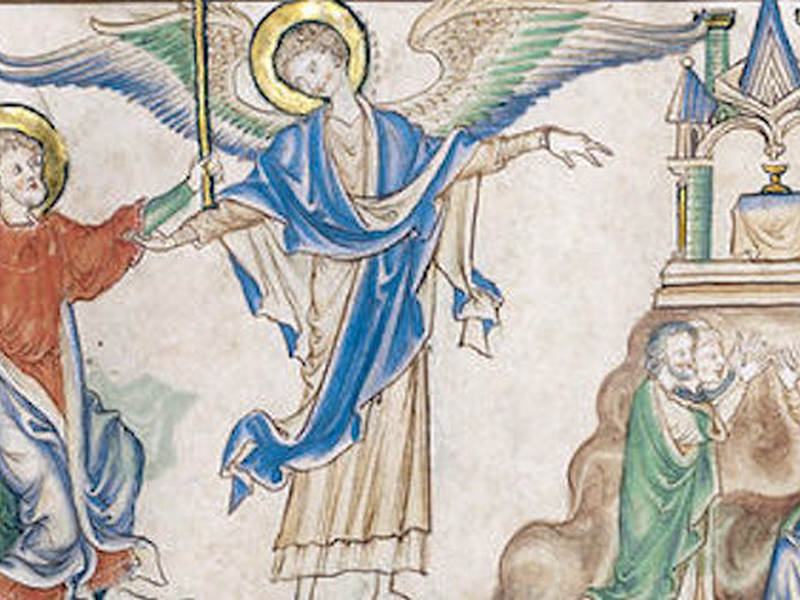
The following is an excerpt from Peter Leithart's forthcoming two-volume commentary on Revelation (T&T Clark). Y ou must prophesy again concerning many peoples and nations and tongues and kings,” a voice tells John (Rev. 10:11). Then someone gives him a “reed like a rod” and instructs him to measure (11:1).…

by Peter LeithartOctober 24, 2017
josiah-death

Back To Egypt

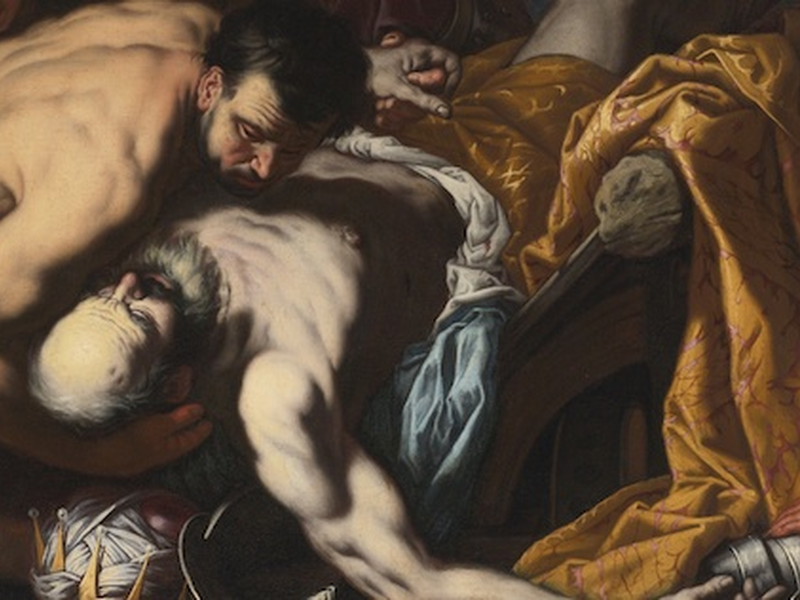
Josiah is an ideal Davidic king in many ways. He not only “did right,” but he “walked in the ways of his father David” and “did not turn aside to the right or to the left” (2 Chronicles 34:2). At the age of 16, he began to seek Yahweh, and…

by Peter LeithartOctober 19, 2017
augustine
Augustine

Augustine and the Music of Time

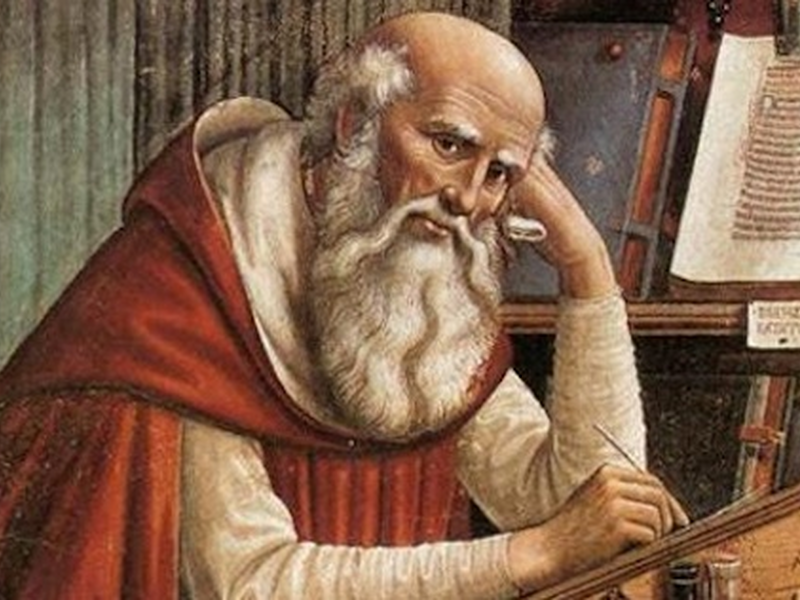
One of the best discussions of Augustine’s views on time comes from Jeremy Begbie’s Theology, Music, and Time (ch. 3). Following Paul Ricoeur, Begbie claims that Augustine’s distentio “is conceived as the three-fold present, and the threefold present as distentio . The distentio consists in the non-coincidence of the mind’s…

by Peter LeithartOctober 17, 2017
img_1043
How to Worship

The Psalter Should be Woven into the Fabric of Worship

This has always been the position of the Christian Church, and from an historical perspective the present situation in evangelicalism is appalling. The early liturgies of the Church, which are still used in Episcopal and Lutheran worship, are laced with psalm phrases. The early hymns, such as the Te Deum…

by James B. JordanOctober 12, 2017

Showing page 104 of 309

See all
See all

Inner Word and Culture

Cavadini suggests that Augustine’s theory of the inner word is a theory of cultural production, formation, and transformation. First, Augustine’s theory opens space for the person’s transcendence of culture, a space that allows for critique and transformation. But this transcendence of culture does not mean removal from culture. The inner…

November 24, 2007

Inner word

Colin Gunton has cited Augustine’s doctrine of the “inner word” as a sign of his preference for abstract over the material/concrete. John Cavadini (Theological Studies 1997) responds: “Augustine’s distinctions, between the presignified and the signified, are evidence unobserved and unaccounted for by Gunton, who sees a distinction only between the…

November 24, 2007

Multiple selves

In his 1969 book on self-deception, Herbert Fingarette pointed out that self-deception could only work if the self was divisible, and suggested that the self is not a unit but a community of “subselves.” Fingarette traced this theme to Plato, and saw it intensified by the New Testament polarity of…

November 22, 2007
History

Early Modern Skepticism

John D. Cox points out in his recent Baylor Press book on Shakespeare that ancient skepticism was not a-religious in the Renaissance and Reformation, but often served the purposes of reform. Erasmus, for instance, deployed skeptical arguments in challenging traditional, but corrupt, practices in the Catholic church. Like More, he…

November 22, 2007

Tennis scoring

Why 15-Love? “Love” is a corruption of the French “l’oeuf,” “the egg,” as in “the big goose egg.”

November 22, 2007
History

Germanic war

Tacitus records in Germania , 7, concerning the Germans in warfare: “They therefore carry with them when going to fight, certain images and figures taken out of their holy groves. What proves the principal incentive to their valour is, that it is not at random nor by the fortuitous conflux…

November 22, 2007

Showing page 1602 of 2212

Browse by Category

In Medias Res

Your weekly digest for all things Theopolis.

Donate

Theopolis is nearly 100% donor-supported. Consider joining us on our mission.