Theopolis Logo

Writing

Explore our collection of theological essays, biblical studies, and reflections on faith and culture.

See all
tim-marshall-k2u71wv2ei4-unsplash
Modernity

Protestantism and the Postmodern self

Postmodernism has, we are told, “decentered” the modern self, that unified, sovereign, isolated, godlike “thinking thing” discovered by Rene Descartes. The postmodern self is not single but multiple; not sovereign but controlled by external forces; not isolated but “embedded” in the world and in relation; not godlike, but human, all…

by Peter LeithartMay 6, 2013

kiwihug-l4gw27xzn1i-unsplash
Matthew

Law and History: How to Read the Law of Moses (Part 8)

This is the eighth in a series of studies on Deuteronomy 22:30-23:8. And Jesus went out thence, and withdrew into the parts of Tyre and Sidon. And behold, a Canaanitish woman came out from those borders, and cried, saying, Have mercy on me, O Lord, thou son of David; my…

by Ralph Allan SmithMay 1, 2013
screen-shot-2023-09-20-at-7-04-07-am
Augustine

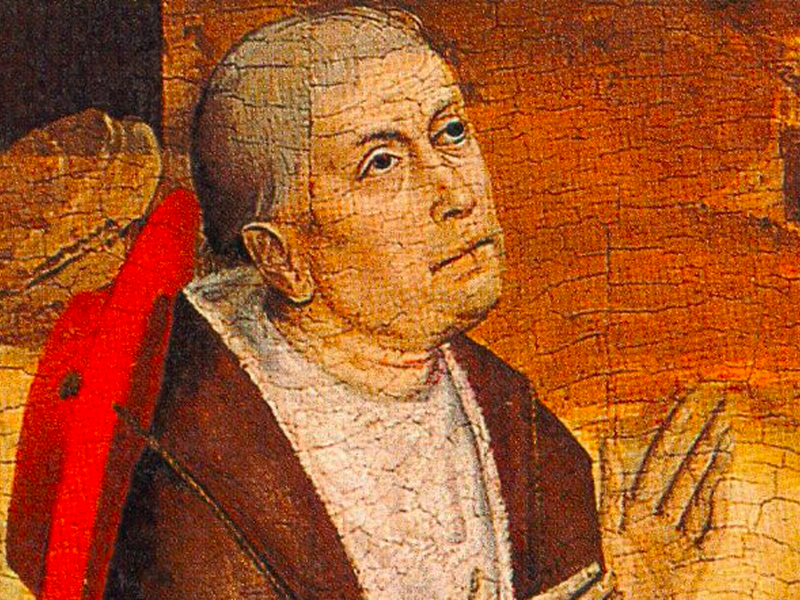
A Cusan Modernity?

The fifteenth-century German Cardinal Nicholas of Cusa led a busy and wide-ranging life. Educated in liberal arts and law at Heidelberg and Padua, Nicholas was a leading figure in the Conciliarist movement, and later served as a papal legate to both Constantinople and throughout Germany. As Bishop of Brixen, he…

by Peter LeithartApril 29, 2013
screenshot-2023-07-27-at-10-25-35-am
Deuteronomy

Law and History: How to Read the Law of Moses (Part 7)

This is the seventh in a series of studies on Deuteronomy 22:30-23:8. Thou shalt not abhor an Edomite, for he is thy brother; thou shalt not abhor an Egyptian, because thou wast a sojourner in his land. The children of the third generation that are born unto them shall enter…

by Ralph Allan SmithApril 25, 2013
ivan-aleksic-16yxcjsoaek-unsplash
Romans

What Advantage the Jew?

A sermon on Romans 3:1-8. 1 Then what advantage has the Jew? Or what is the value of circumcision? 2 Much in every way. To begin with, the Jews were entrusted with the oracles of God. A lot of people speculate here about what kind of advantage Paul is talking…

by Mark HorneApril 22, 2013
screenshot-2023-07-27-at-10-25-35-am
Deuteronomy

Law and History: How to Read the Law of Moses (Part 6)

This is the sixth in a series of studies on Deuteronomy 22:30-23:8. An Ammonite or a Moabite shall not enter into the assembly of Yahweh; even to the tenth generation shall none belonging to them enter into the assembly of Yahweh forever: because they met you not with bread and…

by Ralph Allan SmithApril 17, 2013

Showing page 195 of 309

See all
See all

Inner Word and Culture

Cavadini suggests that Augustine’s theory of the inner word is a theory of cultural production, formation, and transformation. First, Augustine’s theory opens space for the person’s transcendence of culture, a space that allows for critique and transformation. But this transcendence of culture does not mean removal from culture. The inner…

November 24, 2007

Inner word

Colin Gunton has cited Augustine’s doctrine of the “inner word” as a sign of his preference for abstract over the material/concrete. John Cavadini (Theological Studies 1997) responds: “Augustine’s distinctions, between the presignified and the signified, are evidence unobserved and unaccounted for by Gunton, who sees a distinction only between the…

November 24, 2007

Multiple selves

In his 1969 book on self-deception, Herbert Fingarette pointed out that self-deception could only work if the self was divisible, and suggested that the self is not a unit but a community of “subselves.” Fingarette traced this theme to Plato, and saw it intensified by the New Testament polarity of…

November 22, 2007
History

Early Modern Skepticism

John D. Cox points out in his recent Baylor Press book on Shakespeare that ancient skepticism was not a-religious in the Renaissance and Reformation, but often served the purposes of reform. Erasmus, for instance, deployed skeptical arguments in challenging traditional, but corrupt, practices in the Catholic church. Like More, he…

November 22, 2007

Tennis scoring

Why 15-Love? “Love” is a corruption of the French “l’oeuf,” “the egg,” as in “the big goose egg.”

November 22, 2007
History

Germanic war

Tacitus records in Germania , 7, concerning the Germans in warfare: “They therefore carry with them when going to fight, certain images and figures taken out of their holy groves. What proves the principal incentive to their valour is, that it is not at random nor by the fortuitous conflux…

November 22, 2007

Showing page 1602 of 2212

Browse by Category

In Medias Res

Your weekly digest for all things Theopolis.

Donate

Theopolis is nearly 100% donor-supported. Consider joining us on our mission.