Theopolis Logo

Writing

Explore our collection of theological essays, biblical studies, and reflections on faith and culture.

See all
tree-2
Creation

This Is Our Home

In the beginning, this was home. The world, I mean. Creation wasn’t just a series of unconnected events, a flashy display of building prowess. Yes, creation was intended to give God glory—which I guess you could say means that the creation was supposed to show the greatness—the weight —of God.…

by Tim GallantSeptember 19, 2017
img_5107
Theopolis News

Theopolis Institute Regional Course: Who is God?

We think we know. God is a stern Rule-Maker who has a bit of an anger management problem. Or, God is the indulgent Daddy in the sky. Or, God used to be a stern Ruler, but he got nice. Christians don't believe any of that. Christians say the one God…

by TheopolisSeptember 19, 2017
e99a2313
Baptism

God is Shouting, "Baptism Saves!"

Unfortunately today, baptism seems so… tiny . It’s actually… cute (maybe sweet?) when it’s given to a child. A little baby, a small gathering of people, a little bowl of water, tiny drops sprinkled upon the little baby’s head followed by a small applause and a short prayer. How… small!…

by Mani MarprelateSeptember 14, 2017
breviaryworn
Prayer

Reflections on Reformation: Why Pray the Hours?

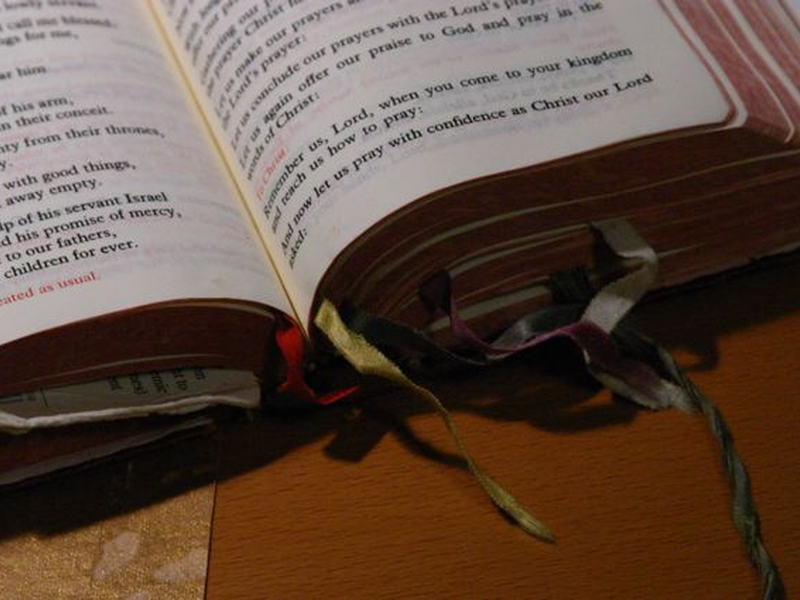
Early on in the history of the church, Christians understood that the 1st century Jewish practice of meeting for prayer at set times of the day was a good and biblical practice to continue. We find references to this in several places in Scripture. In Acts 3 we find Peter…

by Timothy LeCroySeptember 12, 2017
emmanuel-phaeton-1bwmfmvybi8-unsplash
Biblical Studies

Navigating and Celebrating the Complexity of Scripture: A Conversation with Richard Hays

Editors’ note: For those interested in a review of Richard Hays’s latest book, see here . Richard Hays is a renowned New Testament scholar. The professor of New Testament at Duke Divinity School originally studied English literature, giving his reading of Scripture a pronounced literary sensibility. He’s perhaps best known…

by Alastair RobertsSeptember 7, 2017
hebrew-manuscript-2
Genesis

Toledoth and the Structure of Genesis

As many commentators point out, Genesis is structured by 10 uses of the word toledoth , "generations." The word means something along the lines of "begotten things," and the toledoth statements head the various sections of Genesis. When Genesis 2:4 announces "these are the begettings of heaven and earth" and…

by Peter LeithartSeptember 5, 2017

Showing page 106 of 309

See all
See all
Uncategorized

1 & 2 Kings

Uriah Y Kim reviews my Kings commentary in a recent issue of Reviews in Religion and Theology . He’s got some criticisms, but overall it’s a fair review. A couple of responses on specific points: 1) He thinks my contention that there is a “seventh-king” pattern is suspect; my counting…

October 22, 2007
History

Patronage

Richard Saller defines patronage by three features (summarized by Griffin): “(1) it involves the reciprocal exchange of goods and services; (2) that it is a personal relationship of some duration; (3) that it is asymmetrical, in the sense that the two parties are of unequal status and offer different kinds…

October 22, 2007

Gratitude in ancient thought

Griffin begins her essay: “The exchange of beneficia - gifts and services - was an important feature of Greek and Roman society at all periods. Its prominence was reflected in the number of philosophical works that analyzed the phenomenon. From the fourth century B.C. onwards, euergesia and charis became subjects…

October 22, 2007
History

Seneca and Roman Society

Miriam Griffin has a richly detailed discussion of Seneca’s de Beneficiis in a 2003 issue of The Journal of Roman Studies . The article discusses the appropriateness of “patronage system” as a description of Roman social relations, Seneca’s use of exaggeration for moral effect, the and similarities between Seneca and…

October 22, 2007
History

Pointy Greeks

Seneca found Chrysippus’s treatment of the Three Graces too subtle: He was a great man but “a Greek, whose intellect, too sharply pointed, is often bent and turned back upon itself; even when it seems to be in earnest it only pricks, but does not pierce.” Seneca himself found in…

October 22, 2007
Philosophy

Kant on Ingratitude

In his Lectures on Ethics, Kant says that ingratitude is among the vices that “are the essence of vileness and wickedness.” He adds, “It is inhuman to hate and persecute one from whom we have reaped a benefit, and if such conduct were the rule it would cause untold harm.…

October 22, 2007

Showing page 1617 of 2212

Browse by Category

In Medias Res

Your weekly digest for all things Theopolis.

Donate

Theopolis is nearly 100% donor-supported. Consider joining us on our mission.