Theopolis Logo

Writing

Explore our collection of theological essays, biblical studies, and reflections on faith and culture.

See all
paul-stoned
Romans

Hymn of the Justified

Romans 8:31-39 is better sung than commented upon. It’s a thrilling, ecstatic hymn of boisterous assurance that God’s purposes will be accomplished. Yet, I will attempt to comment on them. If we sing Paul’s hymn, let’s make sure we sing with understanding. Given the character of these verses, it’s easy…

by Peter LeithartJuly 20, 2017

baby-driver
Culture

Growing up Nostalgic: Perpetual Adolescence and the Kingdom Come

"An ethic unshaped by eschatology is neither Jesus’ nor Christian.” - Tremper Longman How does an immature culture grow up? Edgar Wright’s Baby Driver is about the dangers of being lost in adolescence. By the end of the movie, the viewer is pointed to a road we infer leads to…

by Dustin MesserJuly 18, 2017
e99a1541
Theopolis News

The Theopolitan Society

We are in the middle of our campaign for the end of the fiscal year. We've raised $30,000 from some major donors, and need to raise another $70,000 to meet our budget. Please consider becoming a regular donor , and keep reading to learn about a great opportunity. This brief…

by Brian MoatsJuly 17, 2017
cross-2
Baptism

Strong Magic Takes Blood

Prolegomena 1. “You’re a pastor,” my new friend says as we sit down, “and you’re a massage therapist. How does that work?” To her, Christianity implies stuffy ideology, a disregard of the physical. A Christian massage therapist is an oddity; a pastor massage therapist is nearly a contradiction in terms.…

by Tim NicholsJuly 13, 2017
polandshutterstock
Politics

Why Poles Love Trump

54% of Poles think favorably of Americans, only 13% unfavorably, according to Centrum Badania Opinii Spolecznej . Ten years ago, the numbers were 44% and 21% respectively. Twenty years ago, they were 64% and 6%. Back in the 1990s, Americans were the most liked nation among Poles. Now they are…

by Bogumil JarmulakJuly 11, 2017
friberg-tencommandments
Biblical Theology

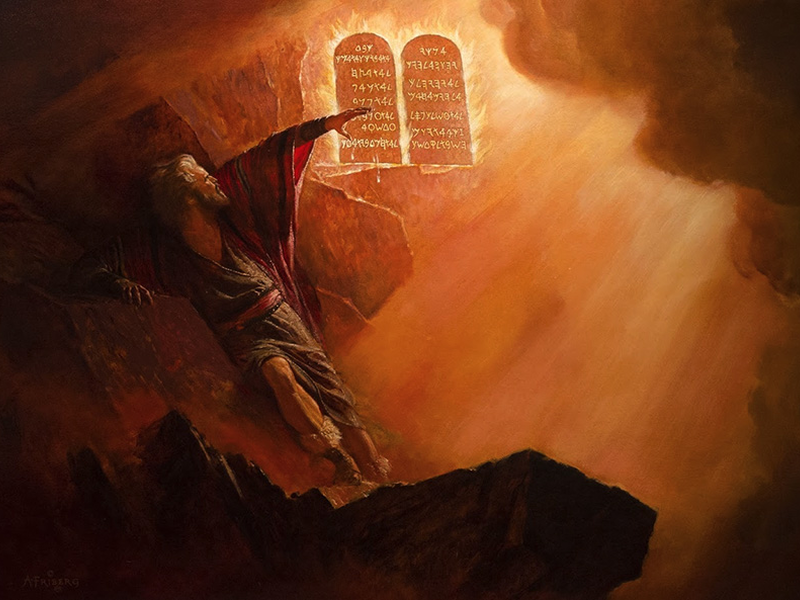
Stones and Fruit: Divination and Procreation – (Part Two)

Stones of Life and Death Of course, the sex of a child is not a choice between light and darkness or life and death. Sex, like circumcision, is a horizontal demarcation, a delegation of roles within humanity. In contrast, the white stone and the black stone within the “liturgical scrotum”…

by Mike BullJuly 7, 2017

Showing page 109 of 309

See all
See all
Uncategorized

1 & 2 Kings

Uriah Y Kim reviews my Kings commentary in a recent issue of Reviews in Religion and Theology . He’s got some criticisms, but overall it’s a fair review. A couple of responses on specific points: 1) He thinks my contention that there is a “seventh-king” pattern is suspect; my counting…

October 22, 2007
History

Patronage

Richard Saller defines patronage by three features (summarized by Griffin): “(1) it involves the reciprocal exchange of goods and services; (2) that it is a personal relationship of some duration; (3) that it is asymmetrical, in the sense that the two parties are of unequal status and offer different kinds…

October 22, 2007

Gratitude in ancient thought

Griffin begins her essay: “The exchange of beneficia - gifts and services - was an important feature of Greek and Roman society at all periods. Its prominence was reflected in the number of philosophical works that analyzed the phenomenon. From the fourth century B.C. onwards, euergesia and charis became subjects…

October 22, 2007
History

Seneca and Roman Society

Miriam Griffin has a richly detailed discussion of Seneca’s de Beneficiis in a 2003 issue of The Journal of Roman Studies . The article discusses the appropriateness of “patronage system” as a description of Roman social relations, Seneca’s use of exaggeration for moral effect, the and similarities between Seneca and…

October 22, 2007
History

Pointy Greeks

Seneca found Chrysippus’s treatment of the Three Graces too subtle: He was a great man but “a Greek, whose intellect, too sharply pointed, is often bent and turned back upon itself; even when it seems to be in earnest it only pricks, but does not pierce.” Seneca himself found in…

October 22, 2007
Philosophy

Kant on Ingratitude

In his Lectures on Ethics, Kant says that ingratitude is among the vices that “are the essence of vileness and wickedness.” He adds, “It is inhuman to hate and persecute one from whom we have reaped a benefit, and if such conduct were the rule it would cause untold harm.…

October 22, 2007

Showing page 1617 of 2212

Browse by Category

In Medias Res

Your weekly digest for all things Theopolis.

Donate

Theopolis is nearly 100% donor-supported. Consider joining us on our mission.