Theopolis Logo

Writing

Explore our collection of theological essays, biblical studies, and reflections on faith and culture.

See all
little-girl
Children

Honor God With Your Body

I am making a new rule in our house! We are actually kind of skimpy on the house rules. I try very hard to keep things simple: love God, love others, be joyful. It’s not complicated to avoid discipline here. But I have found myself repeating this new rule over…

by Lindsey TollefsonApril 9, 2015

giotto-noli-me-3
John

The Gardener and the Beloved, (Part 3)

Click HERE for Part 2 The voice of Jesus transforms and changes Mary when she hears him speak her name. This is her last “turning.” So also the woman in the Song of Songs longs to hear the voice of her beloved. Let me see your face, let me hear…

by Jeff MeyersApril 6, 2015
giotto-noli-me-2
John

The Gardener and the Beloved, (Part 2)

Click HERE for Part 1. The details of this story call the attentive reader back to the drama of Solomon’s Song of Songs. And the Song of Song’s alludes to, ties us into the story of Adam and Eve in the Garden and the promise of a coming Messiah that…

by Jeff MeyersApril 4, 2015
easter-term-2015-2
Theopolis News

Easter Term, 2015

“The course was a paradigm shift for me,” said Jonathan Sedlak, a Milwaukee electrical contractor who attended Theopolis’s course on Revelation. “I am left with a book that is far more practical than it has ever seemed before.” Jonathan Anderson of Louisville, Kentucky found the course “refreshing.” “I finished with…

by TheopolisApril 2, 2015
psalm-singing
Genesis

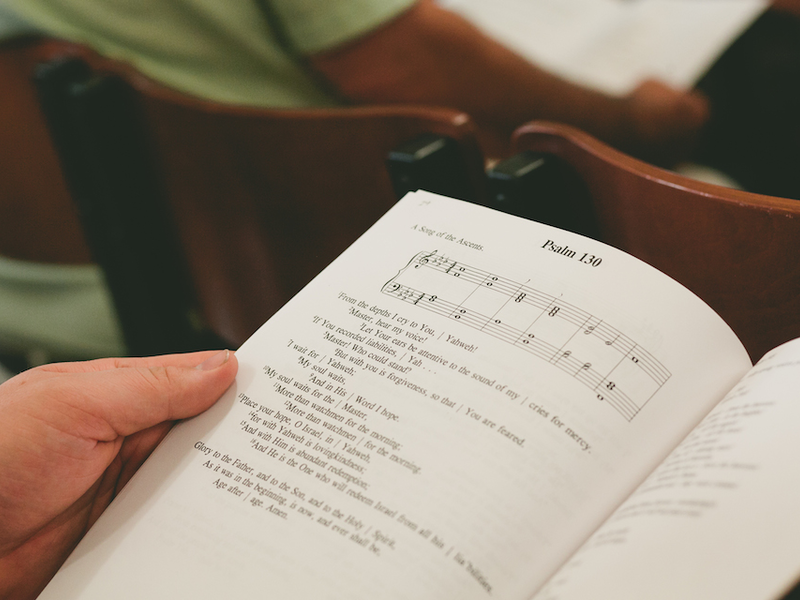
Worship as Response: Liturgical Logic, (Part 1)

“It is only by participation in a rational, practice-based community that one becomes rational.” – Alasdair MacIntyre It may be perfectly clear to a chef why adding unsifted powdered sugar to a hot frosting is a bad idea. But for an amateur cook, this may be the kind of rule…

by Jonathan BarlowApril 2, 2015
giotto-noli-me
John

The Gardener and the Beloved, (Part 1)

On a fresco in a chapel in Padua, Italy, there is a famous painting depicting the dramatic post-resurrection scene in John 20 with Mary and Jesus outside of the garden tomb. Giotto di Bondone painted it in the early 14th century. Jesus is striding from the tomb with a victor’s…

by Jeff MeyersApril 1, 2015

Showing page 156 of 309

See all
See all
Uncategorized

1 & 2 Kings

Uriah Y Kim reviews my Kings commentary in a recent issue of Reviews in Religion and Theology . He’s got some criticisms, but overall it’s a fair review. A couple of responses on specific points: 1) He thinks my contention that there is a “seventh-king” pattern is suspect; my counting…

October 22, 2007
History

Patronage

Richard Saller defines patronage by three features (summarized by Griffin): “(1) it involves the reciprocal exchange of goods and services; (2) that it is a personal relationship of some duration; (3) that it is asymmetrical, in the sense that the two parties are of unequal status and offer different kinds…

October 22, 2007

Gratitude in ancient thought

Griffin begins her essay: “The exchange of beneficia - gifts and services - was an important feature of Greek and Roman society at all periods. Its prominence was reflected in the number of philosophical works that analyzed the phenomenon. From the fourth century B.C. onwards, euergesia and charis became subjects…

October 22, 2007
History

Seneca and Roman Society

Miriam Griffin has a richly detailed discussion of Seneca’s de Beneficiis in a 2003 issue of The Journal of Roman Studies . The article discusses the appropriateness of “patronage system” as a description of Roman social relations, Seneca’s use of exaggeration for moral effect, the and similarities between Seneca and…

October 22, 2007
History

Pointy Greeks

Seneca found Chrysippus’s treatment of the Three Graces too subtle: He was a great man but “a Greek, whose intellect, too sharply pointed, is often bent and turned back upon itself; even when it seems to be in earnest it only pricks, but does not pierce.” Seneca himself found in…

October 22, 2007
Philosophy

Kant on Ingratitude

In his Lectures on Ethics, Kant says that ingratitude is among the vices that “are the essence of vileness and wickedness.” He adds, “It is inhuman to hate and persecute one from whom we have reaped a benefit, and if such conduct were the rule it would cause untold harm.…

October 22, 2007

Showing page 1617 of 2212

Browse by Category

In Medias Res

Your weekly digest for all things Theopolis.

Donate

Theopolis is nearly 100% donor-supported. Consider joining us on our mission.