Theopolis Logo

Writing

Explore our collection of theological essays, biblical studies, and reflections on faith and culture.

See all
stalker
Advent

Why Stalker Should be Added to Your Christmas Watchlist

Stalker is a Soviet-era film by Andrei Tarkovsky in which an enigmatic location comes into existence either through an alien crash or a nuclear disaster; the film never makes it clear, but knowing Tarkovsky’s criticism of the spectacle nature of the alien motif after his own filming of Solaris and…

by Garrett SoucyDecember 19, 2023

jessica-rockowitz-5nlcaz2wjxe-unsplash
Motherhood

A Greater Capacity

I was scrolling through Instagram on the night of Thanksgiving, the only one awake (as usual), coming down from my extrovert-high after all the conversation and merriment of the day, when I came across a post that stopped me in my tracks. The post contained a picture-perfect image of some…

by Lindsey MurphyDecember 18, 2023
screen-shot-2020-12-03-at-1-47-33-pm
Theopolis News

The 2024 James B. Jordan Prize

The Theopolis Institute is pleased to announce the fourth round of the James B. Jordan Prize to honor outstanding doctoral dissertations in biblical theology. James Jordan is one of the most insightful biblical scholars of our time. The Jordan Prize exists to encourage more of the deep Scriptural investigation of…

by Peter LeithartDecember 15, 2023
screenshot-2023-12-12-at-10-36-28-am-2
Eschatology

What Kind of Story Is History?

Suppose I were to write three versions of a story. In every version, the first half of the book looks forward to the coming of the king. There are promises about him and about how glorious his kingdom will be, about how his kingdom will fill the earth with peace…

by John BarachDecember 12, 2023
13071-probablyvalentindeboulogne-saintpaulwritinghi-1
Galatians

Re-Considering Doug Wilson's "Covenant with Hagar"

Introduction Doug Wilson’s American Milk and Honey is now available. There’s a great deal in the book worth commenting on, and I anticipate engaging with that material more broadly in the near future. In the lead up to its release, however, Moscow has not been silent concerning Israel, the Jews,…

by Gabe HarderDecember 11, 2023
screenshot-2023-12-05-at-5-51-01-pm
Parables

The Older Son

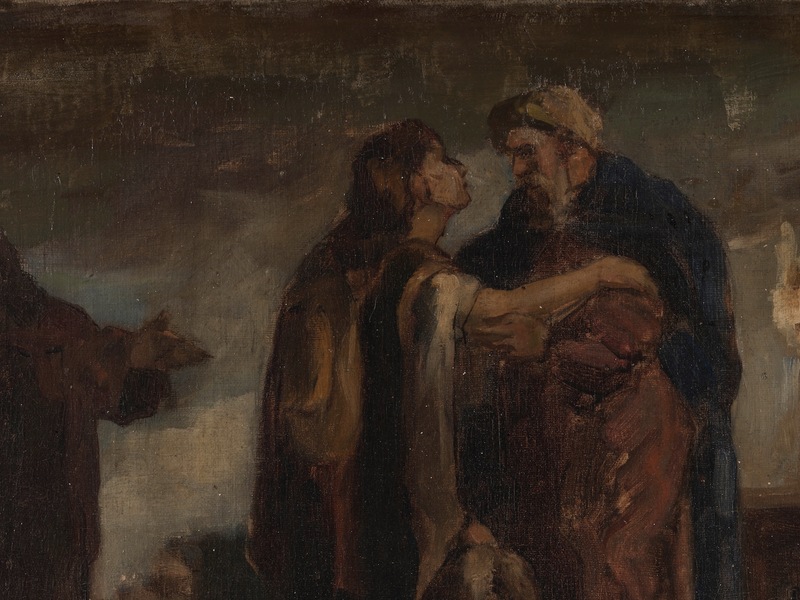
Our telling of the Prodigal Son parable usually (and rightly) focuses on the runaway younger brother: the lost son returns, and his father joyfully and graciously receives him. But the full story has an additional element: an angry older brother. Jesus uses the older brother to rebuke the religious leaders…

by Tim NicholsDecember 6, 2023

Showing page 25 of 309

See all
See all
Uncategorized

1 & 2 Kings

Uriah Y Kim reviews my Kings commentary in a recent issue of Reviews in Religion and Theology . He’s got some criticisms, but overall it’s a fair review. A couple of responses on specific points: 1) He thinks my contention that there is a “seventh-king” pattern is suspect; my counting…

October 22, 2007
History

Patronage

Richard Saller defines patronage by three features (summarized by Griffin): “(1) it involves the reciprocal exchange of goods and services; (2) that it is a personal relationship of some duration; (3) that it is asymmetrical, in the sense that the two parties are of unequal status and offer different kinds…

October 22, 2007

Gratitude in ancient thought

Griffin begins her essay: “The exchange of beneficia - gifts and services - was an important feature of Greek and Roman society at all periods. Its prominence was reflected in the number of philosophical works that analyzed the phenomenon. From the fourth century B.C. onwards, euergesia and charis became subjects…

October 22, 2007
History

Seneca and Roman Society

Miriam Griffin has a richly detailed discussion of Seneca’s de Beneficiis in a 2003 issue of The Journal of Roman Studies . The article discusses the appropriateness of “patronage system” as a description of Roman social relations, Seneca’s use of exaggeration for moral effect, the and similarities between Seneca and…

October 22, 2007
History

Pointy Greeks

Seneca found Chrysippus’s treatment of the Three Graces too subtle: He was a great man but “a Greek, whose intellect, too sharply pointed, is often bent and turned back upon itself; even when it seems to be in earnest it only pricks, but does not pierce.” Seneca himself found in…

October 22, 2007
Philosophy

Kant on Ingratitude

In his Lectures on Ethics, Kant says that ingratitude is among the vices that “are the essence of vileness and wickedness.” He adds, “It is inhuman to hate and persecute one from whom we have reaped a benefit, and if such conduct were the rule it would cause untold harm.…

October 22, 2007

Showing page 1617 of 2212

Browse by Category

In Medias Res

Your weekly digest for all things Theopolis.

Donate

Theopolis is nearly 100% donor-supported. Consider joining us on our mission.