Theopolis Logo

Writing

Explore our collection of theological essays, biblical studies, and reflections on faith and culture.

See all
lightstock_568139_medium_christ_hold_fast
Biblical Theology

Feasting with Elisha

After Elijah’s battered and depressed howling in the wilderness it must have seemed like the new prophet came eating and drinking. Which is a pattern we see again in the New Testament—John is explicitly identified with Elijah (Luke 1.17, Matthew 11.14), howling the truth in the wilderness that the people…

by Tim SuffieldJuly 19, 2022

marjan-blan-marjanblan-dkjquypc4ps-unsplash
Colossians

Lie Not To One Another

Reading Robert Conquest’s biography of Stalin 1 has opened new lines of meditation on Paul’s command in Colossians 3:9. But before turning to that, let me briefly indicate what Paul is not saying. He is not saying that there is no such thing as righteous deception, such as Jael practiced…

by Ralph Allan SmithJuly 14, 2022
francesco-zxnkxnr32ng-unsplash
Amos

Book of the Lion

You won’t find wild lions today in Israel. But lions used to range much more widely than they do now, and in biblical times they were a menace that shepherds in Israel had to contend with. David did as a shepherd boy, and Amos—who “ was among the sheepbreeders of…

by Daniel HoffmanJuly 12, 2022
adam-and-eve-in-the-garden-of-eden-wenzel-peter
Ezekiel

An Uncool Day

I would like to remedy a flaw for English speakers in the book of Genesis. A flaw that may seem innocuous, but we must remember where the devil lives...in the details. If we are to fear the Lord, it behooves our translation committees to ensure that the fearfulness of God…

by Matthew CoreyJuly 7, 2022
frankie-lopez-mis5ib0ktbc-unsplash-2-2
Literature

You Become What You Behold

While reading at my son’s baseball game this week, a mom from our school approached me and asked if I was reading Dante. I wasn’t, but our sons are both reading Divine Comedy in their sophomore literature class, so it was a reasonable question. What unfolded was a quick conversation…

by Mandi GerthJuly 5, 2022
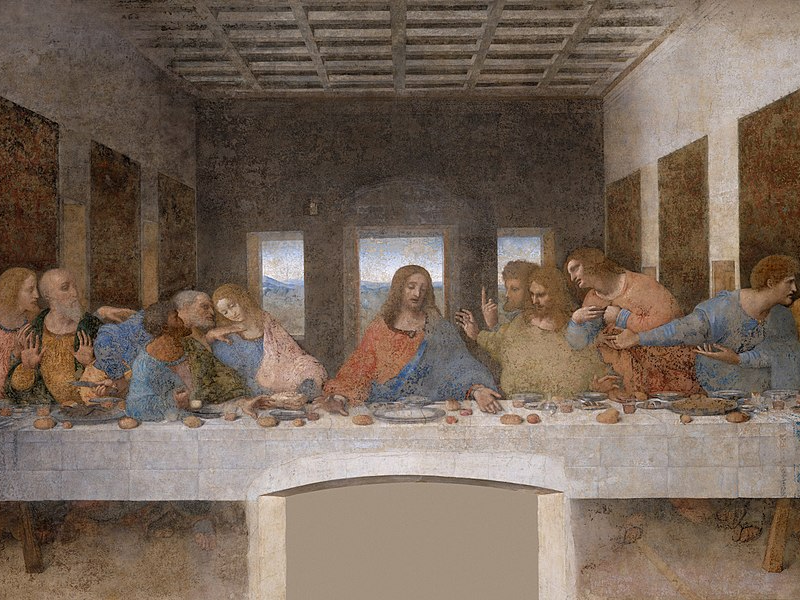
the_last_supper_-_leonardo_da_vinci_-_high_resolution_32x16
Deuteronomy

Torah as Testimony (Part 3)

In the first two essays in this series, I addressed the question of how the nations would learn about Israel’s Torah, in the second essay especially emphasizing the aesthetic aspects of Israel’s testimony. For we naturally wonder: How would people in Mesopotamia or Egypt, not to mention the rest of…

by Ralph Allan SmithJune 28, 2022

Showing page 42 of 309

See all
See all
Uncategorized

1 & 2 Kings

Uriah Y Kim reviews my Kings commentary in a recent issue of Reviews in Religion and Theology . He’s got some criticisms, but overall it’s a fair review. A couple of responses on specific points: 1) He thinks my contention that there is a “seventh-king” pattern is suspect; my counting…

October 22, 2007
History

Patronage

Richard Saller defines patronage by three features (summarized by Griffin): “(1) it involves the reciprocal exchange of goods and services; (2) that it is a personal relationship of some duration; (3) that it is asymmetrical, in the sense that the two parties are of unequal status and offer different kinds…

October 22, 2007

Gratitude in ancient thought

Griffin begins her essay: “The exchange of beneficia - gifts and services - was an important feature of Greek and Roman society at all periods. Its prominence was reflected in the number of philosophical works that analyzed the phenomenon. From the fourth century B.C. onwards, euergesia and charis became subjects…

October 22, 2007
History

Seneca and Roman Society

Miriam Griffin has a richly detailed discussion of Seneca’s de Beneficiis in a 2003 issue of The Journal of Roman Studies . The article discusses the appropriateness of “patronage system” as a description of Roman social relations, Seneca’s use of exaggeration for moral effect, the and similarities between Seneca and…

October 22, 2007
History

Pointy Greeks

Seneca found Chrysippus’s treatment of the Three Graces too subtle: He was a great man but “a Greek, whose intellect, too sharply pointed, is often bent and turned back upon itself; even when it seems to be in earnest it only pricks, but does not pierce.” Seneca himself found in…

October 22, 2007
Philosophy

Kant on Ingratitude

In his Lectures on Ethics, Kant says that ingratitude is among the vices that “are the essence of vileness and wickedness.” He adds, “It is inhuman to hate and persecute one from whom we have reaped a benefit, and if such conduct were the rule it would cause untold harm.…

October 22, 2007

Showing page 1617 of 2212

Browse by Category

In Medias Res

Your weekly digest for all things Theopolis.

Donate

Theopolis is nearly 100% donor-supported. Consider joining us on our mission.