Theopolis Logo

Writing

Explore our collection of theological essays, biblical studies, and reflections on faith and culture.

See all
laura-nyhuis-vg_b61t8efs-unsplash
Advent

5 Reasons I Don't Like Advent

First, I love my Christmas songs. This is how I think of it: the season of Advent gets in the way of singing what I want to sing. How can you not listen to Nat King Cole in December? Or Bing Crosby, Harry Connick Jr., and Amy Grant? Even though…

by Caleb SkogenDecember 16, 2021

johnny-cohen-oxoxqlawve0-unsplash
Covenant

Grandparenting and the Transcendent Summons

Introduction Imagine the stereotypical American grandparents. Once you have the outline, start filling in the details. What picture emerges? Maybe something like what Ogden Nash said, “When grandparents enter the door, discipline flies out the window.” Or maybe the oft-repeated assertion that it’s the grandparent’s job description “to spoil the…

by Jason CherryDecember 14, 2021
guillaume-de-germain-z_br8toccpe-unsplash
Deuteronomy

The Audacity of Lament

Hundreds of generations of ancient Israelites grew up as children of Abraham, inheritors of the covenant—the promises of God. These promises were more than nice bumper stickers or framed photos to cover empty space in their homes–these promises were at the heart of their very identity–individually and collectively. Genesis “I…

by Zach MccartneyDecember 9, 2021
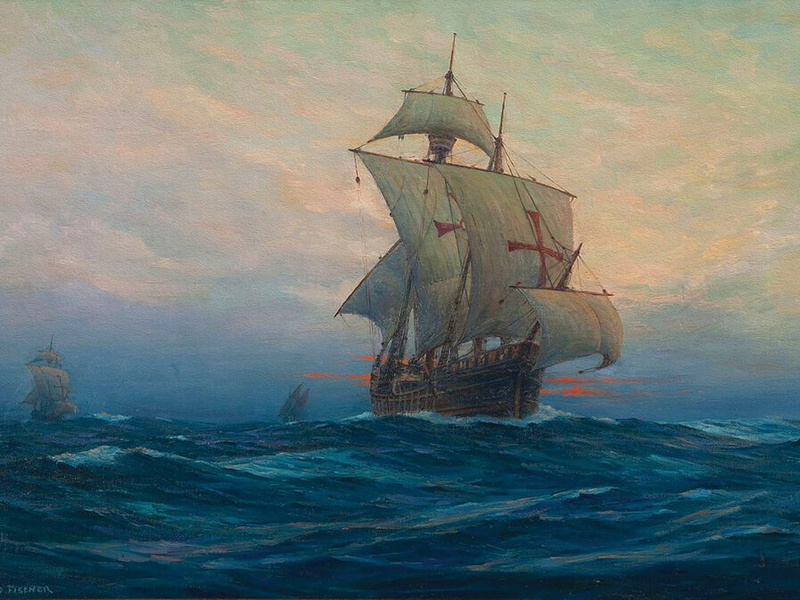
fischer-fleet-of-columbus-edit
Hermeneutics

Barren Worlds

Aliens and Sojourners When the question “Is there life on other planets?” is asked, even the best theologians can only reply, “The Bible doesn’t tell us.” Well, in truth, the Bible does tell us, but only if we are paying attention. …and there was not a man to till the…

by Mike BullDecember 7, 2021
vino-li-j4jjsfjkhpi-unsplash
John

Jesus’ Search for a Wife

John runs a theme throughout his gospel that bubbles under the surface—Jesus is searching for, and finding, a wife. John launches into the narrative proper with a statement of where he’s going. “On the third day there was a wedding” (John 2.1) is about as good an example of flash…

by Tim SuffieldNovember 30, 2021
jackson-david-cicbinoyb7u-unsplash

Touch

I have come to believe that a great many people are almost too weak to repent in any very open way. There must first be some level of healing. In some cases, including biblical ones, there is not even any evidence of faith on the part of the recipients of…

by Richard BledsoeNovember 23, 2021

Showing page 49 of 309

See all
See all
Uncategorized

1 & 2 Kings

Uriah Y Kim reviews my Kings commentary in a recent issue of Reviews in Religion and Theology . He’s got some criticisms, but overall it’s a fair review. A couple of responses on specific points: 1) He thinks my contention that there is a “seventh-king” pattern is suspect; my counting…

October 22, 2007
History

Patronage

Richard Saller defines patronage by three features (summarized by Griffin): “(1) it involves the reciprocal exchange of goods and services; (2) that it is a personal relationship of some duration; (3) that it is asymmetrical, in the sense that the two parties are of unequal status and offer different kinds…

October 22, 2007

Gratitude in ancient thought

Griffin begins her essay: “The exchange of beneficia - gifts and services - was an important feature of Greek and Roman society at all periods. Its prominence was reflected in the number of philosophical works that analyzed the phenomenon. From the fourth century B.C. onwards, euergesia and charis became subjects…

October 22, 2007
History

Seneca and Roman Society

Miriam Griffin has a richly detailed discussion of Seneca’s de Beneficiis in a 2003 issue of The Journal of Roman Studies . The article discusses the appropriateness of “patronage system” as a description of Roman social relations, Seneca’s use of exaggeration for moral effect, the and similarities between Seneca and…

October 22, 2007
History

Pointy Greeks

Seneca found Chrysippus’s treatment of the Three Graces too subtle: He was a great man but “a Greek, whose intellect, too sharply pointed, is often bent and turned back upon itself; even when it seems to be in earnest it only pricks, but does not pierce.” Seneca himself found in…

October 22, 2007
Philosophy

Kant on Ingratitude

In his Lectures on Ethics, Kant says that ingratitude is among the vices that “are the essence of vileness and wickedness.” He adds, “It is inhuman to hate and persecute one from whom we have reaped a benefit, and if such conduct were the rule it would cause untold harm.…

October 22, 2007

Showing page 1617 of 2212

Browse by Category

In Medias Res

Your weekly digest for all things Theopolis.

Donate

Theopolis is nearly 100% donor-supported. Consider joining us on our mission.