Theopolis Logo

Writing

Explore our collection of theological essays, biblical studies, and reflections on faith and culture.

See all
screen-shot-2021-06-03-at-8-49-15-am
Ezra

Ezra: The Aaronic Rest-Giver

If you’re a preacher looking for good commentaries on Ezra, you’ll struggle. Certainly to find ones that wrestle in good detail with the text. And certainly ones that don’t cost you an arm and a leg. There’s a good bit more for Nehemiah, which is odd, as the two are…

by Rhys LavertyJune 8, 2021

christian-lue-k1e6994p3t8-unsplash
1 John

1 John in Community

Quick thought experiment: try to pretend you’ve never read 1 John before. Read 1:1-6. Go ahead; I’ll wait. Now, on to v. 7: “But if we walk in the light as He is in the light, we have fellowship with ______….” What word would you expect in that blank, based…

by Tim NicholsJune 1, 2021
noahs-ark-genesis
Hermeneutics

Spending Time with Noah: Reflections on Prepositions in the Flood Narrative

In my work as a Bible translator, I was recently checking our translation team’s draft of Genesis 8:8, which says of Noah (translating the Hebrew quite literally): And he sent out the dove from with him to see: had the waters lessened from upon the face of the ground? Part…

by Josh JensenMay 25, 2021
86758
Philosophy

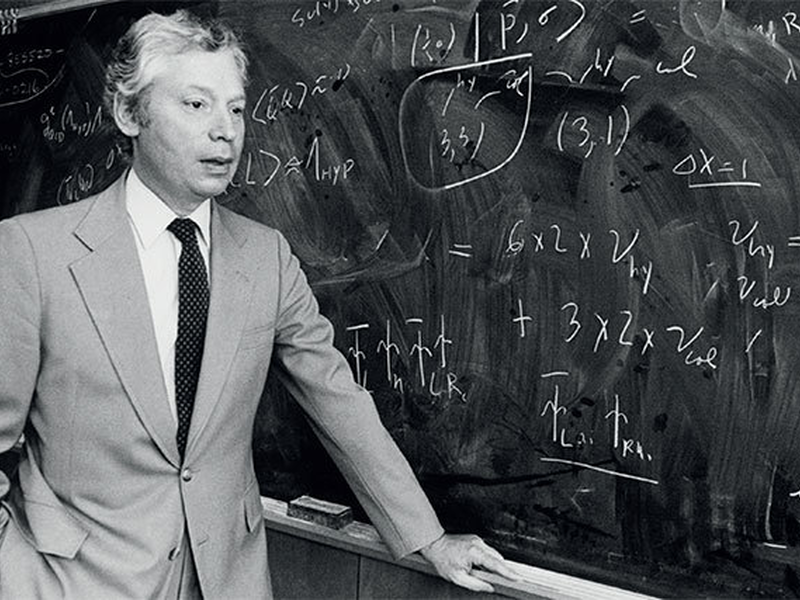
Steven Weinberg Destroyed My Faith

Just in case a reader may not know Weinberg, he is a theoretical physicist and the winner of the Nobel prize in physics in 1979, as well as countless other prizes for his research. He is also a prolific, lucid, and captivating writer. If you want to read something on…

by Ralph Allan SmithMay 18, 2021
screen-shot-2020-09-17-at-9-11-45-am
Colossians

Reconciliation in Colossians 1:20

Colossians 1:15-20 is a famous passage in Paul’s epistles because it is a succinct and powerful poem. It appears even to have been a hymn. Given the uniquely Pauline language — “reconciliation” is a term used only by Paul — it should not seem odd to attribute the poem/hymn to…

by Ralph Allan SmithMay 11, 2021
stalker_still
Movies

Terror of Knowing Myself

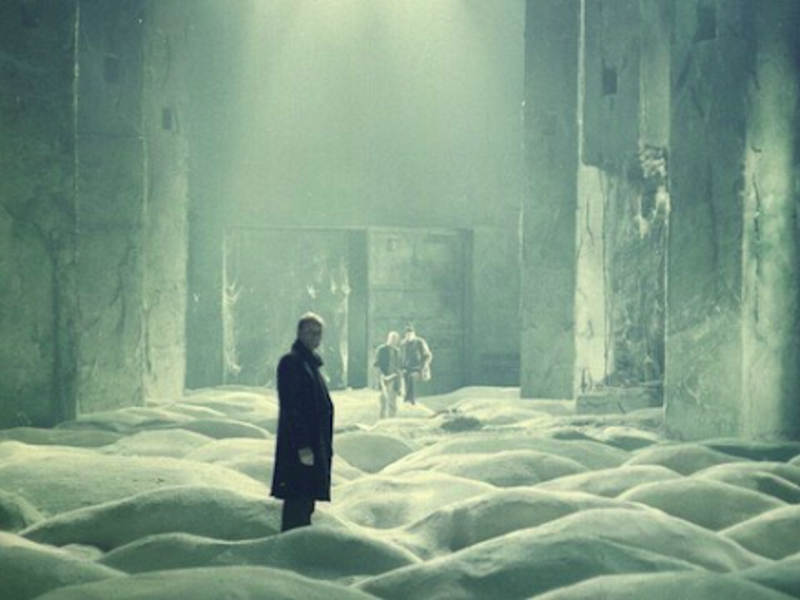
Stalker (1979) is a film by Andrei Tarkovsky based on Roadside Picnic by the Strugatsky brothers. It shows a day from the life of a stalker, a man who enters the so-called "Zone", an Alien landing site, where he leads people to a room that grants people’s innermost desires, which…

by Bogumil JarmulakMay 4, 2021

Showing page 55 of 309

See all
See all

Bridal city

Even before Cain, there is a hint – only a hint, but a hint – of a better city to come. It is not good for man to be alone, Yahweh says of Adam, and then takes a rib from Adam’s side and makes that rib into a woman. Eve…

October 17, 2007

City of Cain

Girard says that “the Bible unveils the victim mechanism that lies behind polytheism and mythology, but not only behind polytheism and mythology, for its full expression underlies everything we know as human culture. The Bible recognizes this in the story of Cain and Abel. Because Cain murders his brother, God…

October 17, 2007

Real Hellenist Stand Up

During much of the modern period, the development of Trinitarian theology has been seen as a “Hellenization” of the original Christian faith. Harnack for instance, “asserts that Logos Christianity, the Nicene dogma of the Trinity, and the Chalcedonian dogma of Christ are the products of ‘acute Hellenization’ that need not…

October 17, 2007

NC Rivalry

Over at the Books & Culture online magazine, Jason Byassee of the Christian Century - and a Duke PhD - lists some of the best lines from Will Blythe’s To Hate Like This Is to Be Happy Forever: A Thoroughly Obsessive, Intermittently Uplifting, and Occasionally Unbiased Account of the Duke-North…

October 16, 2007

On Trinitarian Revivals

Lewis Ayres offers some important historical perspective to the claim that there has been a Trinitarian revival in the last several decades: “it is important to notice that claims for a revival of Trinitarian theology have been made in a number of circles since the early nineteenth century in both…

October 15, 2007

Divine energies

Lossky summarizes the problem for which the doctrine of divine energies is the solution as follows: “If we were able at a given moment to be united to the very essence of God and to participate in it in the very least degree, we should not at the moment be…

October 15, 2007

Showing page 1620 of 2212

Browse by Category

In Medias Res

Your weekly digest for all things Theopolis.

Donate

Theopolis is nearly 100% donor-supported. Consider joining us on our mission.