Theopolis Logo

Writing

Explore our collection of theological essays, biblical studies, and reflections on faith and culture.

See all
aaron-burden-h8s0pf2rcqs-unsplash
Luke

The Second Isaiah and His Message

Higher critics have, for a long time, posited a Second Isaiah to account for the structural and tone differences in the book from chapter 40 on. Now, we do believe in a Second Isaiah, but believe that the form critics have generally suffered from a lack of imagination both in…

by Richard BledsoeOctober 5, 1995

whichbooksbelongintheot
Leviticus

Getting the Translation Right

A couple of the most serious mistranslations in our Bibles are found in the book of Leviticus. The main reason these errors have gone unreformed, I believe, is because Leviticus is simply not studied often enough, so the problem has never been fully addressed. The first mistranslation is found right…

by James B. JordanOctober 4, 1995
Biblical Horizons

Prophecy and the Coming Christian Revolution

Thomas Kuhn’s book, The Structure of Scientific Revolutions , is really a parenthesis inside of the larger reality of Christian history. Progress and forward movement inside of science is a footnote to the larger and more general reality of covenant renewals in both Biblical and Christian history. The fundamental mark…

by Richard BledsoeSeptember 5, 1995
luca-tosoni-wneuvexggjg-unsplash
Biblical Horizons

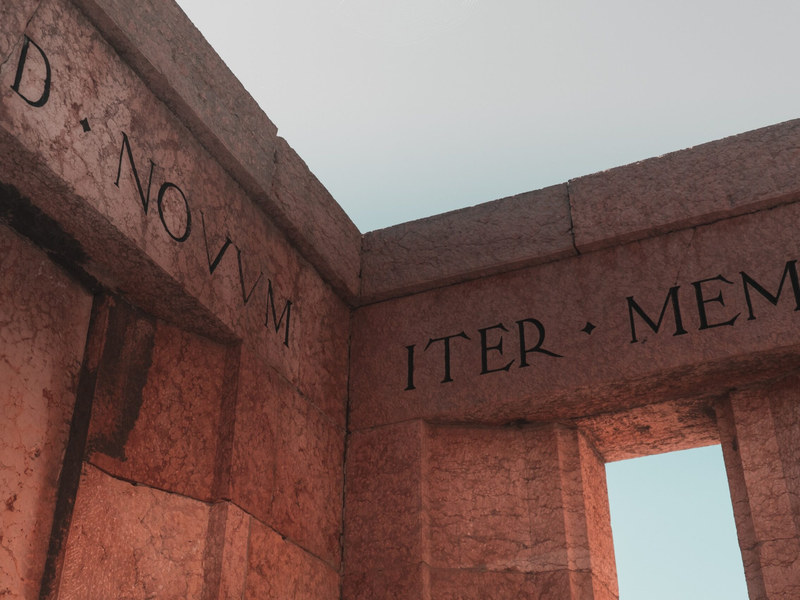
In Defense of Latin

James Jordan, in the June/July 1995 Biblical Horizons, wrote a very helpful essay, "The Great Hangover," the gist of which I entirely agree with. The theme of the essay was that the Church to move forward must shuck off the old husks of Hellenism, Rabbinism, and undo admiration for all…

by Richard BledsoeSeptember 5, 1995
pawan-sharma-vt2efwhbs-e-unsplash
Biblical Horizons

The Triune Office Reconsidered

Traditionally, the three offices in the Presbyterian churches have been teaching elder, ruling elder, and deacon. These have been associated with priest, elder, and Levite respectively. We have seen that the deacon is in fact an apprentice and assistance elder. We have also seen that Levites as well as priests…

by James B. JordanSeptember 4, 1995
jordan-wozniak-xp_agmeea6s-unsplash-2
Biblical Studies

When the Son Is Glorified

John 7:39 interprets Jesus’ offer of living water as an offer of the Spirit to those who believe, "for," John continues, "the Spirit was not yet, because Jesus was not yet glorified." John was not making an ontological statement about the Spirit, as if the Spirit did not exist until…

by Peter LeithartJuly 27, 1995

Showing page 269 of 309

See all
See all
History

Vico on Study Methods

It’s not clear whether Vico (1668-1744) had actually read Descartes (1596-1650) directly, or how much he had read. But it is clear enough that he had read and understood the Cartesianism of his time. His response is perhaps most clearly seen in his treatment of ethics. He opposed the application…

September 13, 2007
History

From Enlightenment to Post-Modernism

Caputo argues that for Kant God fulfills a purely “regulative” function, providing the basis for an aesthetic “as if” regarding the divine regulation of the world. God also has a moral function, giving the rational demands of duty a divine, theological umph. Kant’s philosophy and the Enlightenment in general “put…

September 13, 2007
Uncategorized

Vico against the Trivium

Vico objected to the prioritization of natural science and logic over rhetoric in the schools of his day, arguing that “the invention of arguments are by nature prior to the judgment of their validity, so that, in teaching, that invention should be given priority over philosophical criticisms.”

September 13, 2007
Philosophy

Aesthetic rationality

Hamann: “The connection and agreement of concepts is precisely the same in a demonstration as the relation and sympathy of numbers and lines, sounds and colours are in a musical composition or painting.”

September 12, 2007
Theology

Christianity and Barthianism

As noted in a post earlier his week, Barth sees Kant’s philosophical program as an opening for the biblical theologian to do his own thing on his own basis by his own methods, without paying much of any attention to reason. Milbank wonders if this doesn’t leave a “certain liberal…

September 12, 2007
Theology

Christ or Nihil

Milbank closes a superb article on the “radical pietists” (Hamann and Jacobi) with this paragraph: “Because [the radical pietists] point theology to a radical orthodoxy they also show how theology can outwit nihilism. Not by seeking to reinstate reason, as many opponents of postmodernity would argue. This is absurd, because…

September 12, 2007

Showing page 1630 of 2212

Browse by Category

In Medias Res

Your weekly digest for all things Theopolis.

Donate

Theopolis is nearly 100% donor-supported. Consider joining us on our mission.