Theopolis Logo

Writing

Explore our collection of theological essays, biblical studies, and reflections on faith and culture.

See all
hebrew-manuscript
Biblical Studies

Abraham Myth: A Response to Peter Enns

It took a parody. I devoted a section of a chapter in Deep Exegesis to Peter Enns's work, I've critiqued him on my blog here and here and here , as well as the similar work of John Walton, here and here . To my knowledge, neither Enns nor Walton…

by Peter LeithartJuly 14, 2015

family-at-work
Capitalism

Before Obergefell: Some Thoughts on How We Got Here

The establishment of same-sex marriage is not a bolt from the blue, but the logical outworking of a series of related developments in America’s practice and understanding of marriage. Same-sex marriage was unthinkable just a few decades ago. What made it thinkable wasn’t a concerted campaign on the part of…

by Alastair RobertsJuly 10, 2015
raphael-renter-wuxdtgmnyau-unsplash-1
American Culture

American Tragedy: Gird Up Your Loins

Unless Obergefell can be reversed soon through the next two presidential elections and the retirement/replacement of renegade SCOTUS judges (Ginsburg, Kennedy, and Breyer are the first up), this will turn out to be the greatest American tragedy for the civil liberties of persons of faith, for the cause of sexual…

by Robert GagnonJuly 10, 2015
christian-lue-zksnjxakkqk-unsplash
Homosexuality

Lightning from East to West

With same sex marriage now legalized in many Western countries, and militant Islam ravaging the East, Christians might be wondering what God is doing. With the repeated failure of predictions of an imminent second coming, is the Bible any help to us at all in predicting what will happen next?…

by Mike BullJuly 9, 2015
good-samaritan
Children

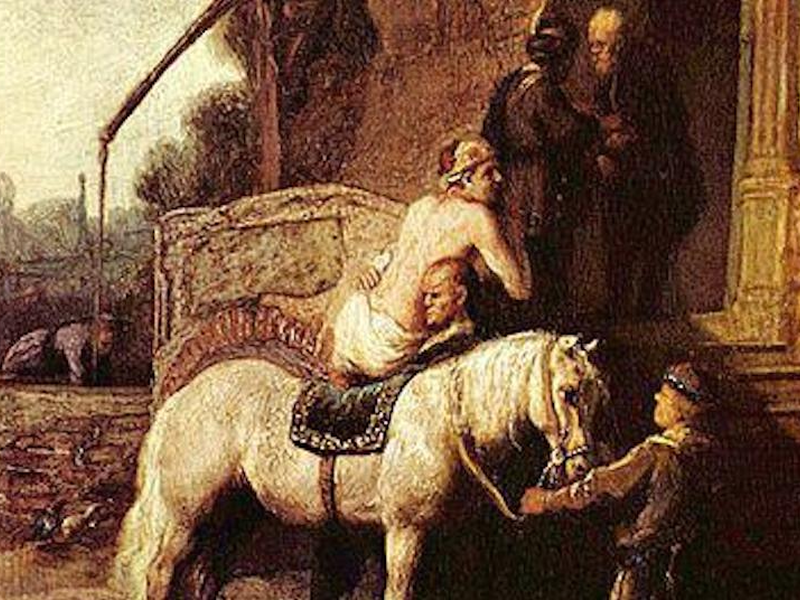
Who Is My Neighbor?

When I was expecting my first child, an older woman gave me the best nugget of parenting wisdom that I have. She told me to always remember that my child is my sister-in-Christ before she is my daughter. I have clung to these words in so many situations as I…

by Lindsey TollefsonJuly 9, 2015
stavrialena-gontzou-68y-orxey_y-unsplash
Homosexuality

After Obergefell: Ephraim Radner

Male-female distinctions define marriage in a particular direction: the gift of generation and of generations. With its decision, the Supreme Court of the United States has done its part to deny and destroy this reality, and further the modern process of legalizing child abandonment, while at the same time violating…

by Ephraim RadnerJuly 8, 2015

Showing page 148 of 309

See all
See all

Exhortation

Most of the Beatitudes in Matthew are stated in third person. “Blessed are the poor in spirit, for theirs is the kingdom of heaven.” ” They shall be comforted,” ” they shall inherit the earth,” ” they shall be called the sons of God.” At the end, Jesus changes the…

September 2, 2007
Theology

Music, Time, and Augustine

One of the best discussions of Augustine’s views on time comes from Jeremy Begbie’s Theology, Music, and Time (ch. 3). Following Ricoeur’s discussion, Begbie claims that Augustine’s distentio “is conceived as the three-fold present, and the threefold present as distentio . The distentio consists in the non-coincidence of the mind’s…

August 30, 2007
Theology

Escaping time

John Rist offers some important insights into Augustine’s view of time. He notes, as many commentators do, that Augustine is not aiming to provide a definition of time but to answer the question of how time can be measured. The dilemma is: If the past no longer is, and the…

August 30, 2007

Distention and eschatology

In a 1957 essay in Man and Time , Gilles Quispel claims that Augustine’s views of time have been extracted from the “great struggle between a cyclical and a historical view of the world, between archaism and Christianity,” and therefore have been misunderstood. Augustine “comes to grips with the Neoplatonists…

August 30, 2007
Philosophy

Augustine’s non-Aristotelian Universe

Augustine argues in Confessions that time is not reducible to the movement of the celestial bodies. Aristotle agreed; but, as Ricoeur points out, the arguments that Augustine used departed radically from Aristotle. First, if the sun and stars stopped moving, and yet a potter’s wheel continued to move, time would…

August 30, 2007

Showing page 1638 of 2212

Browse by Category

In Medias Res

Your weekly digest for all things Theopolis.

Donate

Theopolis is nearly 100% donor-supported. Consider joining us on our mission.