Theopolis Logo

Writing

Explore our collection of theological essays, biblical studies, and reflections on faith and culture.

See all
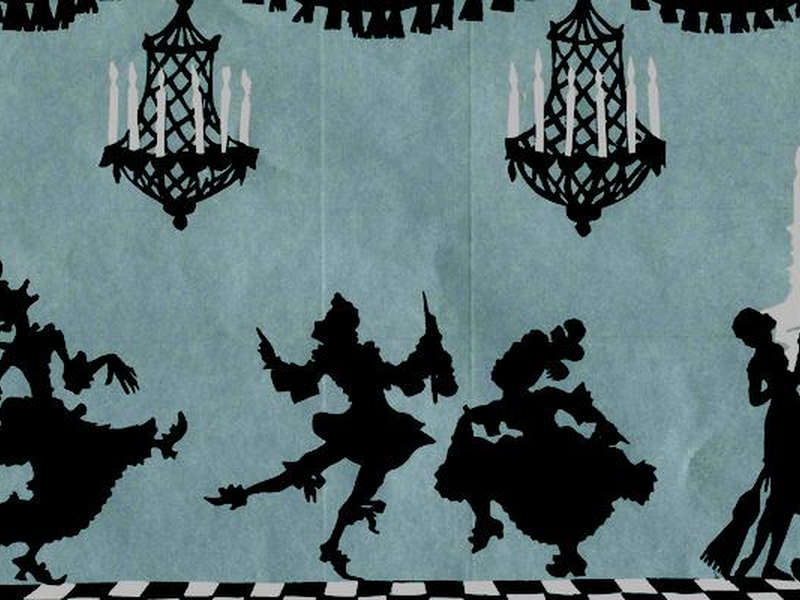
cinderella
C. S. Lewis

On Reading Fairy Tales

One of the main characters of That Hideous Strength by C. S. Lewis is Mark Studdock, who was a sociologist but his true passion was being a part of the so called “inner circle.” He wanted to belong to the elite that would bestow glory and power. On the other…

by Bogumil JarmulakMay 26, 2015

ceilingfromtheimmaculateconceptionchapel
Acts

By the Spirit

The first Pentecost meant many things, fulfilling many types, shadows, and prophecies from the Old Testament. Pentecost marked the beginning of a new creation, and a new humanity. Just as the Spirit hovered over the waters of the original formless and void creation to shape and fill it, so the…

by Peter LeithartMay 21, 2015
tim-marshall-k2u71wv2ei4-unsplash
Interview

Student Profile - Clint Hail

Clint Hail has had an exciting, varied life. A West Point graduate and a former infantry officer, he now serves as Community Transformation Director in Costa Rica for e3 Partners Ministries. Clint has also attended two Theopolis Institute courses. Clint recently told Theopolis about his experiences in the military, his…

by TheopolisMay 20, 2015
skyler-gerald-oygna91tfis-unsplash
Homosexuality

Music in Wartime

Before the summer is out, the US Supreme Court will hand down a decision in Obergefell v. Hodges , the same-sex marriage case. Every other week, ISIS releases a new video of masked fighters beheading Christians, and the rest of the Middle East is in chaos. Boko Haram terrorizes parts…

by Peter LeithartMay 19, 2015
banner
Theopolis News

New Theopolis Board Members

The Theopolis Institute Board added three new Board members at its semi-annual Board meeting on May 16: Dr. Roy Atwood, Pastor Uri Brito, and Rod Olps, Jr. Formerly President of New Saint Andrews College in Moscow, Idaho, Atwood was recently appointed Abraham Kuyper Distinguished Professor of Classics at Morthland College…

by TheopolisMay 18, 2015
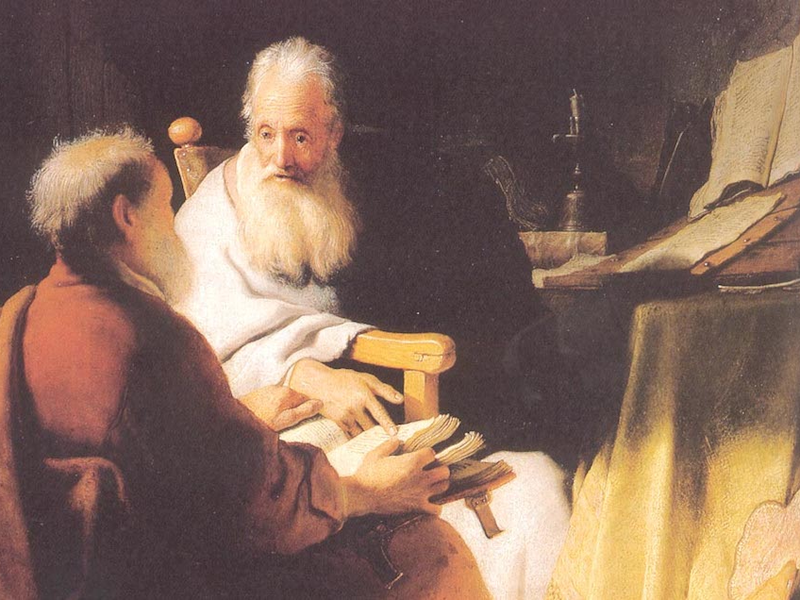
peter-and-paul
Galatians

Galatian Temptations

The kingdom of God has come upon us, Jesus said. The justice of God is revealed in the gospel, Paul said. Whoever is in Christ, there is new creation. Isaiah's visions of lions and lambs and a peaceable kingdom are visions about the effect of the Messiah's first advent. If…

by Peter LeithartMay 14, 2015

Showing page 153 of 309

See all
See all

Exhortation

Most of the Beatitudes in Matthew are stated in third person. “Blessed are the poor in spirit, for theirs is the kingdom of heaven.” ” They shall be comforted,” ” they shall inherit the earth,” ” they shall be called the sons of God.” At the end, Jesus changes the…

September 2, 2007
Theology

Music, Time, and Augustine

One of the best discussions of Augustine’s views on time comes from Jeremy Begbie’s Theology, Music, and Time (ch. 3). Following Ricoeur’s discussion, Begbie claims that Augustine’s distentio “is conceived as the three-fold present, and the threefold present as distentio . The distentio consists in the non-coincidence of the mind’s…

August 30, 2007
Theology

Escaping time

John Rist offers some important insights into Augustine’s view of time. He notes, as many commentators do, that Augustine is not aiming to provide a definition of time but to answer the question of how time can be measured. The dilemma is: If the past no longer is, and the…

August 30, 2007

Distention and eschatology

In a 1957 essay in Man and Time , Gilles Quispel claims that Augustine’s views of time have been extracted from the “great struggle between a cyclical and a historical view of the world, between archaism and Christianity,” and therefore have been misunderstood. Augustine “comes to grips with the Neoplatonists…

August 30, 2007
Philosophy

Augustine’s non-Aristotelian Universe

Augustine argues in Confessions that time is not reducible to the movement of the celestial bodies. Aristotle agreed; but, as Ricoeur points out, the arguments that Augustine used departed radically from Aristotle. First, if the sun and stars stopped moving, and yet a potter’s wheel continued to move, time would…

August 30, 2007

Showing page 1638 of 2212

Browse by Category

In Medias Res

Your weekly digest for all things Theopolis.

Donate

Theopolis is nearly 100% donor-supported. Consider joining us on our mission.