Theopolis Logo

Writing

Explore our collection of theological essays, biblical studies, and reflections on faith and culture.

See all
e99a2994
Creation

Why Genesis Matters

Creationism is debated widely in the US, especially when it comes to teaching creation as an alternative theory of origins in public schools. Every few months, there’s another poll showing that many Americans still believe Ussher’s claim that the world was created around 4000 BC, which always elicits a contemptuous…

by Peter LeithartAugust 20, 2014
walker-percy
Books

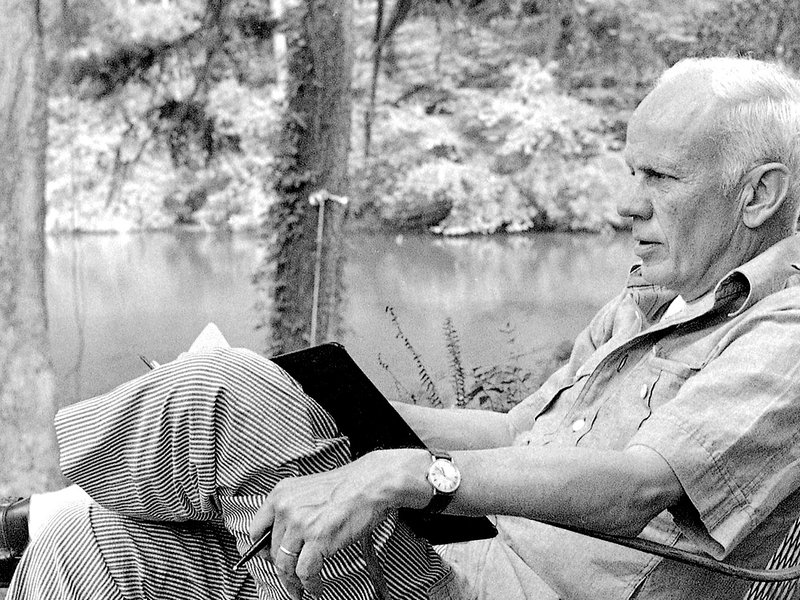
Canary in the Coal Shaft

Walker Percy died in 1990, but his six published novels and his collections of essays are more relevant than when he wrote them. Percy was an American Dostoevsky, and that was no accident. “The European novels,” he says in a 1974 interview, “are more philosophical, more novels of ideas.” Dostoevsky,…

by Peter LeithartAugust 18, 2014
e99a0159
Children

Parenting in the Spirit

The Spirit is God’s agent for renewing the creation, for restoring bonds between nations, for knitting together people into the body of Christ. The Spirit is the renewer of the world, and the bond of all relations. That means that if you want your family to be knit together, if…

by Peter LeithartAugust 13, 2014
francesco-zxnkxnr32ng-unsplash
Revelation

Hunter Into Prey

In their basic physical sense , the verbs translated as "persecute" in the Bible mean “chase” or “pursue,” and that fits the context quite naturally. As Pharaoh “pursued” (LXX, dioko ; Heb. radaph ) Israel into the wilderness, for example, so the dragon chases the woman back to her place…

by Peter LeithartAugust 11, 2014
the-resolutions-of-jonathan-edwards-me4czyke-copy
Books

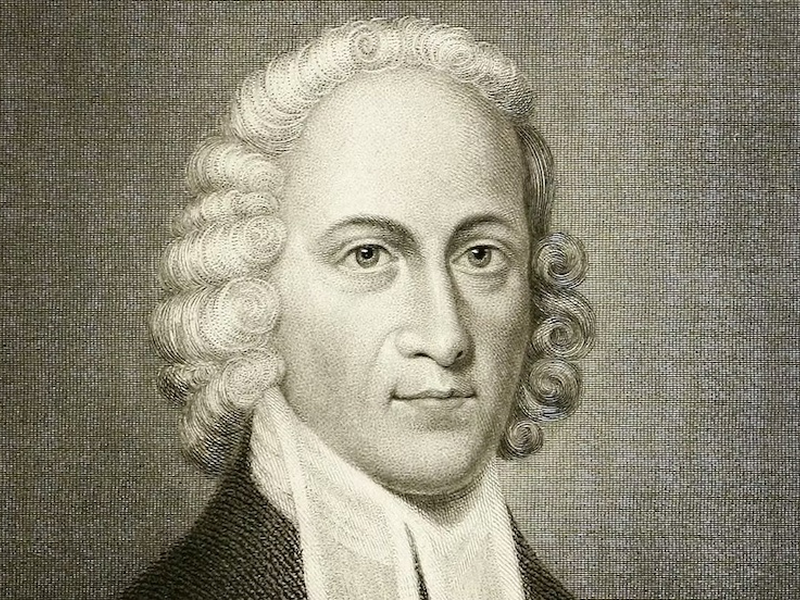
Edwards Our Contemporary

Seng-Kong Tan’s Fullness Received and Returned is a densely argued, thoroughly researched, contextually sensitive study of participation in the soteriology of Jonathan Edwards. Along the way, Tan deals with many of the central themes in Edwards’s theology. As with many recent studies of Edwards, Tan’s monograph demonstrates both Edwards’s creativity…

by Peter LeithartAugust 6, 2014
trnava-university-beeyeib-am8-unsplash
Art

Portrait of the Artist as Aesthetic Martyr

The title of James Joyce’s first novel, Portrait of the Artist as a Young Man indicates that it is a bildungsroman , a story of formation that describes the formative experiences of a poet who aspires to artistic greatness. The education described is Joyce’s own. The novel recounts the failing…

by Peter LeithartAugust 4, 2014

Showing page 170 of 309

See all
See all

Exhortation

Most of the Beatitudes in Matthew are stated in third person. “Blessed are the poor in spirit, for theirs is the kingdom of heaven.” ” They shall be comforted,” ” they shall inherit the earth,” ” they shall be called the sons of God.” At the end, Jesus changes the…

September 2, 2007
Theology

Music, Time, and Augustine

One of the best discussions of Augustine’s views on time comes from Jeremy Begbie’s Theology, Music, and Time (ch. 3). Following Ricoeur’s discussion, Begbie claims that Augustine’s distentio “is conceived as the three-fold present, and the threefold present as distentio . The distentio consists in the non-coincidence of the mind’s…

August 30, 2007
Theology

Escaping time

John Rist offers some important insights into Augustine’s view of time. He notes, as many commentators do, that Augustine is not aiming to provide a definition of time but to answer the question of how time can be measured. The dilemma is: If the past no longer is, and the…

August 30, 2007

Distention and eschatology

In a 1957 essay in Man and Time , Gilles Quispel claims that Augustine’s views of time have been extracted from the “great struggle between a cyclical and a historical view of the world, between archaism and Christianity,” and therefore have been misunderstood. Augustine “comes to grips with the Neoplatonists…

August 30, 2007
Philosophy

Augustine’s non-Aristotelian Universe

Augustine argues in Confessions that time is not reducible to the movement of the celestial bodies. Aristotle agreed; but, as Ricoeur points out, the arguments that Augustine used departed radically from Aristotle. First, if the sun and stars stopped moving, and yet a potter’s wheel continued to move, time would…

August 30, 2007

Showing page 1638 of 2212

Browse by Category

In Medias Res

Your weekly digest for all things Theopolis.

Donate

Theopolis is nearly 100% donor-supported. Consider joining us on our mission.