Theopolis Logo

Writing

Explore our collection of theological essays, biblical studies, and reflections on faith and culture.

See all
aaron-burson-yihqdpsk9ji-unsplash
City

The City of Cain

Not long ago, I heard these statistics about New York City: New York City is in $100 billion in debt. 20% of all NYC residents are on food stamps, which cost $250 million a month. 5% of NYC population are on disability, costing $252 million a month. Other assistance costs…

by Richard BledsoeJune 25, 2020

sebastiano-piazzi-ti_deyjwoky-unsplash
Empire

Twenty-Five Theses on Empire

1. All political power is ambivalent. Vertical violence of “the state” tends to limit horizontal and contested power between people and between tribes. “The State” brings new oppression, but also a measure of new peace and unity. 2. All political formations are ambiguous like this: a strong family conquers weaker…

by John MilbankJune 23, 2020
e99a2549
Coronavirus

Virtual Gnosticism and the Church – some disturbing thoughts about Covid19

Gnosticism by any other name would smell the same. But does the church have much of a theological sense of smell, these days, when it comes to the seductions of virtuality in our worshipping communities? Social isolation during a global pandemic makes good public health sense, but whether church should…

by Paul TysonJune 16, 2020
alex-radelich-evo4wmtrapi-unsplash
American Culture

The Priorities of Priests and Protests

It is a remarkable thing, you know, this thing called priority. Just a few weeks ago, religious leaders were boldly asserting in their high-dollar online videos that it was too dangerous to return to worship and that we needed to listen to our political and health leaders. "They are the…

by Uri BritoJune 15, 2020
roberts_siege_and_destruction_of_jerusalem-744x474-1
James

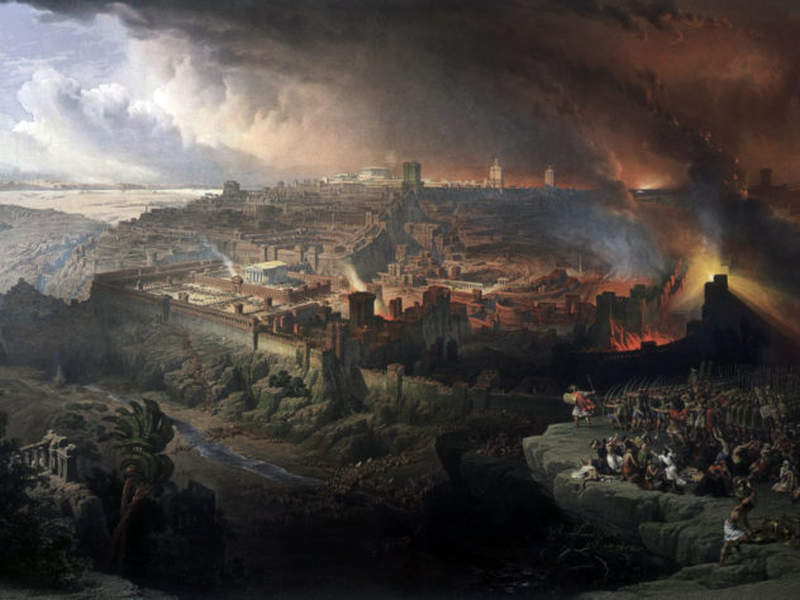
Anger, Riots, Violence, & Justice: How the Epistle of James Came to be Written

Somewhere in the city of Jerusalem on a rooftop just a few years after the ascension of Jesus and the outpouring of the Spirit on Pentecost. . . ". . . and just when are you guys going to live up to your ‘Sons of Thunder’ reputation? Huh? A lot…

by Jeff MeyersJune 9, 2020
adam-and-eve-in-the-garden-of-eden-wenzel-peter
Proverbs

Lady Wisdom Eve

In my book, Solomon Says: Directives for Young Men ( Amazon , Kindle ) I mention that Solomon portrays wisdom as a woman. But I don’t ask (or answer!) why he did so. Solomon uses the figure of Lady Wisdom without apology or explanation: Wisdom cries aloud in the street,…

by Mark HorneJune 2, 2020

Showing page 66 of 309

See all
See all

Exhortation

Most of the Beatitudes in Matthew are stated in third person. “Blessed are the poor in spirit, for theirs is the kingdom of heaven.” ” They shall be comforted,” ” they shall inherit the earth,” ” they shall be called the sons of God.” At the end, Jesus changes the…

September 2, 2007
Theology

Music, Time, and Augustine

One of the best discussions of Augustine’s views on time comes from Jeremy Begbie’s Theology, Music, and Time (ch. 3). Following Ricoeur’s discussion, Begbie claims that Augustine’s distentio “is conceived as the three-fold present, and the threefold present as distentio . The distentio consists in the non-coincidence of the mind’s…

August 30, 2007
Theology

Escaping time

John Rist offers some important insights into Augustine’s view of time. He notes, as many commentators do, that Augustine is not aiming to provide a definition of time but to answer the question of how time can be measured. The dilemma is: If the past no longer is, and the…

August 30, 2007

Distention and eschatology

In a 1957 essay in Man and Time , Gilles Quispel claims that Augustine’s views of time have been extracted from the “great struggle between a cyclical and a historical view of the world, between archaism and Christianity,” and therefore have been misunderstood. Augustine “comes to grips with the Neoplatonists…

August 30, 2007
Philosophy

Augustine’s non-Aristotelian Universe

Augustine argues in Confessions that time is not reducible to the movement of the celestial bodies. Aristotle agreed; but, as Ricoeur points out, the arguments that Augustine used departed radically from Aristotle. First, if the sun and stars stopped moving, and yet a potter’s wheel continued to move, time would…

August 30, 2007

Showing page 1638 of 2212

Browse by Category

In Medias Res

Your weekly digest for all things Theopolis.

Donate

Theopolis is nearly 100% donor-supported. Consider joining us on our mission.