Theopolis Logo

Writing

Explore our collection of theological essays, biblical studies, and reflections on faith and culture.

See all
e99a9334
Advent

Stretching Christmas

For many people Christmas comes on December 25 and is over December 26. The tree is taken down along with the lights and the other decorations, and everyone begins setting the house in order for the new year. No more Christmas hymns. No more celebrations (well, until New Year’s Eve).…

by Steve WilkinsDecember 24, 2016
ascension
Advent

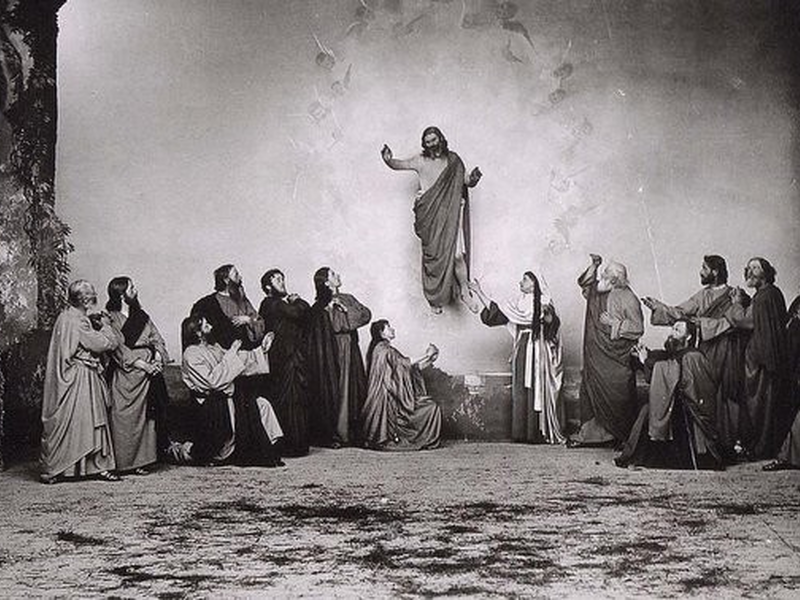
Ascension and Incarnation

The Ascension and the Incarnation should not be disconnected in our Christmas thinking or celebrations. As N.T. Wright notes, the ascension is "a central and vital feature without which all sorts of other things start to go demonstrably wrong. . . . where the ascension has been ignored or misunderstood,…

by Roy AtwoodDecember 23, 2016
nativity-rembrandt
Advent

Christmas Light

“In the Word was life, and the life was the light of men. And the light shines in the darkness.” Thus John describes the incarnation of the Son. He comes as the living and life-giving light of the world. That’s good news. In the beginning, God spoke and light shone…

by Peter LeithartDecember 23, 2016
nativity-chagall
Advent

The Spirit of Christmas

Christmas is all about Jesus. The angels announce Jesus’ birth, shepherds and wise men come to see Jesus, Herod wants to kill Jesus. We occasionally think of the Father who sent the Son, but we keep returning to the Son made flesh in Bethlehem’s manger. Meanwhile, as always, the Spirit…

by Peter LeithartDecember 22, 2016
nativity
Advent

The Humility of God

Christmas is about many things, but one of the chief things revealed in the gospel of Christmas is the humility of God. We don't often think of humility as an attribute of God. If God is glorious and exalted, we think, He must be haughty and proud and self-centered. We…

by Peter LeithartDecember 21, 2016
screenshot-2025-12-15-at-8-35-45-am
Advent

Advent of Unity

John famously begins his Gospel with a piece of theology: “In the beginning was the Word, and the Word was with God, and the Word was God.” Matthew starts with a genealogy. John celebrates Advent with a hymn, Matthew with a list. For John, Jesus is the Word of creation…

by Peter LeithartDecember 20, 2016

Showing page 120 of 309

See all
See all

Hugeness

Jason Zengerle has an interesting piece in the TNR on evangelical conversions to Orthodoxy. At the end of the article, he quotes Jordan DeRenzo, who converted to Orthodoxy when her Baptist pastor, Wilbur Ellsworth, converted. She says: “Coming to the Orthodox Church means that I am in communion with that…

August 30, 2007
Theology

Faith and Reason

For centuries, Christians have posed the dilemma of Christian theology as a problem of faith v. reason. That’s a non-starter, a concession of defeat, for it assumes that there can be such a thing as a faith-free rationality. But there cannot be. What we have is not a conflict of…

August 30, 2007

Homoousios

We fondly look back at the Council of Nicea as a solution to the problem of Arianism, and see the homoousios as the key to this solution. Things are not nearly so tidy. Robert Letham neatly summarizes the problems associated with the term in his recent book on Orthodoxy: “As…

August 28, 2007

Liturgical footwear

Henry Chadwick notes, “Some Christians late in the fourth century, especially round Brescia, walked barefoot after the example of Moses at the burning bush or the prophet Isaiah who went barefoot for three years. Successive bishops deplored this, evidently in vain. Much ancient evidence records the axiom that for cultic…

August 28, 2007
History

Wordsworth and the Picturesque

According to a 1964 article in Modern Philology by John Nabholtz, Wordsworth intended his Guide to the Lakes (first published in 1810; fifth edition in 1835) as a corrective to picturesque writers like Gilpin. He intended his book to model how landscape writing should be done, and most critics have…

August 27, 2007
Literature

Pauline Wordsworth

In a 1993 article in the Review of English Studies , Colin Pedley points out the similarities between the cadences of this passage from “Tintern Abbey” and Paul’s triumphant conclusion to Romans 8: My dear, dear Sister! and this prayer I make, Knowing that Nature never did betray The heart…

August 27, 2007

Showing page 1639 of 2212

Browse by Category

In Medias Res

Your weekly digest for all things Theopolis.

Donate

Theopolis is nearly 100% donor-supported. Consider joining us on our mission.