Theopolis Logo

Writing

Explore our collection of theological essays, biblical studies, and reflections on faith and culture.

See all
little-girl
Children

Honor God With Your Body

I am making a new rule in our house! We are actually kind of skimpy on the house rules. I try very hard to keep things simple: love God, love others, be joyful. It’s not complicated to avoid discipline here. But I have found myself repeating this new rule over…

by Lindsey TollefsonApril 9, 2015

giotto-noli-me-3
John

The Gardener and the Beloved, (Part 3)

Click HERE for Part 2 The voice of Jesus transforms and changes Mary when she hears him speak her name. This is her last “turning.” So also the woman in the Song of Songs longs to hear the voice of her beloved. Let me see your face, let me hear…

by Jeff MeyersApril 6, 2015
giotto-noli-me-2
John

The Gardener and the Beloved, (Part 2)

Click HERE for Part 1. The details of this story call the attentive reader back to the drama of Solomon’s Song of Songs. And the Song of Song’s alludes to, ties us into the story of Adam and Eve in the Garden and the promise of a coming Messiah that…

by Jeff MeyersApril 4, 2015
easter-term-2015-2
Theopolis News

Easter Term, 2015

“The course was a paradigm shift for me,” said Jonathan Sedlak, a Milwaukee electrical contractor who attended Theopolis’s course on Revelation. “I am left with a book that is far more practical than it has ever seemed before.” Jonathan Anderson of Louisville, Kentucky found the course “refreshing.” “I finished with…

by TheopolisApril 2, 2015
psalm-singing
Genesis

Worship as Response: Liturgical Logic, (Part 1)

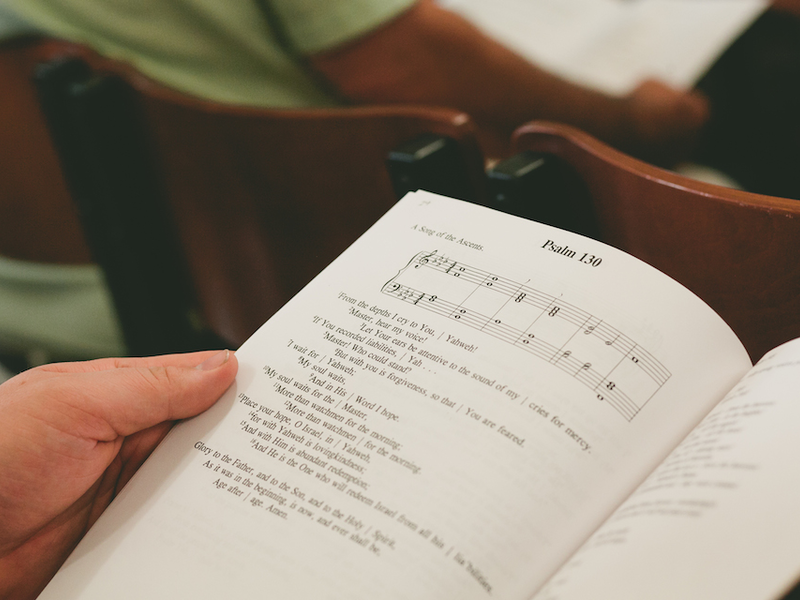
“It is only by participation in a rational, practice-based community that one becomes rational.” – Alasdair MacIntyre It may be perfectly clear to a chef why adding unsifted powdered sugar to a hot frosting is a bad idea. But for an amateur cook, this may be the kind of rule…

by Jonathan BarlowApril 2, 2015
giotto-noli-me
John

The Gardener and the Beloved, (Part 1)

On a fresco in a chapel in Padua, Italy, there is a famous painting depicting the dramatic post-resurrection scene in John 20 with Mary and Jesus outside of the garden tomb. Giotto di Bondone painted it in the early 14th century. Jesus is striding from the tomb with a victor’s…

by Jeff MeyersApril 1, 2015

Showing page 156 of 309

See all
See all
Theology

Practical preaching

In his history of Protestant theology in the 19th century, Barth lists some of the sermon topics of one Traugott Gunther Roller of Schonfels in Kur-Saxony: Fourth Sunday after Epiphany: The Duties of a Christian Congregation saved from the Grave Risk of Fire. Easter: Reasonable Rules for the Christian Burial…

July 12, 2007
Theology

Whose questions?

Bediako neatly describes the dualism that results when the church attempts to apply the questions and answers of European or American Christianity to Africa without addressing the questions of Africans themselves. He quotes John Taylor’s pointed question: “if Christ were to appear as the answer to the questions that Africans…

July 11, 2007
Theology

Against Theology

Bediako criticizes other African theologians who claim that there is no African theological tradition. There is, he admits, not much if we’re looking for school theology. But focusing on that lack misses the real action - the “grassroots” theology expressed in songs, worship, sermons, personal evangelism, etc. And this is…

July 11, 2007

Christos kurios

One of Afua Kuma’s hymns to Jesus describes Him as an arriving hero: “Children rush to meet Him crowds of young people rush about to make Him welcome. Chief of young women: they have strung a necklace of gold nuggets and beads and hung it around Your neck so we…

July 11, 2007

Jesus of the Deep Forest

In the songs and praises of the illiterate Ghanian Christian, Christina Afua Gyan (or Afua Kuma), Jesus is described as a powerful Protector in a world teeming with dangers. “Should the devil himself become a lion and chase us as his prey, we shall have no fear Lamb of God!…

July 11, 2007
Theology

Good/evil or finite/infinite

What Milbank describes as “postmodern Kantianism” (in Zizek, Nancy, and others) wants to take evil seriously, which means “positively.” They do not think Augustine’s theory adequately accounts for modern evil, complaining that the Augustinian account’s weakness left Europe open to the possibility of radical evil. Milbank suggests on the contrary…

July 11, 2007

Showing page 1657 of 2212

Browse by Category

In Medias Res

Your weekly digest for all things Theopolis.

Donate

Theopolis is nearly 100% donor-supported. Consider joining us on our mission.